Neuroscience Research Australia, University of New South Wales, Sydney, Australia.
Department of Biomedical Physiology and Kinesiology, Simon Fraser University, Burnaby, Canada.
BMC Public Health. 2018 Jul 4;18(1):824. doi: 10.1186/s12889-018-5719-8.
Advances in sensor technology allow for objective and high-resolution monitoring of physical activity and sedentary behaviour. Novel epidemiological data is required to provide feedback on an individual's habitual daily activity in comparison to peers and might eventually lead to refined physical activity guidelines.
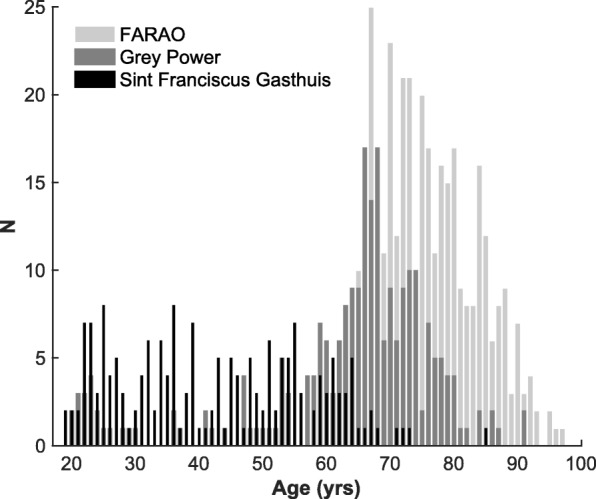
We merged data of 762 people between 18 and 99 years of age, who all wore a DynaPort MoveMonitor accelerometer on their lower back during 1 week in daily-life, to provide insight into habitual types and durations of daily activities, and examine the association between age and physical activity and sedentary behaviour.
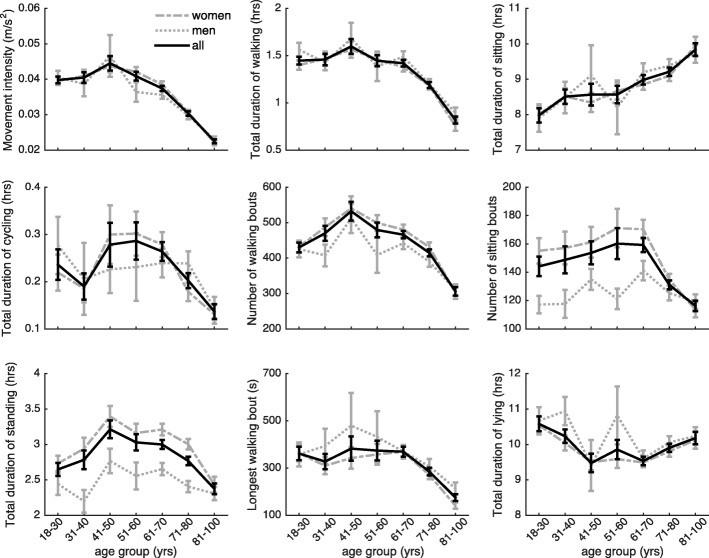
We found associations between age and almost all activity outcomes. These associations suggested that physical activity declines and sedentary behaviour increases from the age of 50. We further describe an association with gender, with men walking more often in fewer but longer bouts and having fewer, longer bouts of sitting and standing.
These data provide a valuable reference and may call for more age- and gender-specific activity interventions.
传感器技术的进步使得对身体活动和久坐行为进行客观、高分辨率的监测成为可能。需要新的流行病学数据来提供个体日常活动习惯与同龄人相比的反馈,这最终可能会导致更精细的身体活动指南。
我们合并了年龄在 18 至 99 岁之间的 762 人的数据,他们在日常生活中都在背部佩戴了 Dynaport MoveMonitor 加速度计,持续 1 周,以深入了解日常活动的习惯类型和持续时间,并检查年龄与身体活动和久坐行为之间的关系。
我们发现年龄与几乎所有活动结果都存在关联。这些关联表明,身体活动从 50 岁开始下降,久坐行为开始增加。我们进一步描述了与性别之间的关联,男性走得更频繁,但每次持续时间更长,坐着和站着的时间更少但每次持续时间更长。
这些数据提供了有价值的参考,并可能需要更多针对年龄和性别的活动干预措施。