APHP, Hôpital Bichat Claude Bernard, Service des Maladies Infectieuses et Tropicales, Paris Diderot University, Paris, France.
APHP, Hôpitaux Universitaires Pitié Salpêtrière-Charles Foix, Service des Maladies Infectieuses et Tropicales, Paris, France.
BMC Infect Dis. 2018 Jul 16;18(1):331. doi: 10.1186/s12879-018-3223-5.
Patients with suspected Middle East respiratory syndrome coronavirus (MERS-CoV) infection should be hospitalized in isolation wards to avoid transmission. This suspicion can also lead to medical confusion and inappropriate management of acute respiratory syndrome due to causes other than MERS-CoV.
We studied the characteristics and outcome of patients hospitalized for suspected MERS-CoV infection in the isolation wards of two referral infectious disease departments in the Paris area between January 2013 and December 2016.
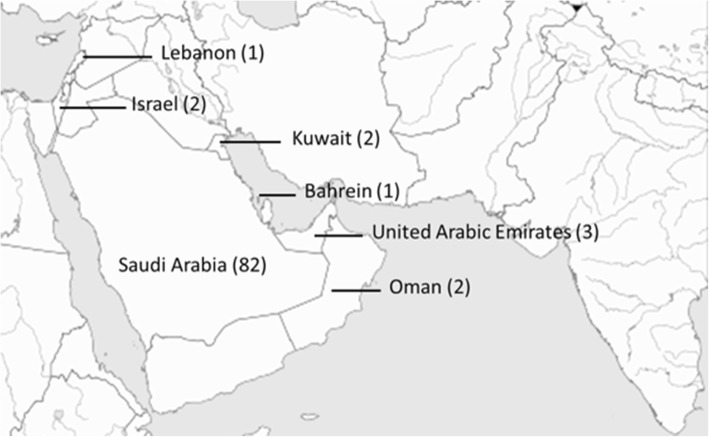
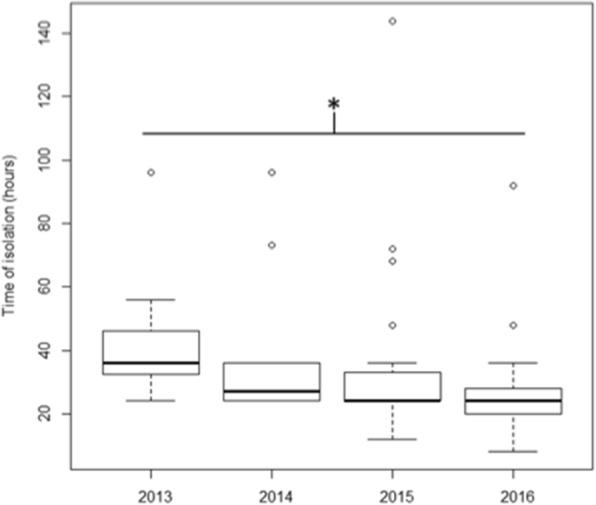
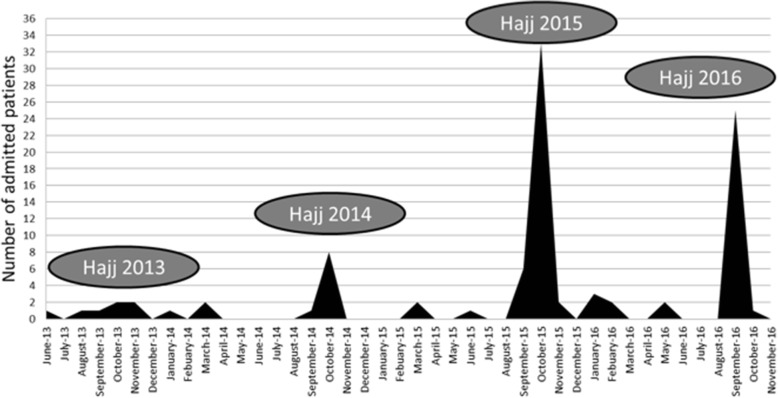
Of 93 adult patients (49 male (52.6%), median age 63.4 years) hospitalized, 82 out of 93 adult patients had returned from Saudi Arabia, and 74 of them were pilgrims (Hajj). Chest X-ray findings were abnormal in 72 (77%) patients. The 93 patients were negative for MERS-CoV RT-PCR, and 70 (75.2%) patients had documented infection, 47 (50.5%) viral, 22 (23.6%) bacterial and one Plasmodium falciparum malaria. Microbiological analysis identified Rhinovirus (27.9%), Influenza virus (26.8%), Legionella pneumophila (7.5%), Streptococcus pneumoniae (7.5%), and non-MERS-coronavirus (6.4%). Antibiotics were initiated in 81 (87%) cases, with two antibiotics in 63 patients (67.7%). The median duration of hospitalization and isolation was 3 days (1-33) and 24 h (8-92), respectively. Time of isolation decreased over time (P < 0.01). Two patients (2%) died.
The management of patients with possible MERS-CoV infection requires medical facilities with trained personnel, and rapid access to virological results. Empirical treatment with neuraminidase inhibitors and an association of antibiotics effective against S. pneumoniae and L. pneumophila are the cornerstones of the management of patients hospitalized for suspected MERS-CoV infection.
疑似中东呼吸综合征冠状病毒(MERS-CoV)感染的患者应住院隔离,以避免传播。这种怀疑也可能导致由于 MERS-CoV 以外的原因引起的急性呼吸道综合征的医疗混乱和不当管理。
我们研究了 2013 年 1 月至 2016 年 12 月期间巴黎地区两个转诊传染病科隔离病房住院疑似 MERS-CoV 感染患者的特征和结局。
93 名成年患者(49 名男性(52.6%),中位年龄 63.4 岁)中,82 名成年患者从沙特阿拉伯返回,其中 74 名是朝觐者(麦加朝圣)。72 名(77%)患者的胸部 X 线检查结果异常。93 名患者的 MERS-CoV RT-PCR 均为阴性,70 名(75.2%)患者有明确的感染记录,47 名(50.5%)病毒感染,22 名(23.6%)细菌感染,1 名疟原虫感染。微生物分析鉴定出鼻病毒(27.9%)、流感病毒(26.8%)、嗜肺军团菌(7.5%)、肺炎链球菌(7.5%)和非 MERS-CoV(6.4%)。81 名(87%)患者开始使用抗生素,63 名患者(67.7%)使用两种抗生素。住院和隔离的中位时间分别为 3 天(1-33 天)和 24 小时(8-92 小时)。隔离时间随时间推移而减少(P<0.01)。两名患者(2%)死亡。
可能感染 MERS-CoV 的患者的管理需要有经过培训的人员和快速获得病毒学结果的医疗设施。经验性使用神经氨酸酶抑制剂和联合使用对肺炎链球菌和嗜肺军团菌有效的抗生素是管理疑似 MERS-CoV 感染住院患者的基石。