
地下通道中细颗粒物的空间分布。
Spatial Distribution of Fine Particulate Matter in Underground Passageways.
机构信息
Center for Intelligent Transportation Systems and Unmanned Aerial Systems Applications, State Key Laboratory of Ocean Engineering, School of Naval Architecture, Ocean & Civil Engineering, Shanghai Jiao Tong University, Shanghai 200240, China.
China Institute for Urban Governance, Shanghai Jiao Tong University, Shanghai 200240, China.
出版信息
Int J Environ Res Public Health. 2018 Jul 25;15(8):1574. doi: 10.3390/ijerph15081574.
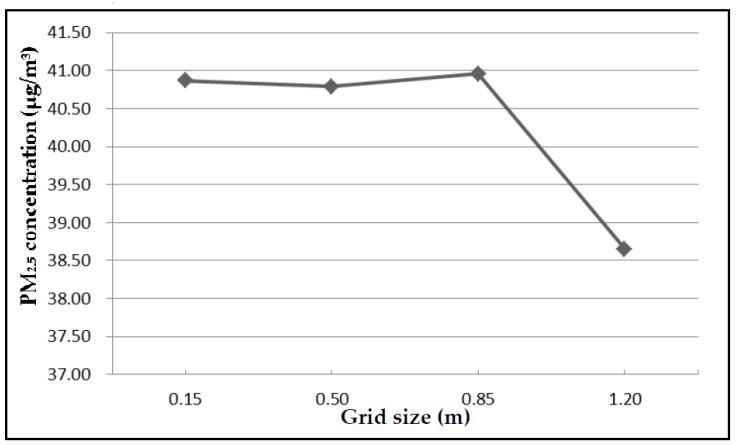
The unfavorable locations of underground infrastructures and poor ventilation facilities can result in the deterioration of enclosed air quality. Some researchers have studied air quality and ventilation measures in different types of underground buildings. However, few studies have investigated the pollution in pedestrian passageways connecting underground structures. Hence, in this paper, we attempted to investigate the spatial distribution of fine particulate matter (PM) in underground passageways. First, measurements were designed and conducted in a pedestrian passageway beneath the Shanghai South Railway Station, Shanghai, China. Second, numerical simulations were performed based on computational fluid dynamic (CFD) technology. Finally, the numerical simulations were extended to examine impacts of the ventilation measures on PM concentration with different inlet positions and air velocity in underground passageways. The simulation results showed good agreement with the experimental data, and the numerical model was validated to be an effective method to investigate the spatial distribution of PM in underground passageways. Results suggest that building additional entrances is an advisable method for improving air quality in the underground passageways of the Shanghai South Railway Station, while jet fans are not recommended. Findings of this study offer suggestions for mitigating PM pollution in underground passageways.
地下基础设施的不利位置和通风设施差会导致封闭空气质量恶化。一些研究人员研究了不同类型地下建筑的空气质量和通风措施。但是,很少有研究调查连接地下结构的行人通道中的污染情况。因此,在本文中,我们试图调查地下通道中细颗粒物(PM)的空间分布。首先,在中国上海的上海南站下的行人通道中进行了设计和测量。其次,基于计算流体动力学(CFD)技术进行了数值模拟。最后,将数值模拟扩展到检查不同入口位置和地下通道中空气速度对 PM 浓度的通风措施的影响。模拟结果与实验数据吻合较好,验证了数值模型是研究地下通道中 PM 空间分布的有效方法。结果表明,在上海南站地下通道中增设入口是改善空气质量的可行方法,而不建议使用射流风扇。本研究的结果为减轻地下通道中 PM 污染提供了建议。




 Zotero 插件