Department of Biomedical Engineering, Texas A&M University, College Station, TX, 77843, USA.
Department of Biomedical Engineering, Texas A&M University, College Station, TX, 77843, USA; Department of Material Sciences, Texas A&M University, College Station, TX, 77843, USA; Center for Remote Health and Technologies and Systems, Texas A&M University, College Station, TX, 77843, USA.
Biomaterials. 2019 Mar;196:2-17. doi: 10.1016/j.biomaterials.2018.07.029. Epub 2018 Jul 23.
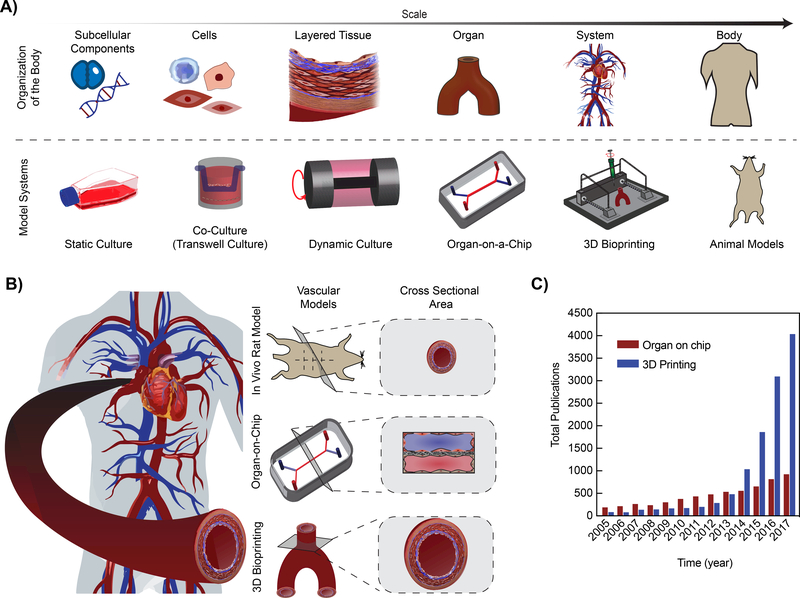
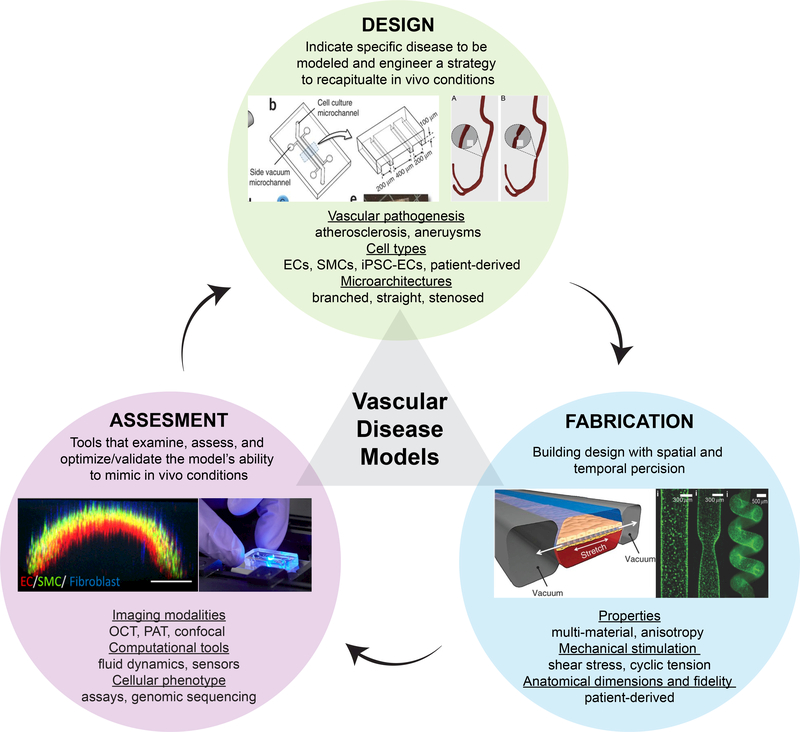
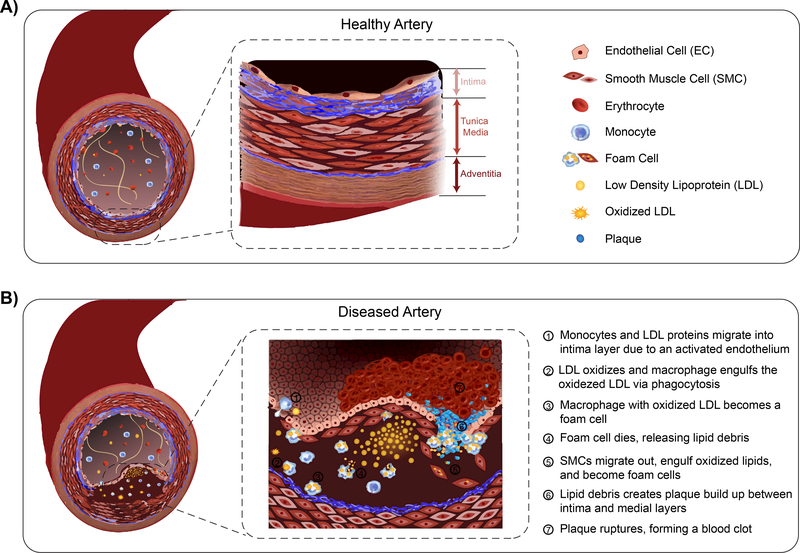
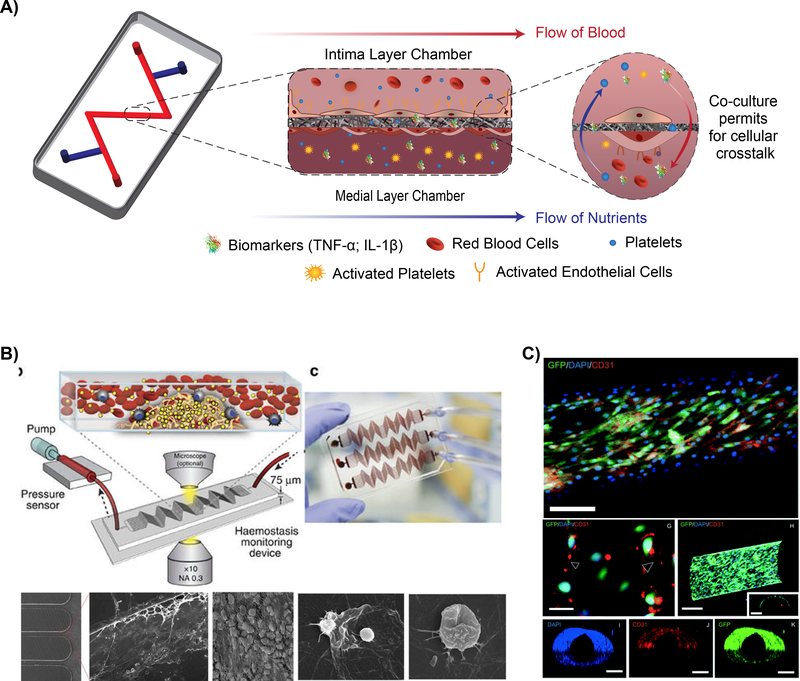
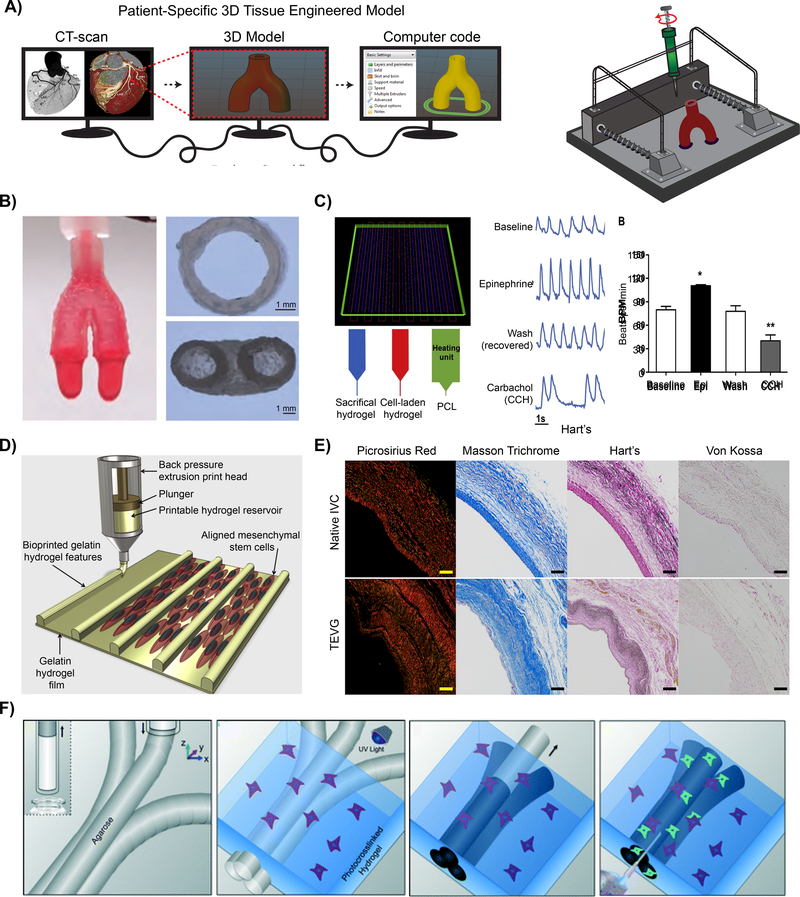
Most biomedical and pharmaceutical research of the human vascular system aims to unravel the complex mechanisms that drive disease progression from molecular to organ levels. The knowledge gained can then be used to innovate diagnostic and treatment strategies which can ultimately be determined precisely for patients. Despite major advancements, current modeling strategies are often limited at identifying, quantifying, and dissecting specific cellular and molecular targets that regulate human vascular diseases. Therefore, development of multiscale modeling approaches are needed that can advance our knowledge and facilitate the design of next-generation therapeutic approaches in vascular diseases. This article critically reviews animal models, static in vitro systems, and dynamic in vitro culture systems currently used to model vascular diseases. A leading emphasis on the potential of emerging approaches, specifically organ-on-a-chip and three-dimensional (3D) printing, to recapitulate the innate human vascular physiology and anatomy is described. The applications of these approaches and future outlook in designing and screening novel therapeutics are also presented.
大多数针对人体血管系统的生物医学和制药研究旨在揭示从分子水平到器官水平驱动疾病进展的复杂机制。然后,可以利用所获得的知识创新诊断和治疗策略,最终为患者量身定制。尽管取得了重大进展,但目前的建模策略在识别、量化和剖析调节人类血管疾病的特定细胞和分子靶标方面往往受到限制。因此,需要开发多尺度建模方法,以增进我们的知识并促进血管疾病的下一代治疗方法的设计。本文批判性地回顾了目前用于模拟血管疾病的动物模型、静态体外系统和动态体外培养系统。重点介绍了新兴方法(特别是器官芯片和三维 (3D) 打印)在再现先天人体血管生理学和解剖结构方面的潜力。还介绍了这些方法的应用以及在设计和筛选新型治疗方法方面的未来展望。