Zhang Wenwen, Jiang Mengmeng, Chen Jieying, Zhang Rui, Ye Yingnan, Liu Pengpeng, Yu Wenwen, Yu Jinpu
Cancer Molecular Diagnostics Core, Tianjin Medical University Cancer Institute and Hospital, National Clinical Research Center for Caner, Key Laboratory of Cancer Prevention and Therapy, Tianjin's Clinical Research Center for Cancer, Tianjin, China.
Department of Urology, Tianjin Medical University General Hospital, Tianjin, China.
Front Immunol. 2018 Jul 23;9:1699. doi: 10.3389/fimmu.2018.01699. eCollection 2018.
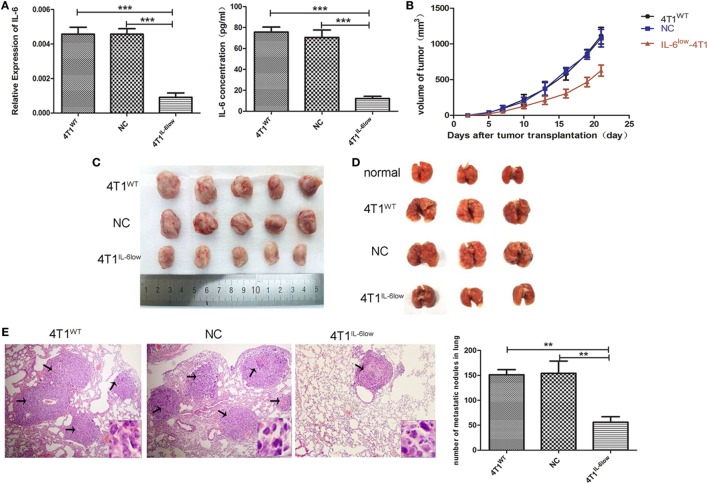
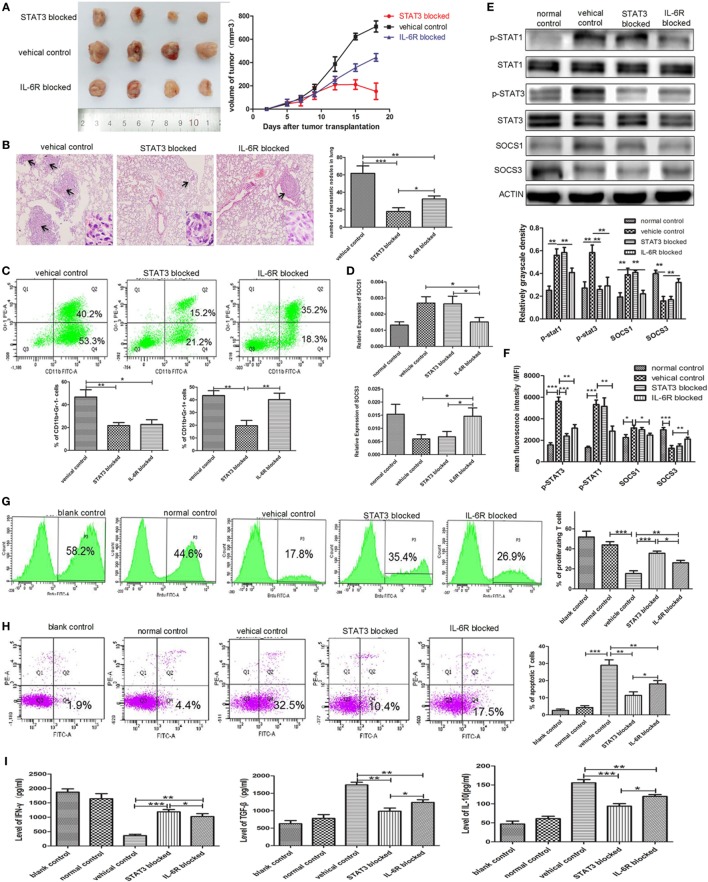
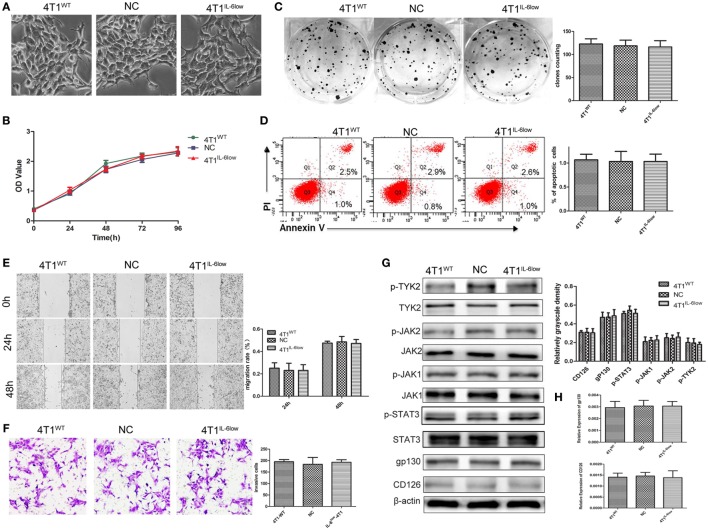
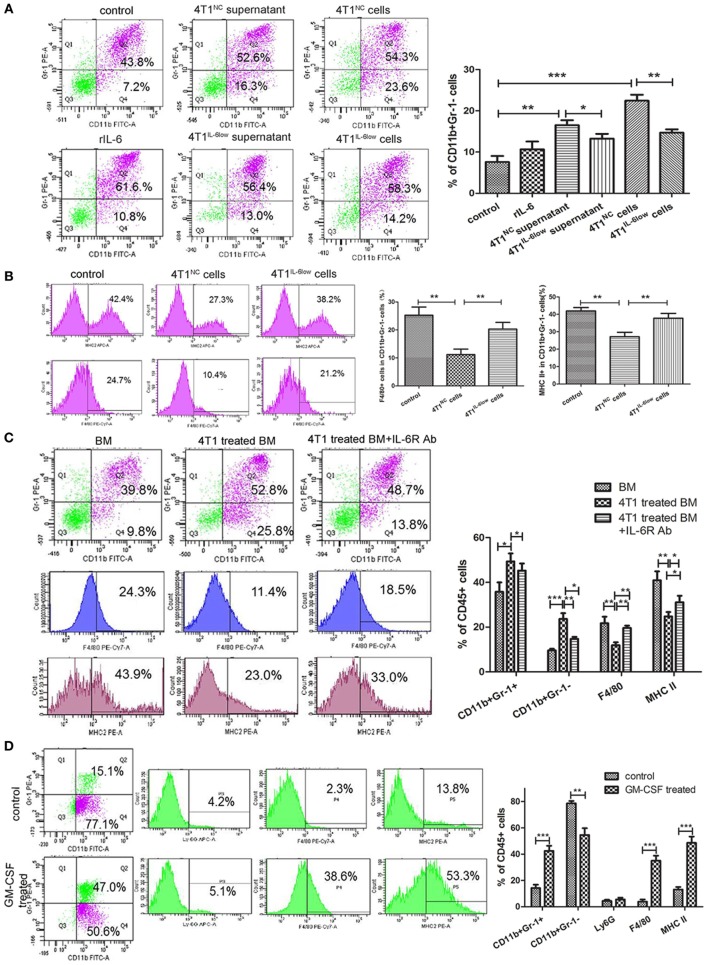
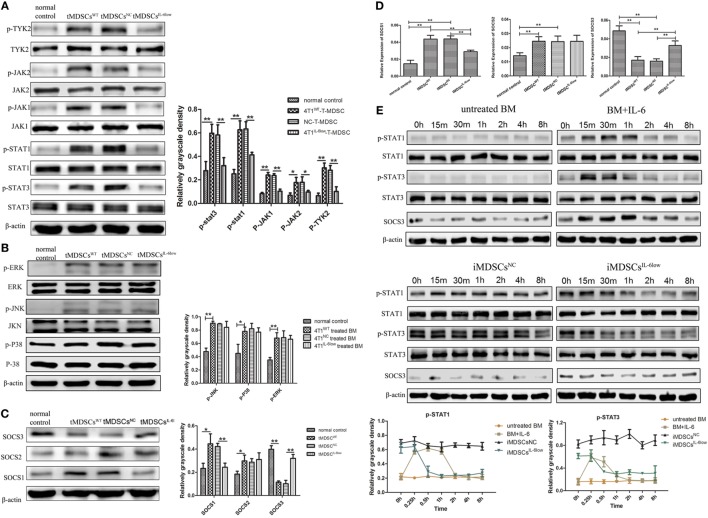
Interleukin-6 (IL-6) is an important trigger for the expansion and recruitment of myeloid-derived suppressor cells (MDSCs), which are regarded to be major coordinators of the immunosuppressive tumor microenvironment. In this study, we constructed IL-6-knockdown breast cancer mice models to explore the molecular events involved in the IL-6-mediated effects on MDSC development. We defined a subset of early-stage MDSCs (e-MDSCs) with the phenotype of CD11bGr-1F4/80MHCII in IL-6 high-expressing 4T1 mice mammary carcinoma models, which were the precursors of CD11bGr-1 conventional MDSCs. Furthermore, sustained suppression of SOCS3 and aberrant hyperactivation of the JAK/STAT signaling pathway was exclusively detected in wide-type 4T1 tumor-bearing mice, which promoted the accumulation of e-MDSCs and their immunosuppressive capability . After blocking the IL-6/STAT3 signaling pathway with the IL-6 receptor antibody or STAT3 antagonist JSI-124 in tumor-bearing mice, significant shrinkage of primary tumors and decrease in lung metastatic nodules were observed , accompanied by the dramatic decrease of e-MDSC recruitment and recovery of anti-tumor T cell immunity. Thus, SOCS3 suppression accelerated the IL-6-mediated growth and metastasis of mammary carcinoma affecting myeloid differentiation in breast cancer. Moreover, the IL-6/STAT3 signaling pathway might be a promising candidate target in developing novel therapeutic strategies to eliminate e-MDSCs and improve breast cancer prognosis.
白细胞介素-6(IL-6)是髓源性抑制细胞(MDSCs)扩增和募集的重要触发因素,而MDSCs被认为是免疫抑制性肿瘤微环境的主要协调者。在本研究中,我们构建了IL-6基因敲低的乳腺癌小鼠模型,以探索IL-6介导的对MDSC发育影响所涉及的分子事件。在IL-6高表达的4T1小鼠乳腺癌模型中,我们定义了一个具有CD11bGr-1F4/80MHCII表型的早期MDSCs(e-MDSCs)亚群,它们是CD11bGr-1传统MDSCs的前体。此外,仅在野生型4T1荷瘤小鼠中检测到SOCS3的持续抑制和JAK/STAT信号通路的异常过度激活,这促进了e-MDSCs的积累及其免疫抑制能力。在用IL-6受体抗体或STAT3拮抗剂JSI-124阻断荷瘤小鼠的IL-6/STAT3信号通路后,观察到原发性肿瘤显著缩小和肺转移结节减少,同时伴随着e-MDSC募集的显著减少和抗肿瘤T细胞免疫的恢复。因此,SOCS3抑制加速了IL-6介导的乳腺癌生长和转移,影响了乳腺癌中的髓系分化。此外,IL-6/STAT3信号通路可能是开发新型治疗策略以消除e-MDSCs和改善乳腺癌预后的一个有前景的候选靶点。