Etezadi Dordaneh, Warner Iv John B, Ruggeri Francesco S, Dietler Giovanni, Lashuel Hilal A, Altug Hatice
Bionanophotonic Systems Laboratory, École Polytechnique Fédérale de Lausanne (EPFL), Lausanne CH-1015, Switzerland.
Laboratory of Molecular Neurobiology and Neuroproteomics, EPFL, Lausanne CH-1015, Switzerland.
Light Sci Appl. 2017 Aug 25;6(8):e17029. doi: 10.1038/lsa.2017.29. eCollection 2017 Aug.
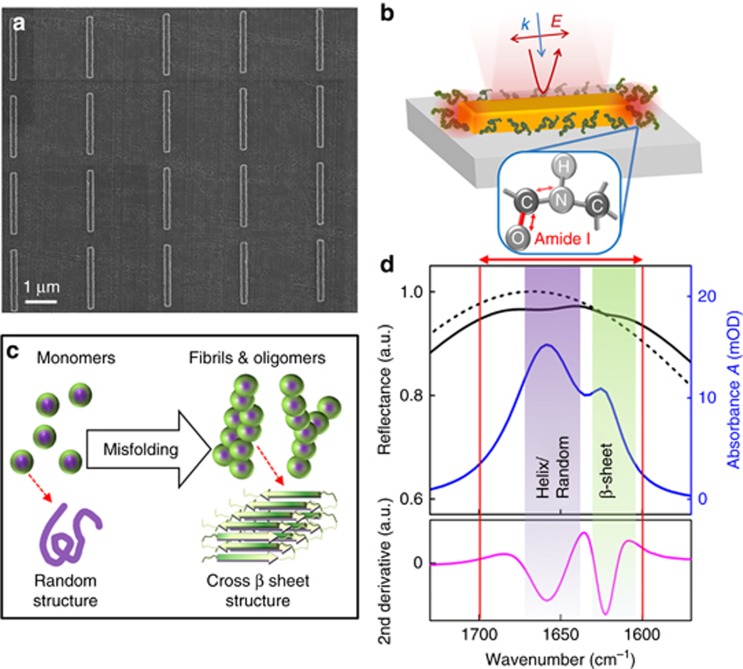
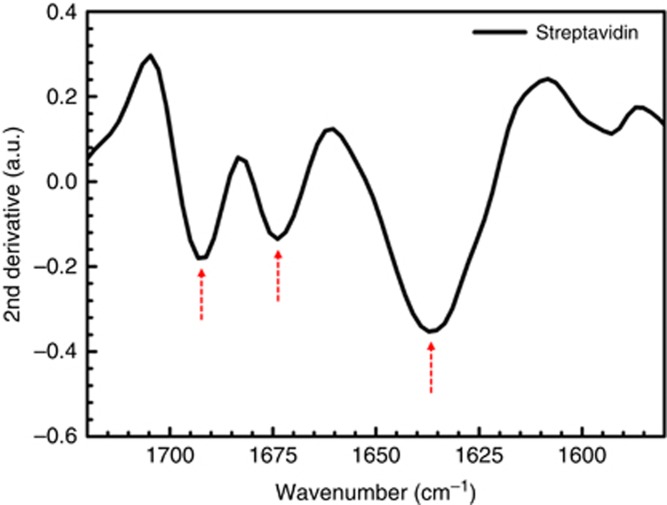
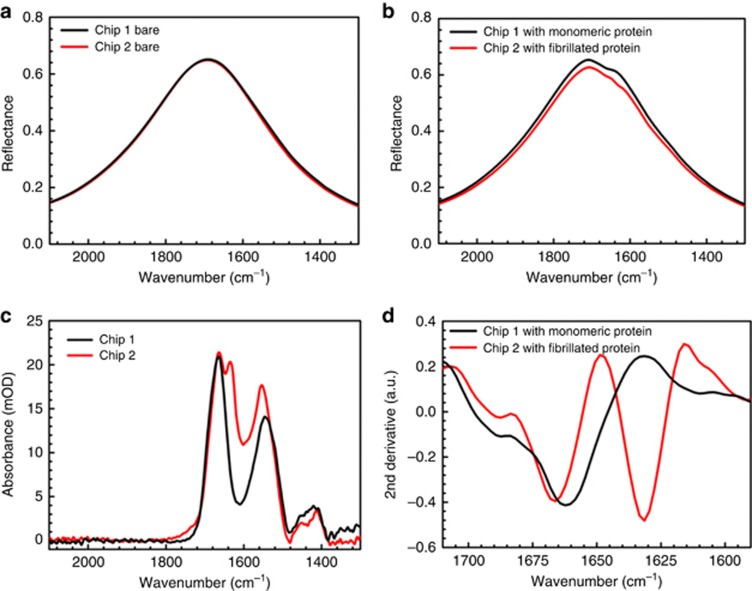
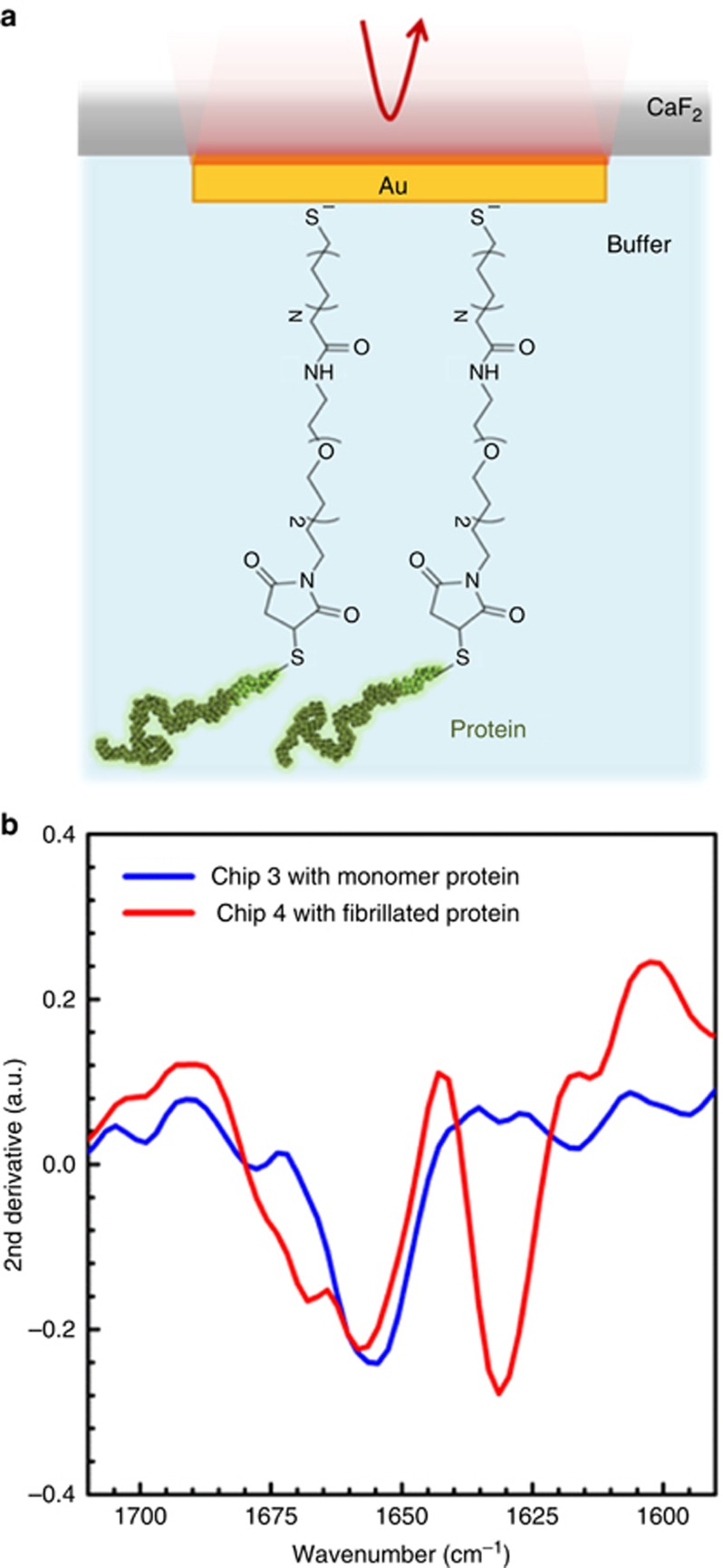
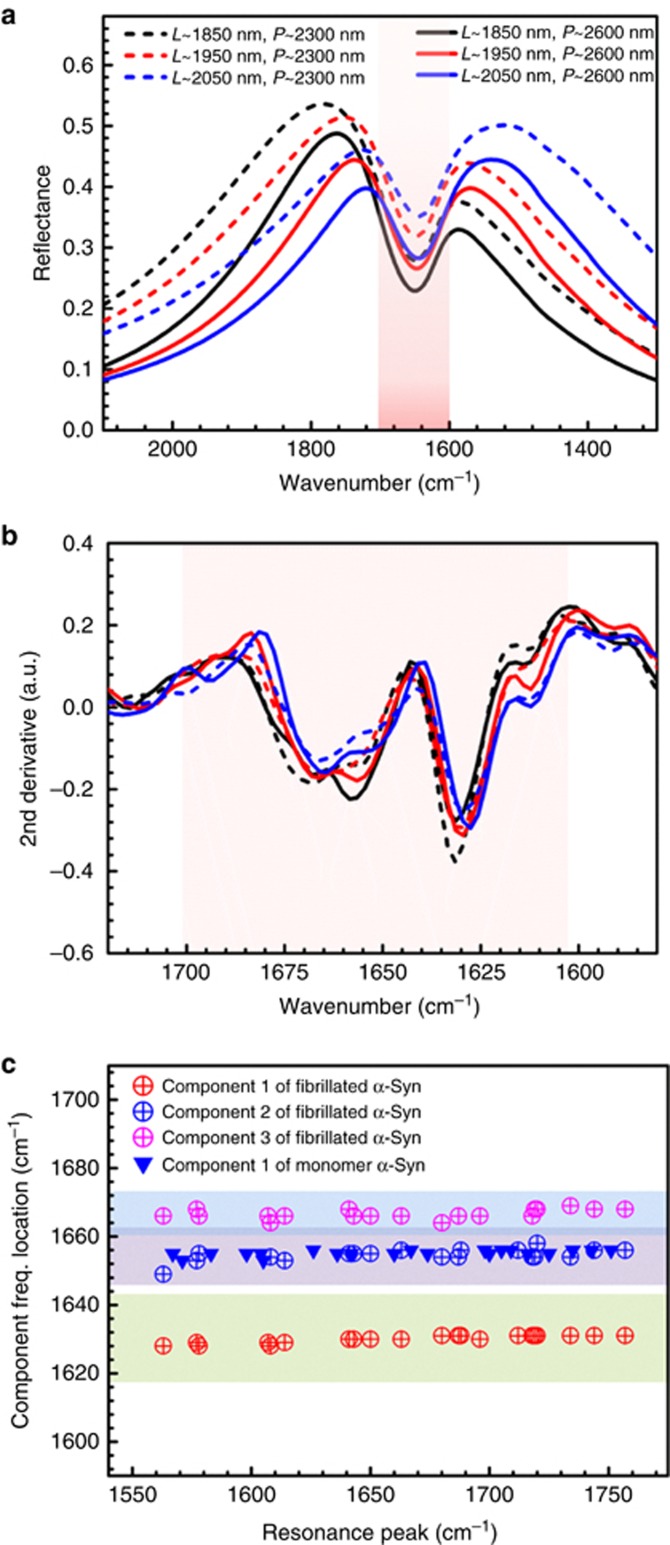
Plasmonic nanoantennas offer new applications in mid-infrared (mid-IR) absorption spectroscopy with ultrasensitive detection of structural signatures of biomolecules, such as proteins, due to their strong resonant near-fields. The amide I fingerprint of a protein contains conformational information that is greatly important for understanding its function in health and disease. Here, we introduce a non-invasive, label-free mid-IR nanoantenna-array sensor for secondary structure identification of nanometer-thin protein layers in aqueous solution by resolving the content of plasmonically enhanced amide I signatures. We successfully detect random coil to cross β-sheet conformational changes associated with α-synuclein protein aggregation, a detrimental process in many neurodegenerative disorders. Notably, our experimental results demonstrate high conformational sensitivity by differentiating subtle secondary-structural variations in a native β-sheet protein monolayer from those of cross β-sheets, which are characteristic of pathological aggregates. Our nanoplasmonic biosensor is a highly promising and versatile tool for structural analysis of thin protein layers.
等离子体纳米天线由于其强共振近场,在中红外(mid-IR)吸收光谱中提供了新的应用,可对生物分子(如蛋白质)的结构特征进行超灵敏检测。蛋白质的酰胺I指纹包含构象信息,这对于理解其在健康和疾病中的功能极为重要。在此,我们介绍一种非侵入性、无标记的中红外纳米天线阵列传感器,通过解析等离子体增强酰胺I信号的含量,用于鉴定水溶液中纳米级薄蛋白质层的二级结构。我们成功检测到与α-突触核蛋白聚集相关的从无规卷曲到交叉β-折叠的构象变化,这是许多神经退行性疾病中的有害过程。值得注意的是,我们的实验结果通过区分天然β-折叠蛋白单层与交叉β-折叠(病理性聚集体的特征)中细微的二级结构变化,证明了高构象敏感性。我们的纳米等离子体生物传感器是用于薄蛋白质层结构分析的极具前景且通用的工具。