Department of Physics, Faculty of Science, University of Zagreb, Bijenička cesta 32, 10000, Zagreb, Croatia.
Division of Molecular Biology, Ruđer Bošković Institute, Bijenička cesta 54, 10000, Zagreb, Croatia.
Nat Commun. 2018 Sep 3;9(1):3571. doi: 10.1038/s41467-018-06005-7.
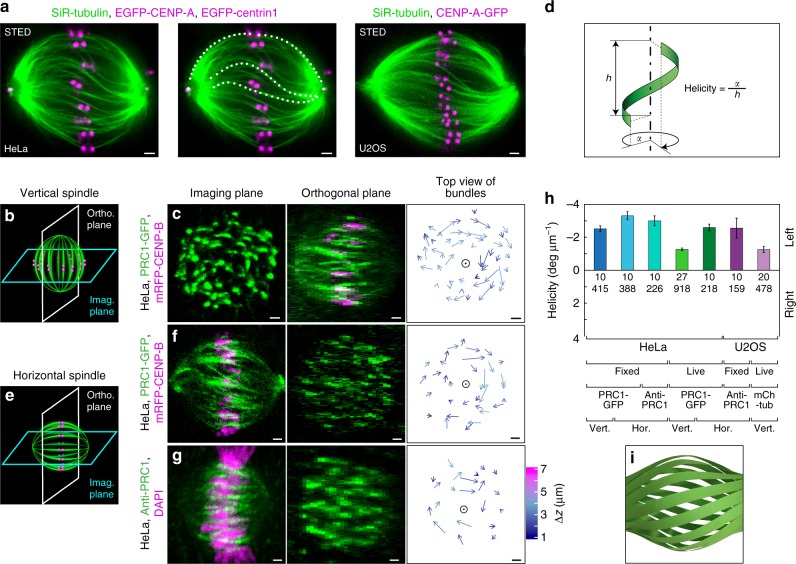
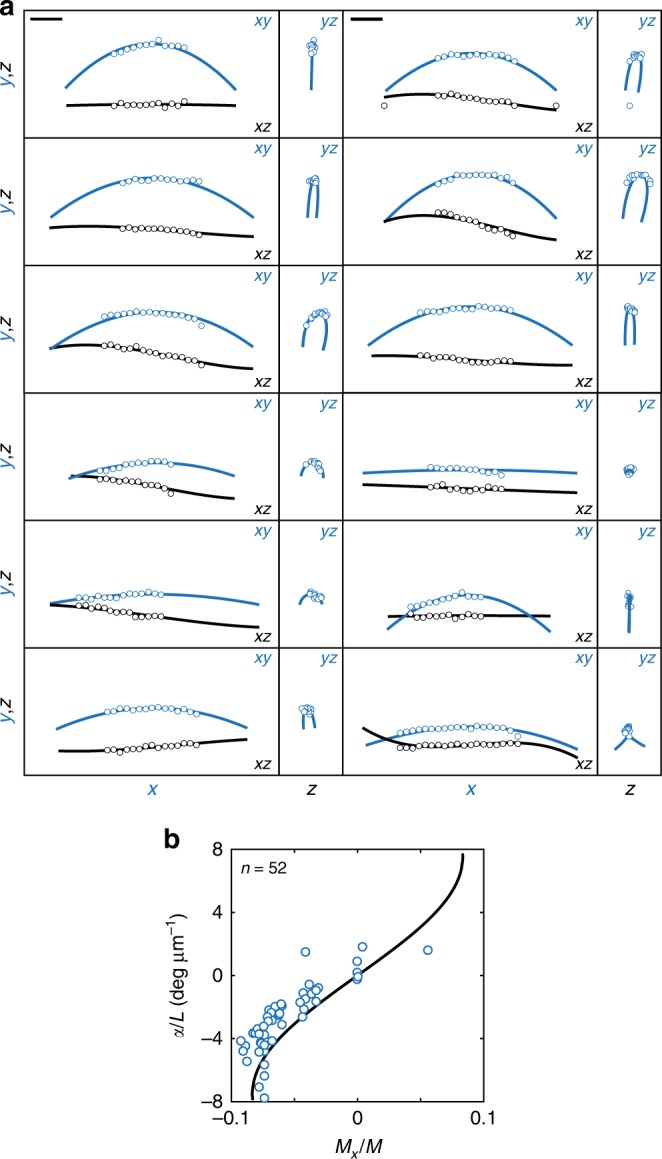
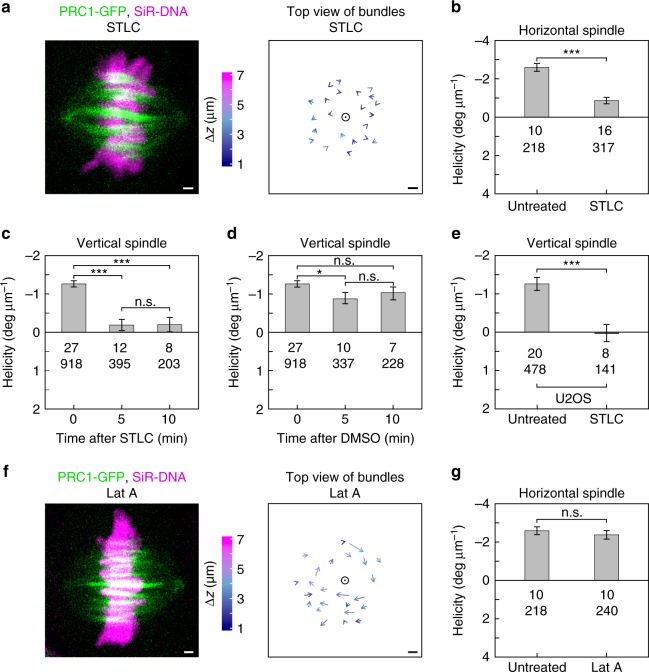
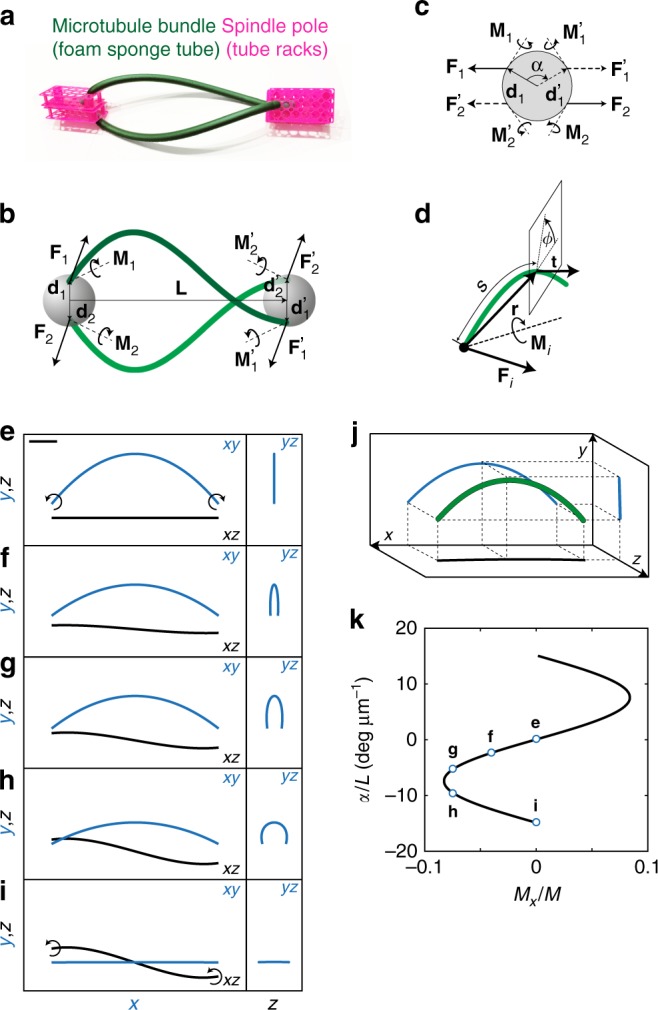
Mitosis relies on forces generated in the spindle, a micro-machine composed of microtubules and associated proteins. Forces are required for the congression of chromosomes to the metaphase plate and their separation in anaphase. However, besides forces, torques may exist in the spindle, yet they have not been investigated. Here we show that the spindle is chiral. Chirality is evident from the finding that microtubule bundles in human spindles follow a left-handed helical path, which cannot be explained by forces but rather by torques. Kinesin-5 (Kif11/Eg5) inactivation abolishes spindle chirality. Our theoretical model predicts that bending and twisting moments may generate curved shapes of bundles. We found that bundles turn by about -2 deg µm around the spindle axis, which we explain by a twisting moment of roughly -10 pNµm. We conclude that torques, in addition to forces, exist in the spindle and determine its chiral architecture.
有丝分裂依赖于纺锤体中产生的力,纺锤体是由微管和相关蛋白组成的微观机器。为了使染色体向中期板聚集并在后期分离,需要力。然而,除了力之外,纺锤体中可能还存在扭矩,但尚未进行研究。在这里,我们表明纺锤体是手性的。从以下发现可以明显看出微管束在人类纺锤体中遵循左手螺旋路径,这不能仅用力来解释,而必须用扭矩来解释。驱动蛋白-5(Kif11/Eg5)失活会破坏纺锤体的手性。我们的理论模型预测,弯曲和扭转力矩可能会产生束的弯曲形状。我们发现束在纺锤体轴周围旋转约-2°µm,我们通过大约-10 pNµm 的扭转力矩来解释这一点。我们得出结论,除了力之外,扭矩还存在于纺锤体中,并决定其手性结构。