Laboratory of Immunological and Tumour Models, Institute of Molecular Genetics of the Czech Academy of Sciences, v.v.i., Prague 4 142 20, Czech Republic.
Czech Centre for Phenogenomics, Institute of Molecular Genetics of the Czech Academy of Sciences, v.v.i., Prague 4 142 20, Czech Republic.
Int J Oncol. 2018 Nov;53(5):1997-2009. doi: 10.3892/ijo.2018.4553. Epub 2018 Sep 5.
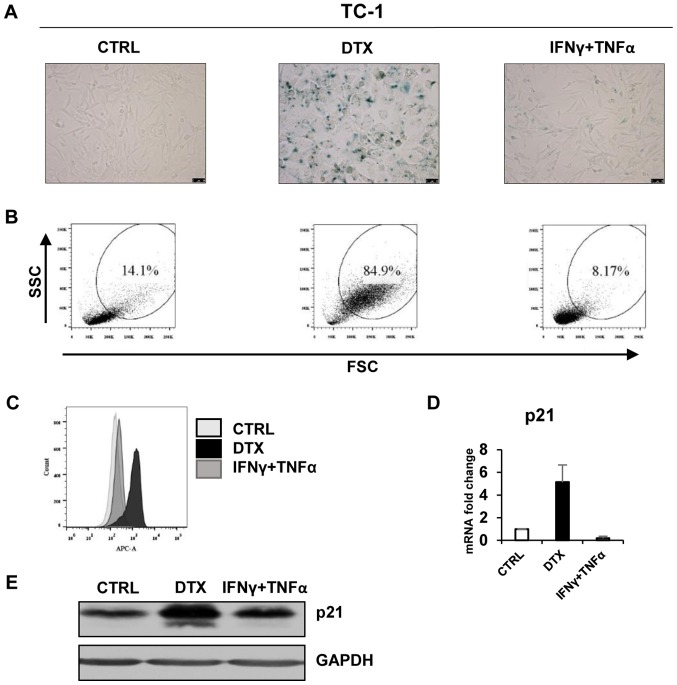
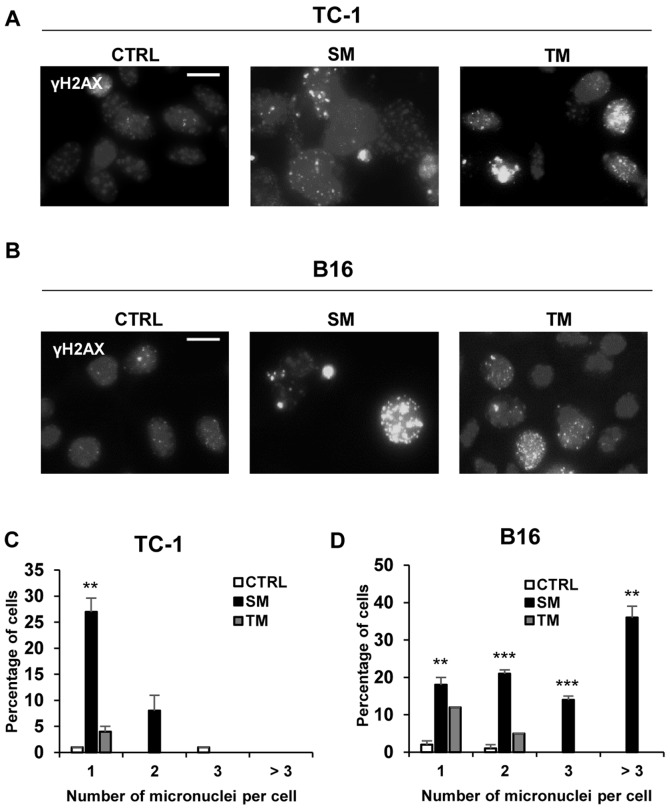
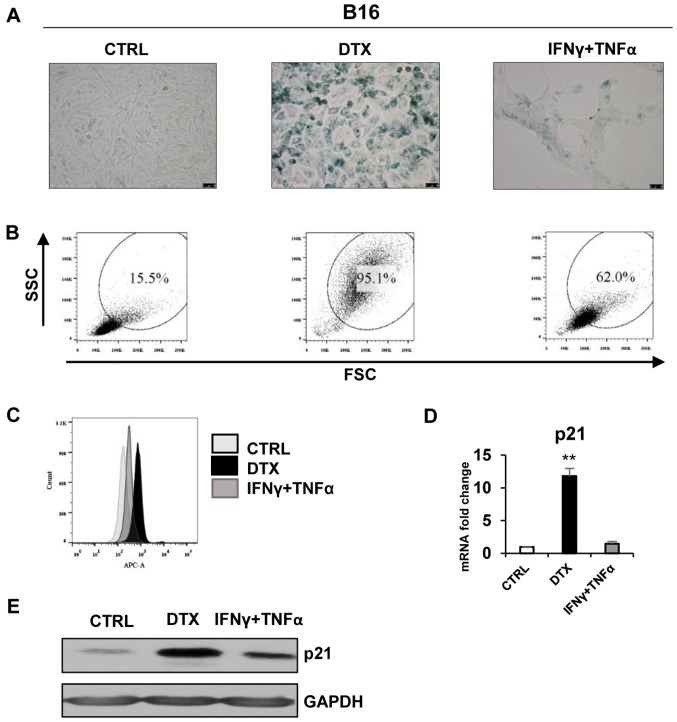
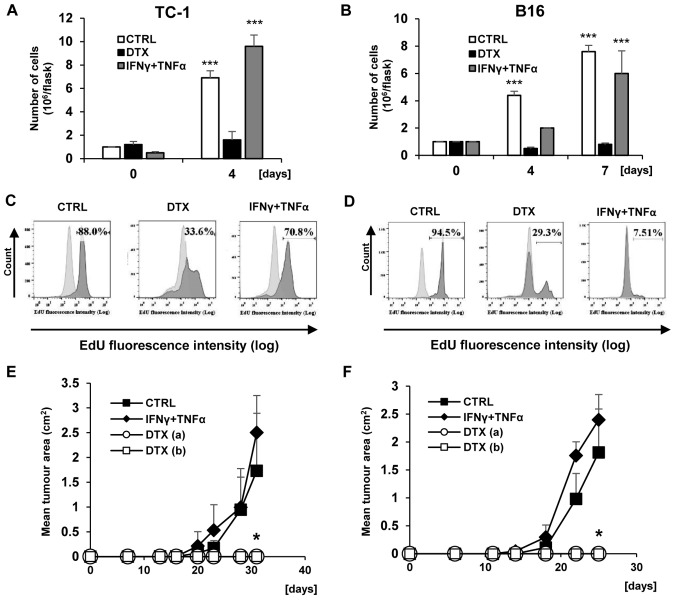
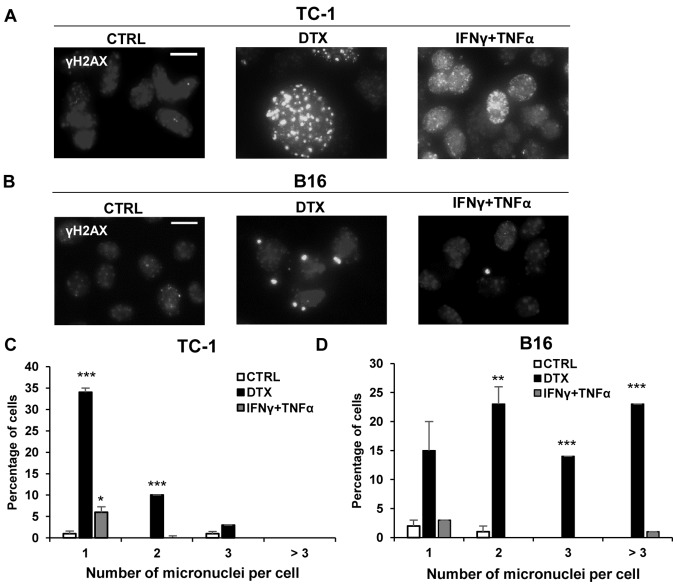
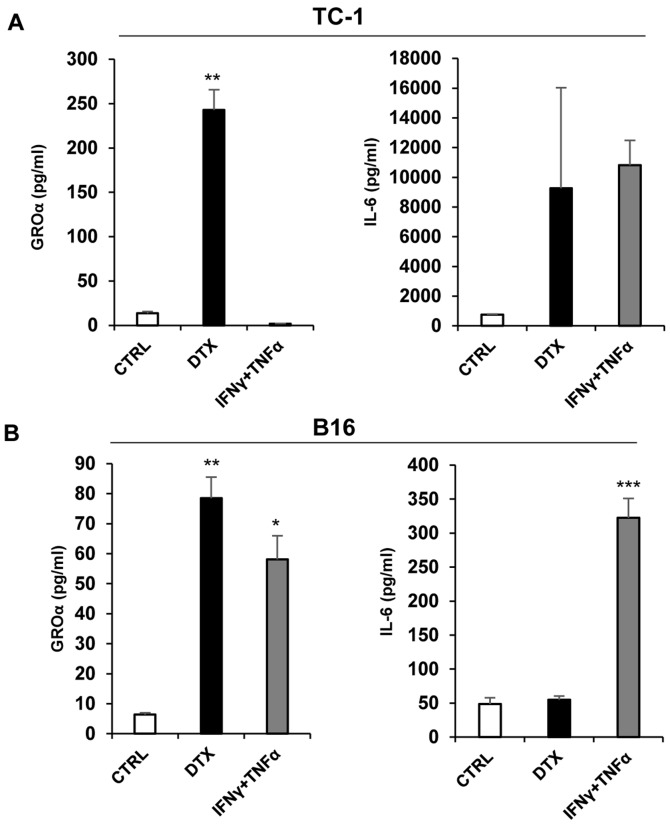
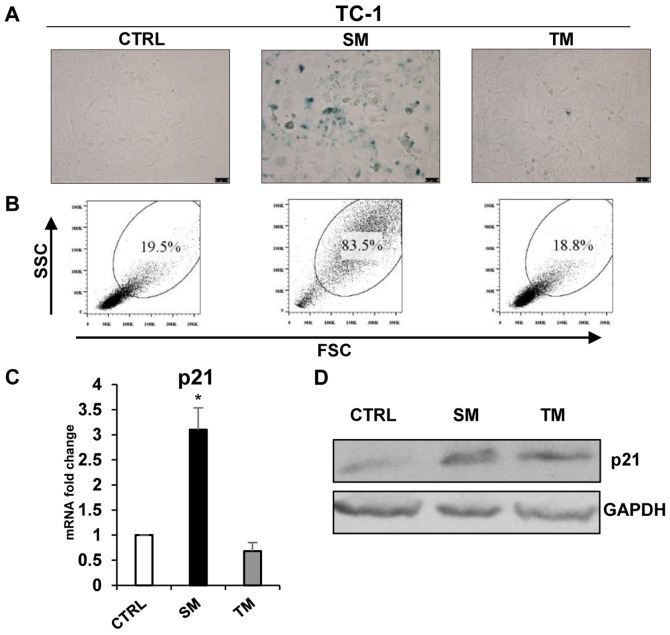
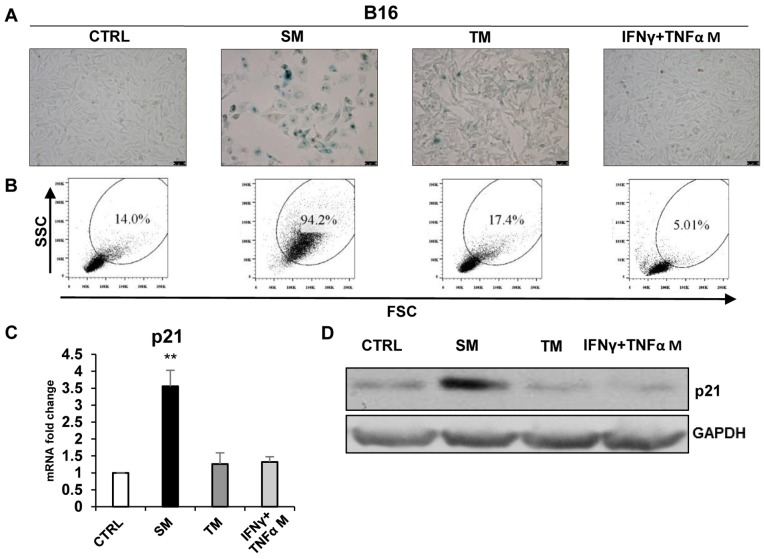
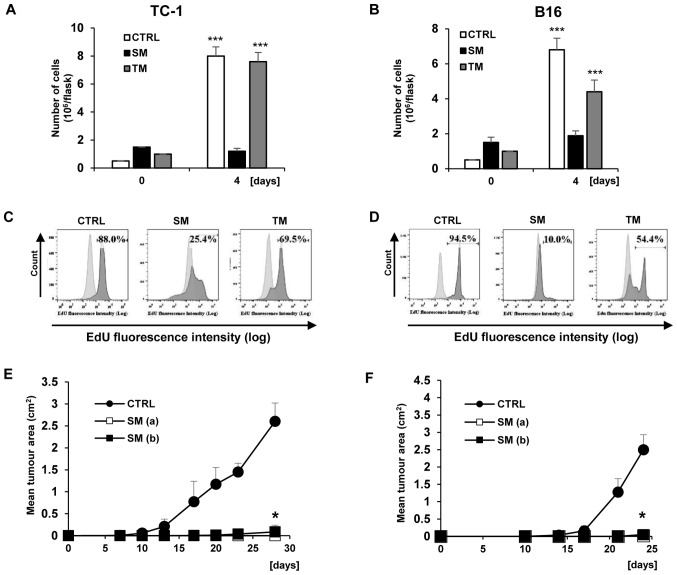
Cellular senescence is the process of the permanent proliferative arrest of cells in response to various inducers. It is accompanied by typical morphological changes, in addition to the secretion of bioactive molecules, including proinflammatory cytokines and chemokines [known as the senescence-associated secretory phenotype (SASP)]. Thus, senescent cells may affect their local environment and induce a so-called 'bystander' senescence through the state of SASP. The phenotypes of senescent cells are determined by the type of agent inducing cellular stress and the cell lineages. To characterise the phenotypes of senescent cancer cells, two murine cell lines were employed in the present study: TC-1 and B16F10 (B16) cells. Two distinct senescence inductors were used: Chemotherapeutic agent docetaxel (DTX) and a combination of immunomodulatory cytokines, including interferon γ (IFNγ) and tumour necrosis factor α (TNFα). It was demonstrated that DTX induced senescence in TC-1 and B16 tumour cell lines, which was demonstrated by growth arrest, positive β-galactosidase staining, increased p21Waf1 (p21) expression and the typical SASP capable of inducing a 'bystander' senescence. By contrast, treatment with a combination of T helper cell 1 cytokines, IFNγ and TNFα, induced proliferation arrest only in B16 cells. Despite the presence of certain characteristic features resembling senescent cells (proliferation arrest, morphological changes and increased p21 expression), these cells were able to form tumours in vivo and started to proliferate upon cytokine withdrawal. In addition, B16 cells were not able to induce a 'bystander' senescence. In summary, the present study described cell line- and treatment-associated differences in the phenotypes of senescent cells that may be relevant in optimization of cancer chemo- and immunotherapy.
细胞衰老(cellular senescence)是细胞对各种诱导剂的永久性增殖停滞的过程。除了生物活性分子(包括促炎细胞因子和趋化因子)的分泌外,它还伴随着典型的形态变化[称为衰老相关分泌表型(SASP)]。因此,衰老细胞可能会通过 SASP 状态影响其局部环境并诱导所谓的“旁观者”衰老。衰老细胞的表型由诱导细胞应激的试剂类型和细胞谱系决定。为了描述衰老癌细胞的表型,本研究使用了两种鼠细胞系:TC-1 和 B16F10(B16)细胞。使用了两种不同的衰老诱导剂:化疗药物多西他赛(DTX)和包括干扰素γ(IFNγ)和肿瘤坏死因子α(TNFα)在内的免疫调节细胞因子的组合。结果表明,DTX 诱导 TC-1 和 B16 肿瘤细胞系衰老,表现为生长停滞、β-半乳糖苷酶染色阳性、p21Waf1(p21)表达增加和具有诱导“旁观者”衰老能力的典型 SASP。相比之下,用 T 辅助细胞 1 细胞因子 IFNγ 和 TNFα 的组合处理仅在 B16 细胞中诱导增殖停滞。尽管存在某些类似衰老细胞的特征(增殖停滞、形态变化和 p21 表达增加),但这些细胞仍能在体内形成肿瘤,并在细胞因子撤回后开始增殖。此外,B16 细胞不能诱导“旁观者”衰老。总之,本研究描述了与细胞系和治疗相关的衰老细胞表型差异,这可能与癌症化疗和免疫治疗的优化相关。