Farncombe Family Digestive Health Research Institute, McMaster University, Hamilton, Ontario, Canada.
Department of Pathology and Molecular Medicine, McMaster University, Hamilton, Ontario, Canada.
Sci Rep. 2018 Sep 21;8(1):14184. doi: 10.1038/s41598-018-32366-6.
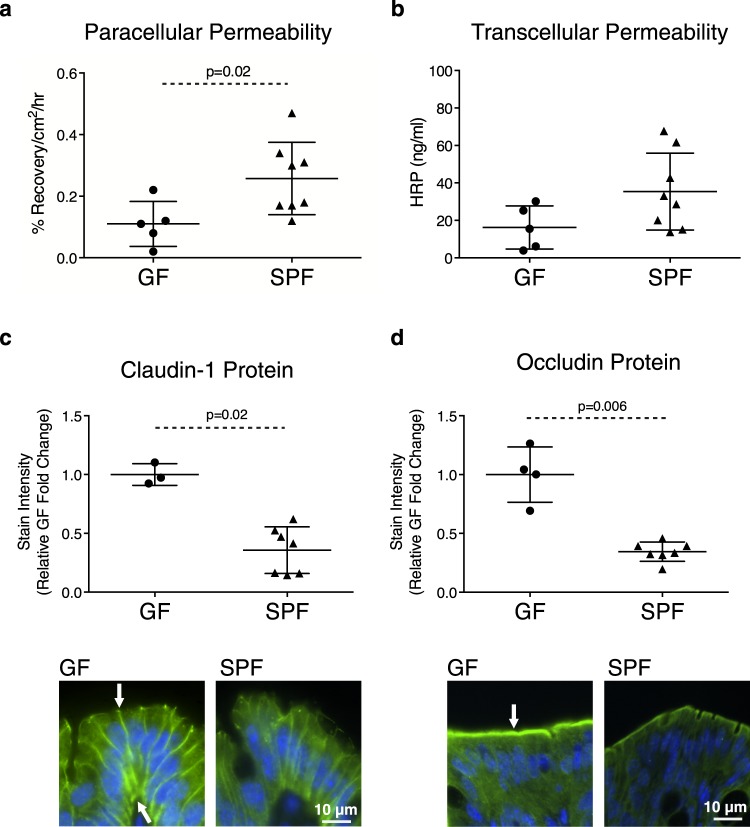
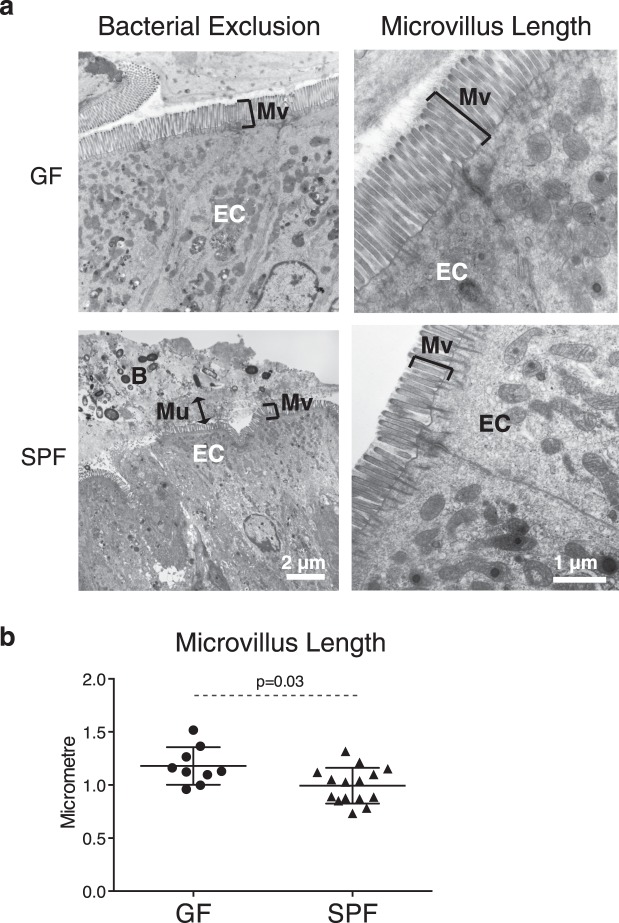
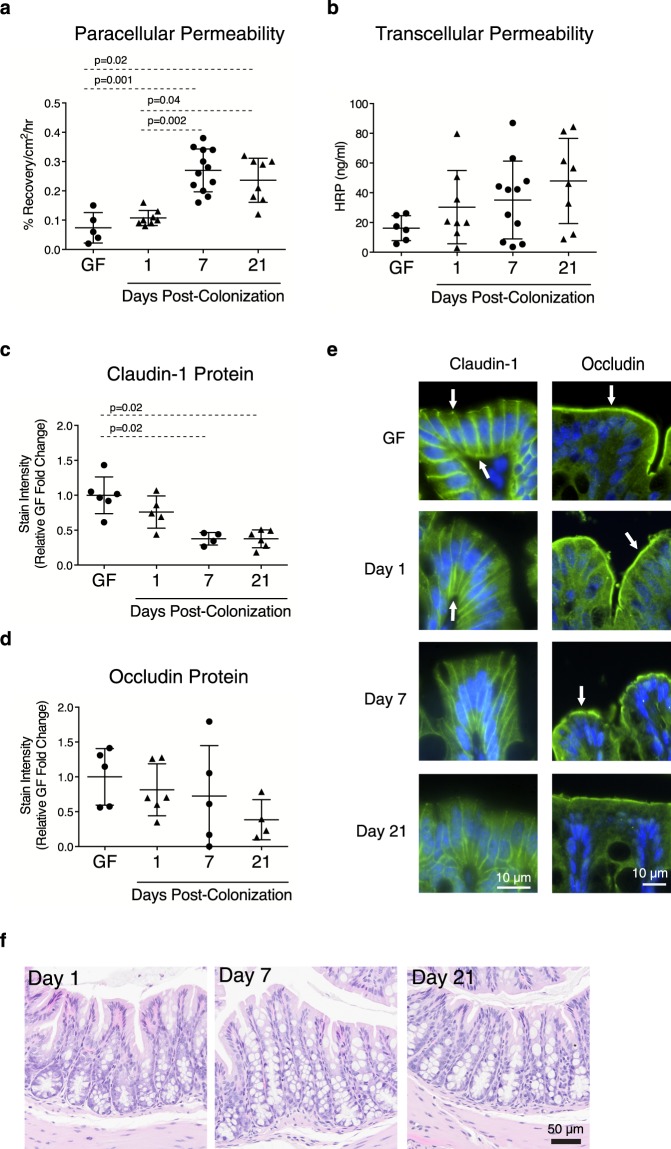
The intestinal barrier encompasses structural, permeability and immune aspects of the gut mucosa that, when disrupted, may contribute to chronic inflammation. Although gnotobiotic studies have demonstrated the effects of microbiota on mucosal and systemic immunity, as well as intestinal barrier architecture and innate immune characteristics, its impact on barrier function remains unclear. We compared germ-free and conventional mice, as well as mice colonized with human fecal microbiota that were followed for 21 days post-colonization. Colonic barrier structure was investigated by immunohistochemistry, molecular and electron microscopy techniques. Permeability was assessed in colon tissue by Ussing chambers, and by serum LPS and MDP detection using TLR4- and NOD2-NFκB reporter assays. Microbiota profile was determined by Illumina 16S rRNA gene sequencing. Low dose dextran sodium sulfate was administered to assess microbiota-induced barrier changes on resistance to colonic injury. Permeability to paracellular probes and mucus layer structure resembled that of conventional mice by day 7 post-colonization, coinciding with reduced claudin-1 expression and transient IL-18 production by intestinal epithelial cells. These post-colonization adaptations were associated with decreased systemic bacterial antigen exposure and reduced susceptibility to intestinal injury. In conclusion, commensal colonization promotes physiological barrier structural and functional adaptations that contribute to intestinal homeostasis.
肠道屏障包括肠道黏膜的结构、通透性和免疫方面,这些方面如果被破坏,可能会导致慢性炎症。虽然无菌动物研究已经证明了微生物群对黏膜和系统免疫以及肠道屏障结构和固有免疫特征的影响,但它对屏障功能的影响尚不清楚。我们比较了无菌和常规小鼠,以及定植了人类粪便微生物群的小鼠,这些小鼠在定植后 21 天进行了跟踪研究。通过免疫组织化学、分子和电子显微镜技术研究了结肠屏障结构。通过 Ussing 室和 TLR4 和 NOD2-NFκB 报告基因测定检测血清 LPS 和 MDP,评估了通透性。通过 Illumina 16S rRNA 基因测序确定了微生物组谱。用低剂量葡聚糖硫酸钠处理来评估微生物诱导的屏障变化对结肠损伤的抵抗力。定植后 7 天,肠道通透性和黏液层结构类似于常规小鼠,此时紧密连接蛋白-1 的表达减少,肠上皮细胞中 IL-18 的产生短暂增加。这些定植后的适应性与全身细菌抗原暴露减少和肠道损伤易感性降低有关。总之,共生定植促进了肠道屏障的生理性结构和功能适应性,有助于肠道的稳态。