Michelotti Julia M, Yeh Kenneth B, Beckham Tammy R, Colby Michelle M, Dasgupta Debanjana, Zuelke Kurt A, Olinger Gene G
MRI Global, Gaithersburg, MD 20878, USA.
College of Veterinary Medicine, Kansas State University, Manhattan, KS 66503, USA.
Trop Med Infect Dis. 2018 May 30;3(2):55. doi: 10.3390/tropicalmed3020055.
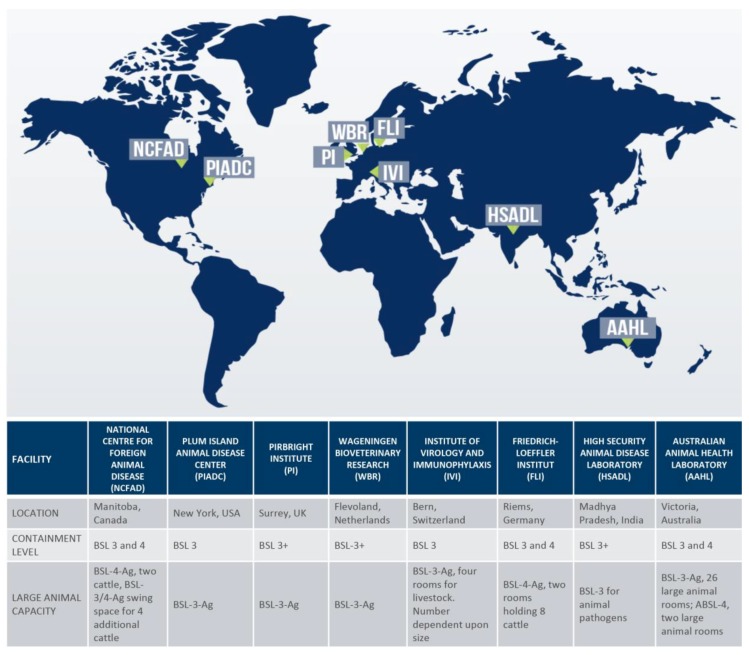
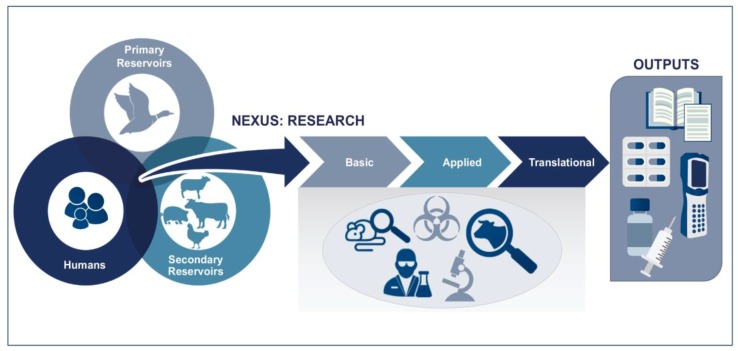
The World Health Organization (WHO) estimates that zoonotic diseases transmitted from animals to humans account for 75 percent of new and emerging infectious diseases. Globally, high-consequence pathogens that impact livestock and have the potential for human transmission create research paradoxes and operational challenges for the high-containment laboratories that conduct work with them. These specialized facilities are required for conducting all phases of research on high-consequence pathogens (basic, applied, and translational) with an emphasis on both the generation of fundamental knowledge and product development. To achieve this research mission, a highly-trained workforce is required and flexible operational methods are needed. In addition, working with certain pathogens requires compliance with regulations such as the Centers for Disease Control (CDC) and the U.S. Department of Agriculture (USDA) Select Agent regulations, which adds to the operational burden. The vast experience from the existing studies at Plum Island Animal Disease Center, other U.S. laboratories, and those in Europe and Australia with biosafety level 4 (BSL-4) facilities designed for large animals, clearly demonstrates the valuable contribution this capability brings to the efforts to detect, prepare, prevent and respond to livestock and potential zoonotic threats. To raise awareness of these challenges, which include biosafety and biosecurity issues, we held a workshop at the 2018 American Society for Microbiology (ASM) Biothreats conference to further discuss the topic with invited experts and audience participants. The workshop covered the subjects of research funding and metrics, economic sustainment of drug and vaccine development pipelines, workforce turnover, and the challenges of maintaining operational readiness of high containment laboratories.
世界卫生组织(WHO)估计,从动物传播给人类的人畜共患疾病占新出现传染病的75%。在全球范围内,影响家畜且有可能传播给人类的高后果病原体给从事相关研究的高防护实验室带来了研究悖论和操作挑战。开展高后果病原体各阶段研究(基础研究、应用研究和转化研究)都需要这些专门设施,重点是基础知识的生成和产品开发。为实现这一研究使命,需要一支训练有素的员工队伍和灵活的操作方法。此外,处理某些病原体需要遵守疾病控制中心(CDC)和美国农业部(USDA)的特定病原体法规等规定,这增加了操作负担。普卢姆岛动物疾病中心、美国其他实验室以及欧洲和澳大利亚拥有针对大型动物的四级生物安全(BSL - 4)设施的现有研究的丰富经验,清楚地表明了这种能力对检测、防范、预防和应对家畜及潜在人畜共患威胁所做的宝贵贡献。为提高对包括生物安全和生物安保问题在内的这些挑战的认识,我们在2018年美国微生物学会(ASM)生物威胁会议上举办了一次研讨会,与特邀专家和与会观众进一步讨论该主题。研讨会涵盖了研究资金和指标、药物和疫苗研发管道的经济可持续性、员工流动率以及维持高防护实验室操作准备状态的挑战等主题。