Department of Zoological Sciences, Addis Ababa University, PO. Box 1176, Addis Ababa, Ethiopia.
Unit of Chemical Ecology, Department of Plant Protection Biology, Swedish University of Agricultural Sciences, Alnarp, Sweden.
Malar J. 2018 Oct 5;17(1):351. doi: 10.1186/s12936-018-2499-7.
Understanding the ecology of exophilic anophelines is a key step toward developing outdoor control strategies to complement existing indoor control tools against malaria vectors. This study was conducted to assess the movement pattern of exophilic Anopheles mosquitoes between blood meal sources and resting habitats, and the landscape factors dictating their resting habitat choice.
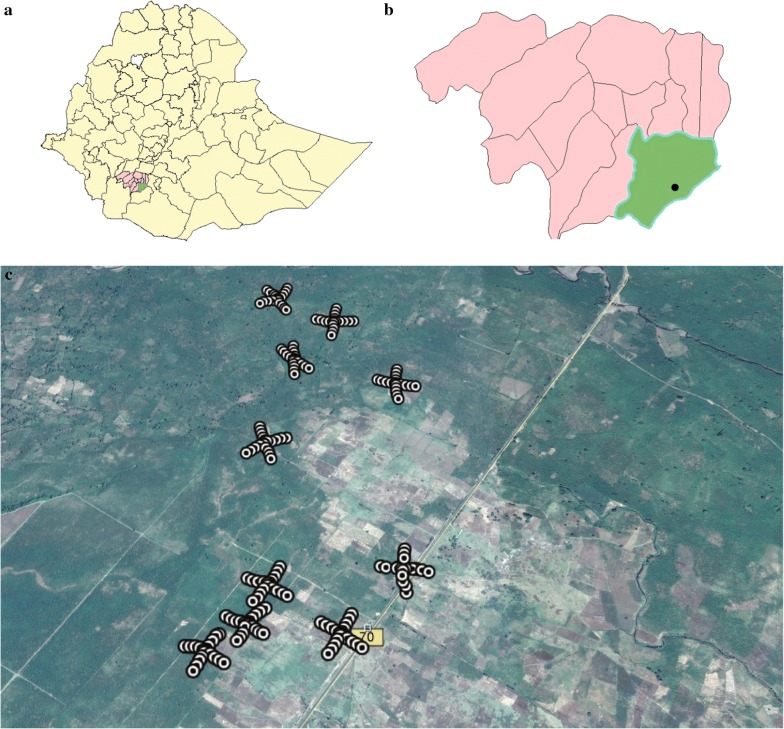
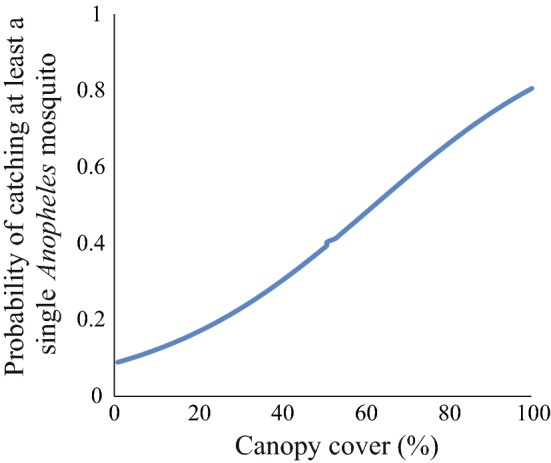
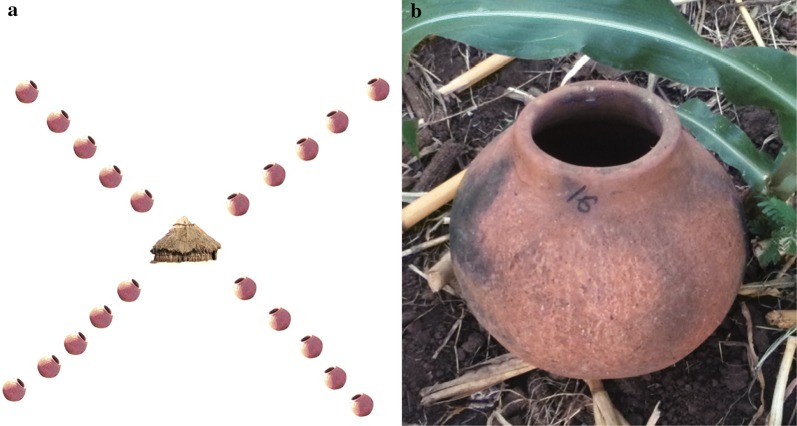
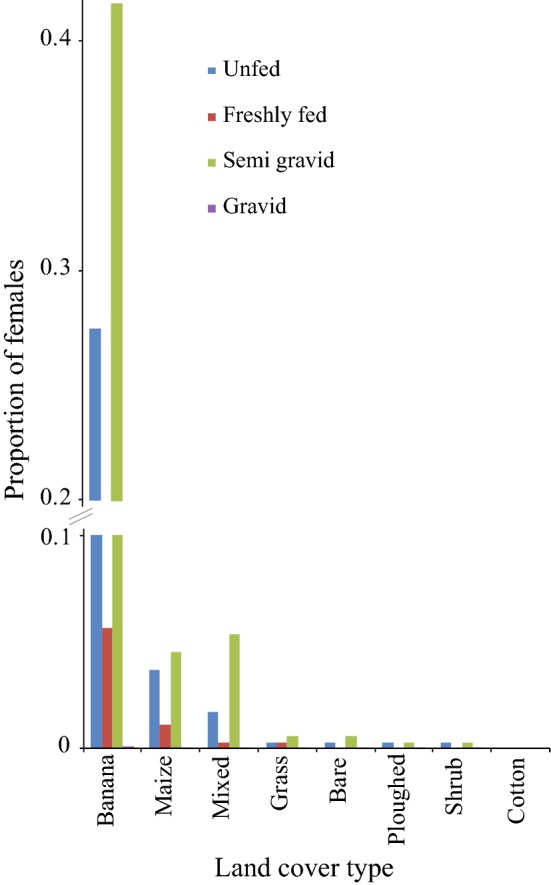
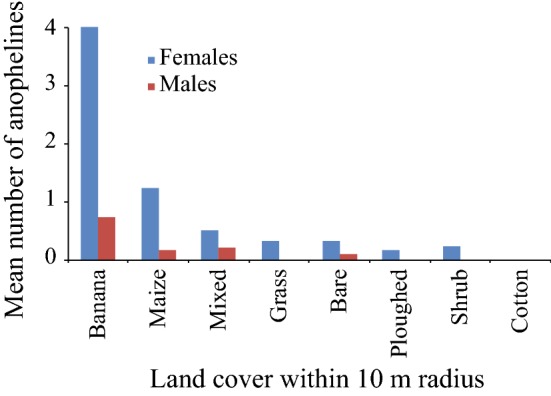
Resting clay pots were placed at 5 m, 25 m, 50 m, 75 m and 100 m away from isolated focal houses, radiating from them in four directions. The locations of the clay pots represent heterogeneous land cover types at a relatively fine spatial scale in the landscape. The effect of the landscape characters on the number of both female and male anophelines caught was modelled using zero-inflated negative binomial regression with a log link function. A total of 420 Anopheles mosquitoes (353 females and 67 males) belonging to three species; Anopheles arabiensis, Anopheles pharoensis, and Anopheles tenebrosus were caught in the resting clay pots, with An. arabiensis being the dominant species. Canopy cover, distance from the house, and land cover type were the significant landscape characters influencing the aggregation of resting mosquitoes. Both the count and binary models showed that canopy cover was the strongest predictor variable on the counts and the presence of Anopheles mosquitoes in the clay pots. Female Anopheles were most frequently found resting in the pots placed in banana plantations, and at sampling points that were at the greater distances (75 m and 100 m) from the focal house.
This study showed that exophilic Anopheles mosquitoes tend to rest in shaded areas some distance away from human habitation. These findings are important when targeting mosquitoes outdoors, complementing the existing effort being made to control malaria vectors indoors.
了解嗜人按蚊的生态学是制定户外控制策略的关键步骤,以补充现有的针对疟疾媒介的室内控制工具。本研究旨在评估嗜人按蚊在血源和栖息地之间的移动模式,以及决定其栖息地选择的景观因素。
在距离孤立的焦点房屋 5、25、50、75 和 100 米处,放置了用于休息的粘土罐,从这些房屋向四个方向辐射。粘土罐的位置代表了景观中相对较小空间尺度上的异质土地覆盖类型。使用具有对数链接函数的零膨胀负二项回归模型来模拟景观特征对捕获的雌性和雄性按蚊数量的影响。共捕获了 420 只按蚊(353 只雌性和 67 只雄性),分属于三个物种:阿比西尼亚按蚊、法罗按蚊和夜入按蚊,其中阿比西尼亚按蚊是优势种。冠层覆盖、距离房屋的距离和土地覆盖类型是影响栖息地中休息蚊子聚集的重要景观特征。计数和二元模型都表明,冠层覆盖是对计数和粘土罐中按蚊存在的最强预测变量。雌性按蚊最常被发现在香蕉种植园的罐子中休息,并且在距离焦点房屋更远的采样点(75 米和 100 米)被发现。
本研究表明,嗜人按蚊倾向于在远离人类居住的阴凉处休息。这些发现对于在户外针对蚊子非常重要,补充了现有的室内控制疟疾媒介的努力。