Gould Carlos F, Schlesinger Samuel, Toasa Andres Ochoa, Thurber Mark, Waters William F, Graham Jay P, Jack Darby W
Department of Environmental Health Science, Columbia University Mailman School of Public Health, New York, New York, USA.
Independent Consultant, Quito, Ecuador.
Energy Sustain Dev. 2018 Oct;46:111-122. doi: 10.1016/j.esd.2018.05.009. Epub 2018 Jun 27.
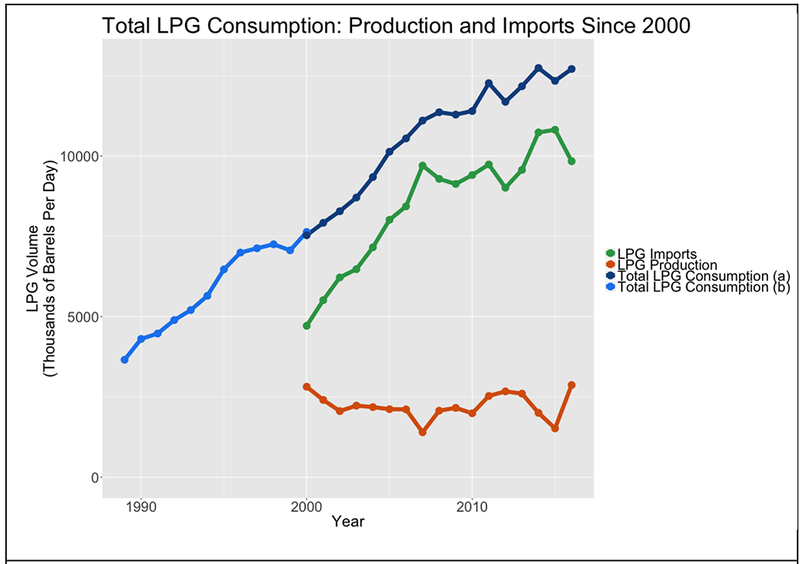
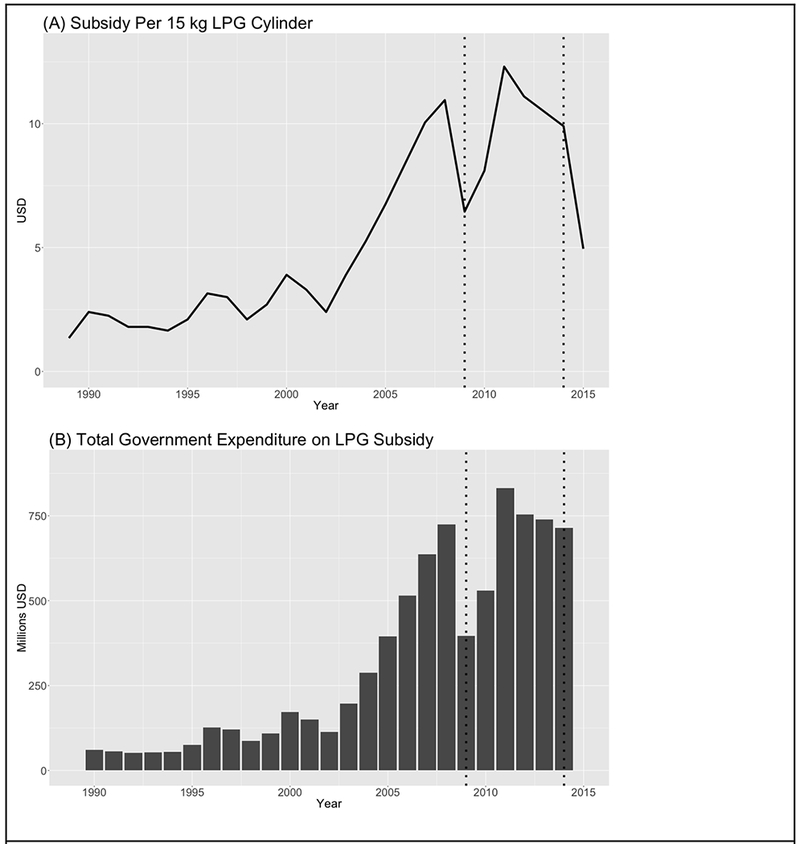
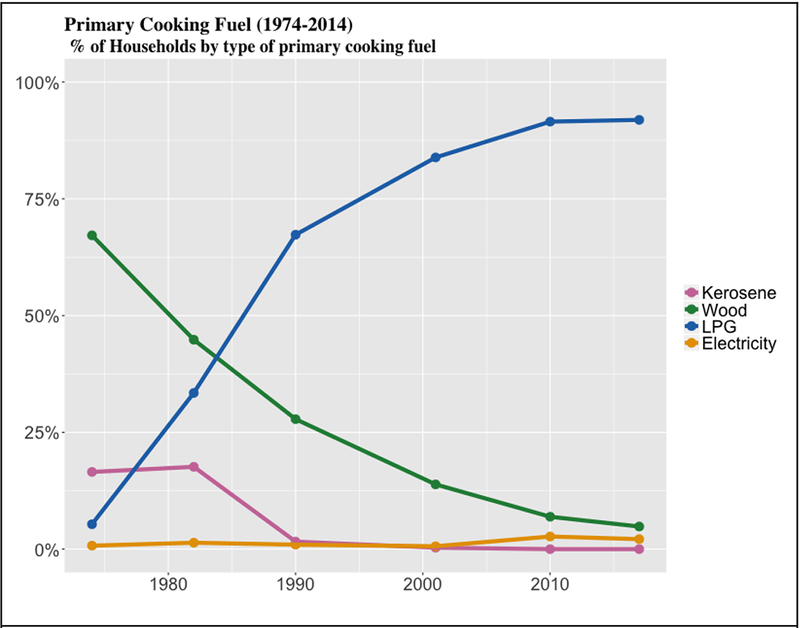
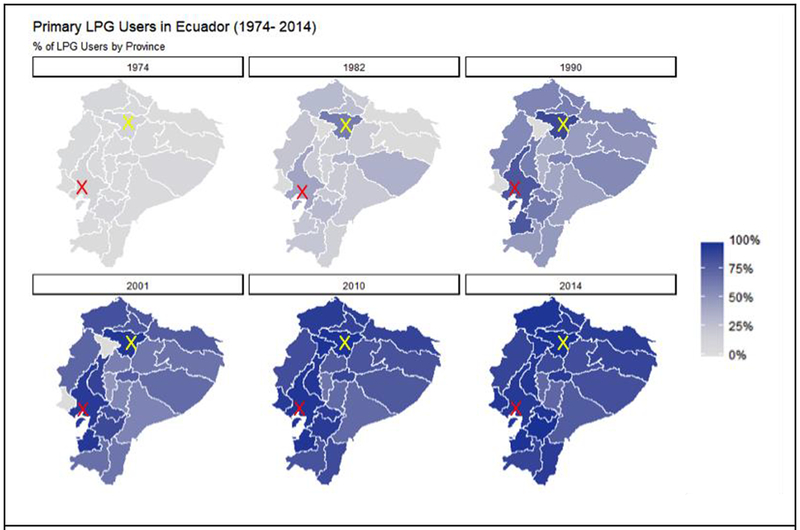
After more than three decades of access to low-cost liquefied petroleum gas (LPG) financed by large direct government subsidies, more than 90% of Ecuadorian households cook primarily with LPG. Due to the large fiscal burden of the LPG subsidy, increases in electricity from hydropower, and other sociopolitical factors, the Government of Ecuador launched a major induction stove program (PEC) to reduce the demand for LPG. We assess the effects of the LPG subsidies and PEC using government records, interviews, academic literature, newspaper reports, household surveys, and focus groups. Household surveys, conducted in rural, northern Ecuadorian households (n=383), characterized cooking patterns and fuel access. Focus groups (n=6) were carried out with a subset of surveyed households to better characterize survey findings. The LPG subsidy was developed as part of broad social support reforms in the early 1970s, without specific aims to reduce the health impacts of household air pollution from woodfuel or provide economic benefits as part of the transition to a clean cooking fuel. Nonetheless, the subsidy has resulted in nearly all Ecuadorian households cooking primarily with LPG. PEC has generated the sale of 740,000 induction stoves since its inception in 2014, short of the goal of 3.5 million. Among the rural households surveyed, LPG use, acceptance, and satisfaction was high, however, more than three-quarters of those surveyed reported weekly woodfuel use. Induction stove ownership (17%) and use as a primary cooking fuel (1%) was low among the rural households surveyed; furthermore, households owning induction stoves reported very low satisfaction with the stoves. Here we show that nationally-representative surveys reporting only "primary cooking fuef" use may underestimate solid fuel use as a supplemental household cooking energy, particularly in rural areas where fuel availability issues play a stronger role in decisions about what fuels to use.
在由政府直接提供大量补贴从而得以使用低成本液化石油气(LPG)三十多年后,超过90%的厄瓜多尔家庭主要使用LPG做饭。由于LPG补贴带来的巨大财政负担、水电发电量的增加以及其他社会政治因素,厄瓜多尔政府启动了一项重大的电磁炉项目(PEC)以减少对LPG的需求。我们利用政府记录、访谈、学术文献、报纸报道、家庭调查和焦点小组来评估LPG补贴和PEC的效果。在厄瓜多尔北部农村家庭(n = 383)中进行的家庭调查,对烹饪模式和燃料获取情况进行了描述。对一部分被调查家庭开展了焦点小组(n = 6),以更好地描述调查结果。LPG补贴是作为20世纪70年代初广泛社会支持改革的一部分而制定的,并非旨在减少木柴燃料造成的家庭空气污染对健康的影响,也不是作为向清洁烹饪燃料过渡的一部分提供经济利益。尽管如此,补贴已使几乎所有厄瓜多尔家庭主要使用LPG做饭。自2014年启动以来,PEC已售出74万台电磁炉,未达到350万台的目标。在接受调查的农村家庭中,LPG的使用、接受度和满意度都很高,然而,超过四分之三的受访者表示每周使用木柴燃料。在接受调查的农村家庭中,电磁炉的拥有率(17%)和作为主要烹饪燃料的使用率(1%)较低;此外,拥有电磁炉的家庭对这些炉灶的满意度非常低。我们在此表明,仅报告“主要烹饪燃料”使用情况的全国代表性调查可能会低估固体燃料作为家庭补充烹饪能源的使用情况,特别是在农村地区,燃料供应问题在燃料使用决策中发挥着更大作用。