Ooe Emi, Kuse Yoshiki, Yako Tomohiro, Sogon Tetsuya, Nakamura Shinsuke, Hara Hideaki, Shimazawa Masamitsu
Molecular Pharmacology, Department of Biofunctional Evaluation, Gifu Pharmaceutical University, Gifu, Japan.
Wakasa Seikatsu Co. Ltd, 22 Naginataboko-cho, Shijo-Karasuma, Shimogyo-ku, Kyoto, Japan.
Mol Vis. 2018 Sep 24;24:621-632. eCollection 2018.
The purpose of this study was to investigate the effects of bilberry extract with its anthocyanins on retinal photoreceptor cell damage and on the endoplasmic reticulum (ER) stress induced by exposure to blue light-emitting diode (LED) light.
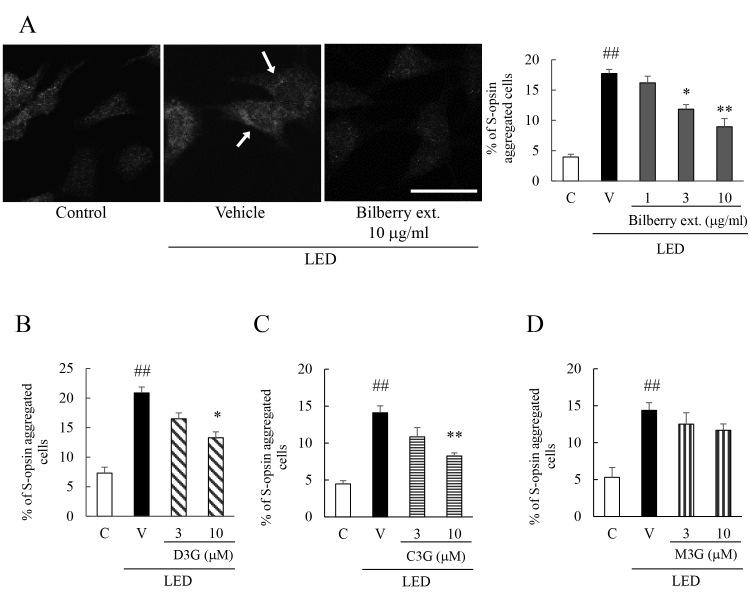
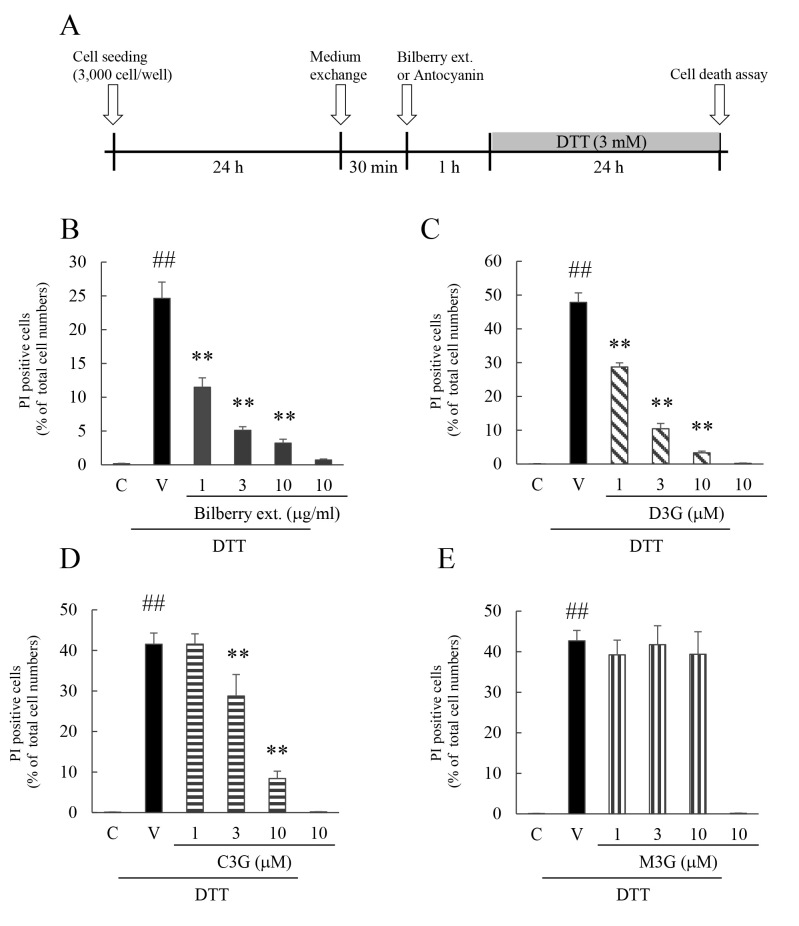
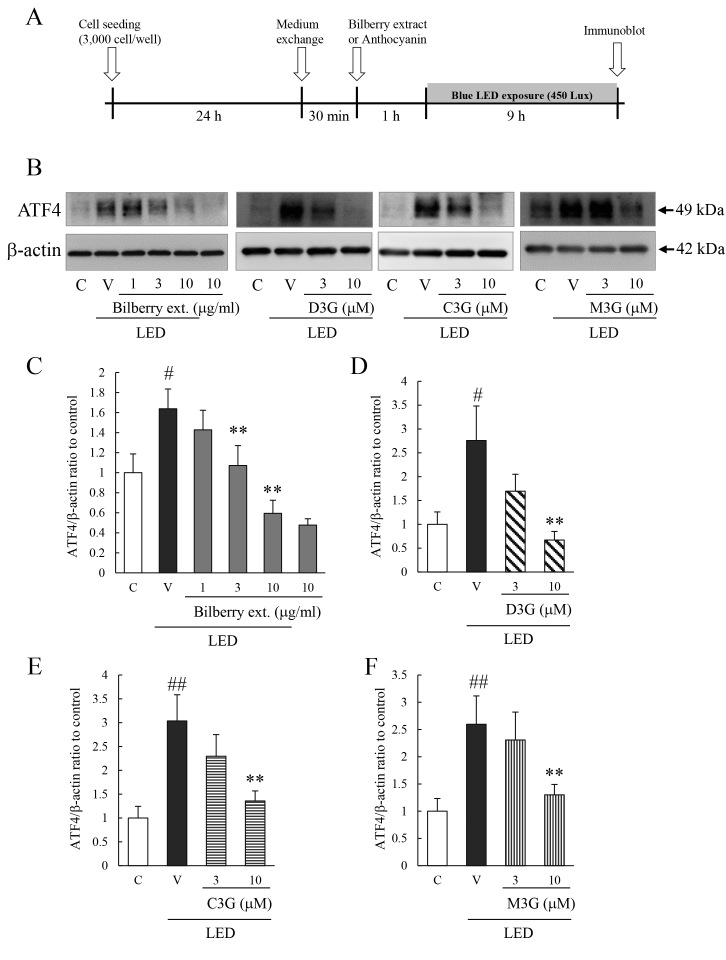
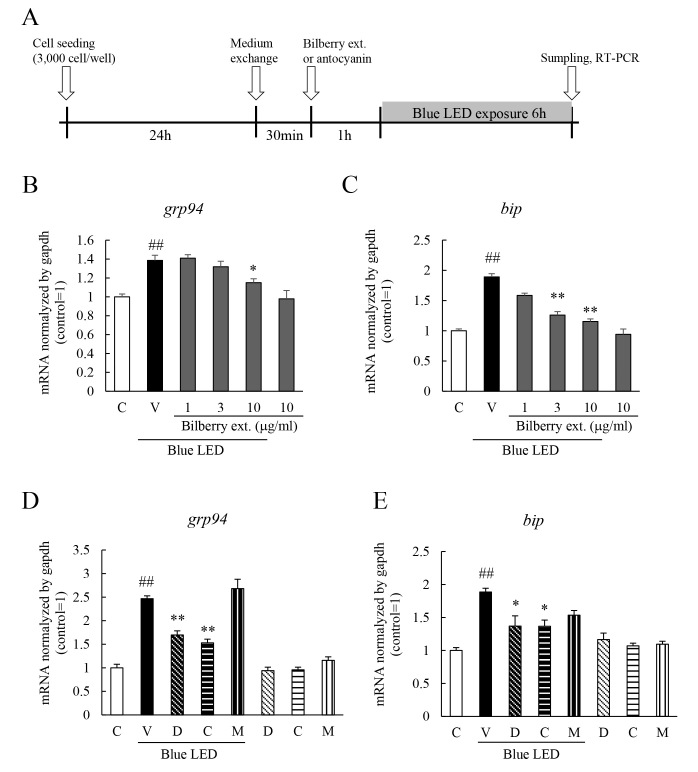
Cultured murine photoreceptor cells (661W) were exposed to blue LED light with or without bilberry extract or its anthocyanins in the culture media. Aggregated short-wavelength opsin (S-opsin) in murine photoreceptor cells was observed with immunostaining. The expression of factors involved in the unfolded protein response was examined with immunoblot analysis and quantitative real-time reverse transcription (RT)-PCR. Furthermore, cell death was observed with double staining with Hoechst 33342 and propidium iodide after dithiothreitol (DTT) treatment.
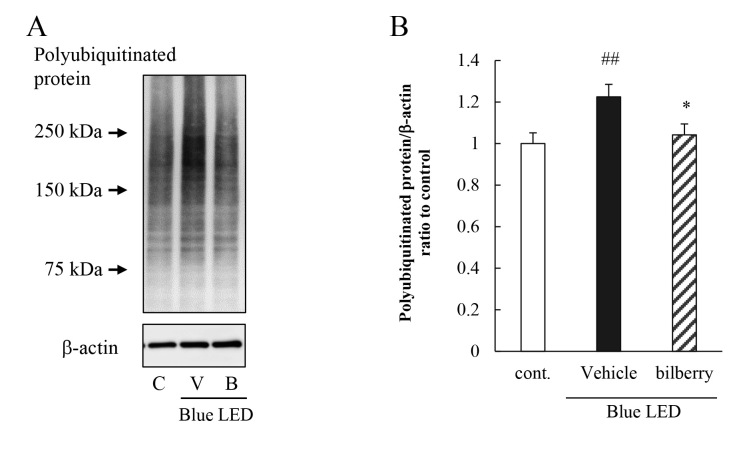
Bilberry extract and anthocyanins suppressed the aggregation of S-opsin, activation of ATF4, and expression of the mRNA of the factors associated with the unfolded protein response (UPR). In addition, bilberry extract and the anthocyanins inhibited the death of photoreceptor cells induced by DTT, an ER stress inducer.
These findings suggest that bilberry extract containing anthocyanins can alter the effects of blue LED light and DTT-induced retinal photoreceptor cell damage. These effects were achieved by modulating the activation of ATF4 and through the suppression of the abnormal aggregation of S-opsin.
本研究旨在探讨越橘提取物及其花青素对视网膜光感受器细胞损伤以及对暴露于蓝光发光二极管(LED)光所诱导的内质网(ER)应激的影响。
将培养的小鼠光感受器细胞(661W)在含有或不含有越橘提取物或其花青素的培养基中暴露于蓝光LED光下。通过免疫染色观察小鼠光感受器细胞中聚集的短波视蛋白(S-视蛋白)。用免疫印迹分析和定量实时逆转录(RT)-PCR检测参与未折叠蛋白反应的因子的表达。此外,在二硫苏糖醇(DTT)处理后,用Hoechst 33342和碘化丙啶双重染色观察细胞死亡情况。
越橘提取物和花青素抑制了S-视蛋白的聚集、ATF4的激活以及与未折叠蛋白反应(UPR)相关因子的mRNA表达。此外,越橘提取物和花青素抑制了由ER应激诱导剂DTT所诱导的光感受器细胞死亡。
这些发现表明,含有花青素的越橘提取物可以改变蓝光LED光和DTT诱导的视网膜光感受器细胞损伤的效应。这些效应是通过调节ATF4的激活以及抑制S-视蛋白的异常聚集而实现的。