Wang Jingjing, Jiao Yajing, Shao Yiran
Key Laboratory of Inorganic Coating Materials CAS, Shanghai Institute of Ceramics, Chinese Academy of Sciences, Shanghai 200050, China.
University of Chinese Academy of Sciences, Beijing 100049, China.
Materials (Basel). 2018 Oct 19;11(10):2041. doi: 10.3390/ma11102041.
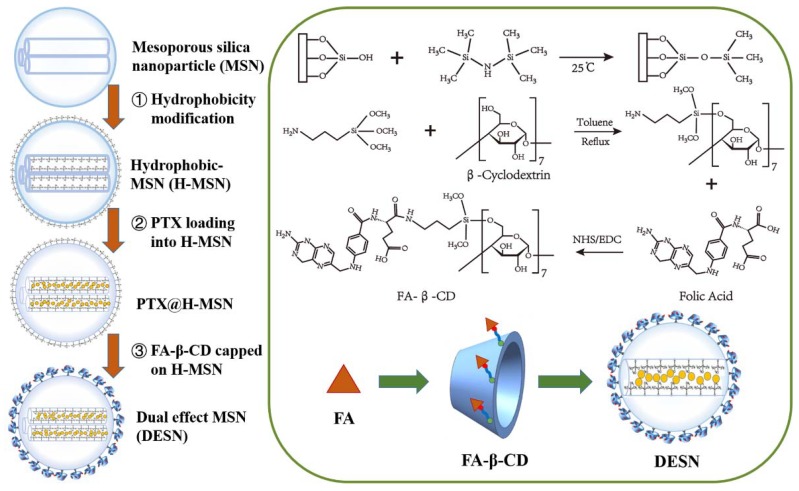
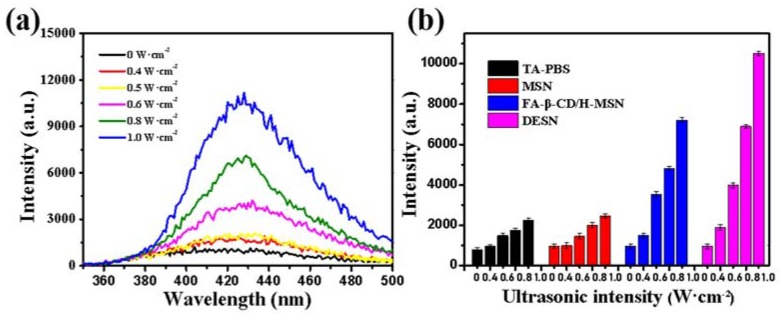
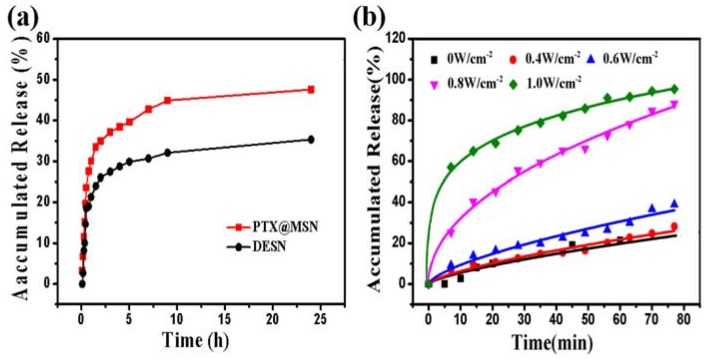
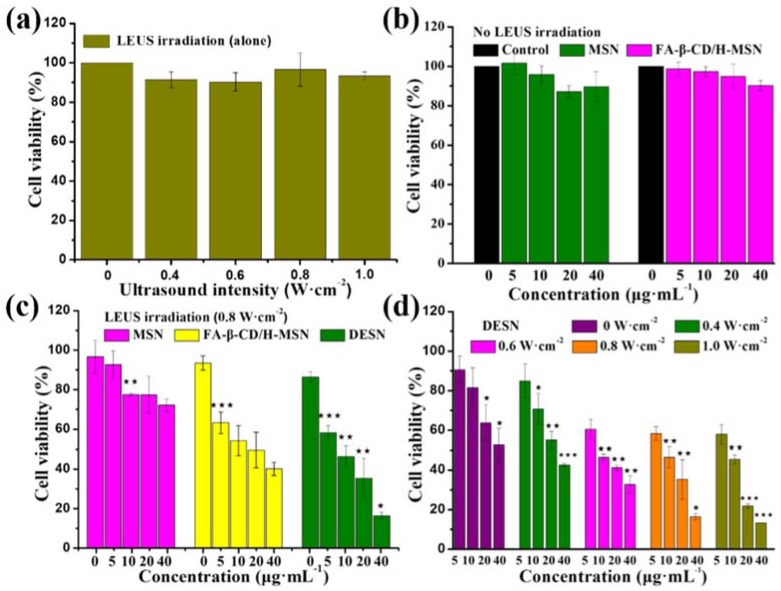
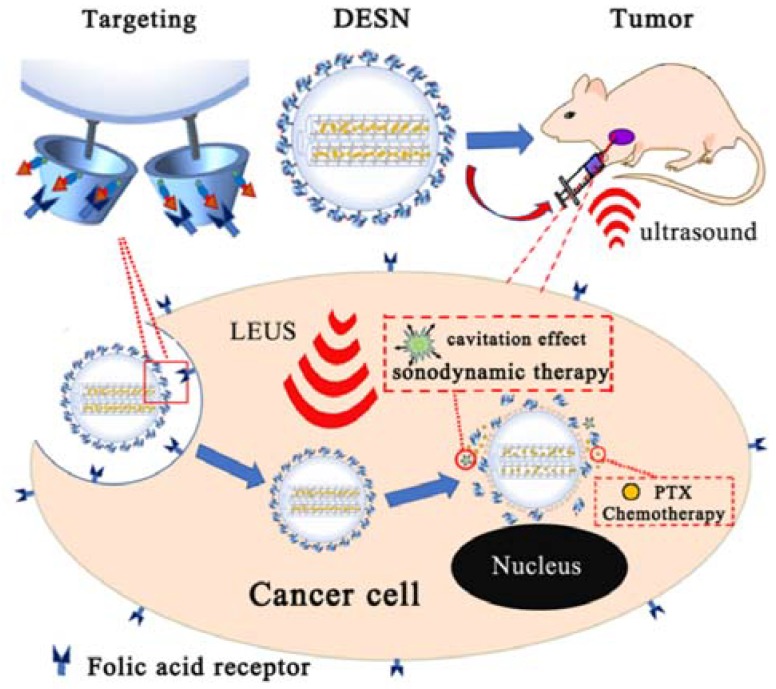
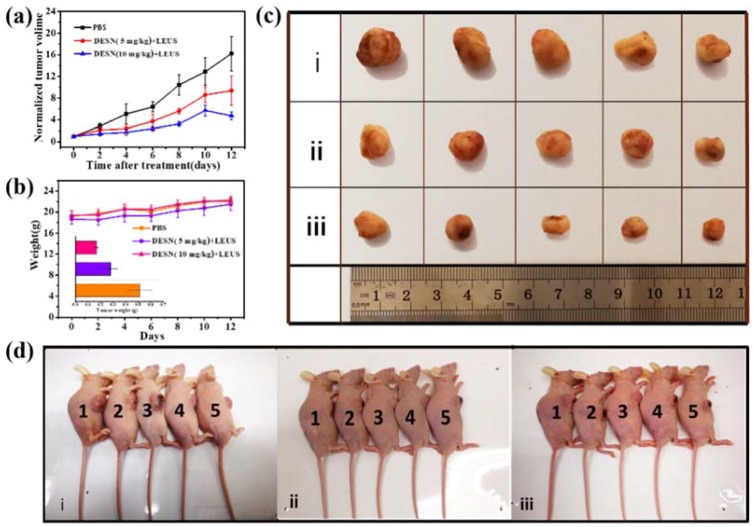
Low-energy ultrasound (LEUS), exhibiting obvious advantages as a safe therapeutic strategy, would be promising for cancer therapy. We had synthesized a LEUS-responsive targeted drug delivery system based on functional mesoporous silica nanoparticle for cancer therapy. Paclitaxel (PTX) was loaded in mesoporous silica nanoparticles with a hydrophobic internal channel, and folic acid (FA) functionalized β-Cyclodextrin (β-CD) was capped on the surface of the nanoparticles (DESN), which acted as a cancer-targeting moiety and solubilizer. The existence of a hydrophobic internal channel in the DESN was beneficial to the storage of hydrophobic PTX, along with the enhancement of the cavitation effect produced by mild low-energy ultrasound (LEUS, ≤1.0 W/cm², 1 MHz). The DESN showed significantly enhanced cavitation effect, selective targeting, and achieved a rapid drug release under mild LEUS. To investigate the in vivo antitumor efficacy of the DESN upon LEUS irradiation, we established a 4T1 mammary tumor model. The DESN were confirmed to be of great biodegradability/biocompatibility. The tumor growth was significantly inhibited when the mice were treated with DESN (10 mg/kg) + LEUS with the relative tumor volume reduced to 4.72 ± 0.70 compared with the control group (V/V₀ = 17.12 ± 2.75). The DESN with LEUS represented excellent inhibiting effect on tumor cell in vivo. This work demonstrated that DESN mediating dual mode chemo-sonodynamic therapy could be triggered by extracorporeal remote control, may suggest a promising clinical application in cancer therapy.
低能量超声(LEUS)作为一种安全的治疗策略具有明显优势,在癌症治疗方面前景广阔。我们合成了一种基于功能性介孔二氧化硅纳米颗粒的LEUS响应型靶向药物递送系统用于癌症治疗。紫杉醇(PTX)被负载于具有疏水内部通道的介孔二氧化硅纳米颗粒中,叶酸(FA)功能化的β-环糊精(β-CD)封端于纳米颗粒表面(DESN),其作为癌症靶向部分和增溶剂。DESN中疏水内部通道的存在有利于疏水PTX的储存,同时增强了温和低能量超声(LEUS,≤1.0 W/cm²,1 MHz)产生的空化效应。DESN表现出显著增强的空化效应、选择性靶向性,并在温和的LEUS作用下实现快速药物释放。为了研究DESN在LEUS照射下的体内抗肿瘤疗效,我们建立了4T1乳腺肿瘤模型。证实DESN具有良好的生物降解性/生物相容性。当用DESN(10 mg/kg)+LEUS治疗小鼠时,肿瘤生长受到显著抑制,相对肿瘤体积降至4.72±0.70,而对照组为(V/V₀ = 17.12±2.75)。DESN联合LEUS在体内对肿瘤细胞表现出优异的抑制作用。这项工作表明,DESN介导的双模化学-声动力疗法可由体外远程控制触发,可能在癌症治疗中具有广阔的临床应用前景。