
用于治疗和诊断的物理刺激响应性纳米颗粒。
Physically stimulus-responsive nanoparticles for therapy and diagnosis.
作者信息
Farjadian Fatemeh, Ghasemi Soheila, Akbarian Mohsen, Hoseini-Ghahfarokhi Mojtaba, Moghoofei Mohsen, Doroudian Mohammad
机构信息
Pharmaceutical Sciences Research Center, School of Pharmacy, Shiraz University of Medical Sciences, Shiraz, Iran.
Department of Chemistry, College of Sciences, Shiraz University, Shiraz, Iran.
出版信息
Front Chem. 2022 Sep 14;10:952675. doi: 10.3389/fchem.2022.952675. eCollection 2022.
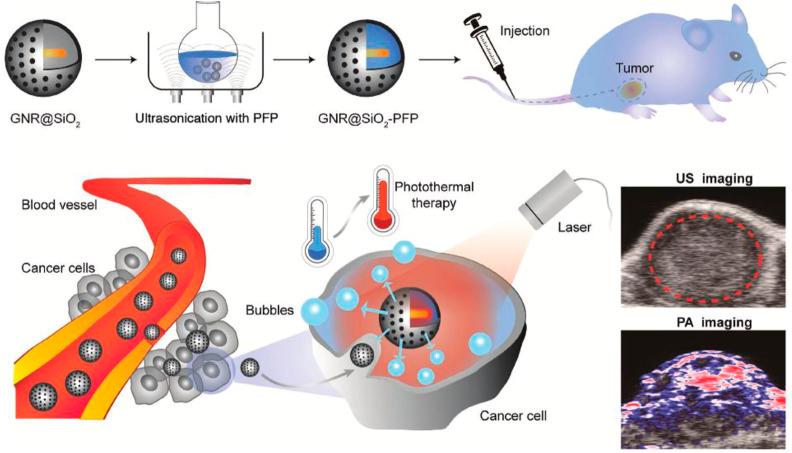
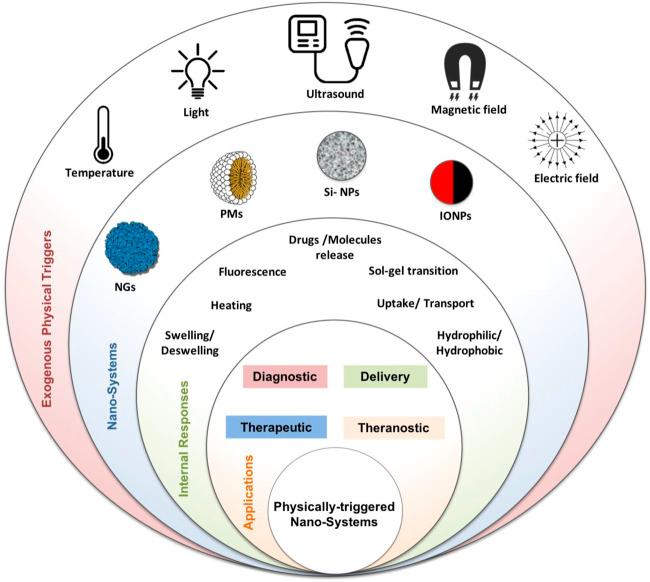
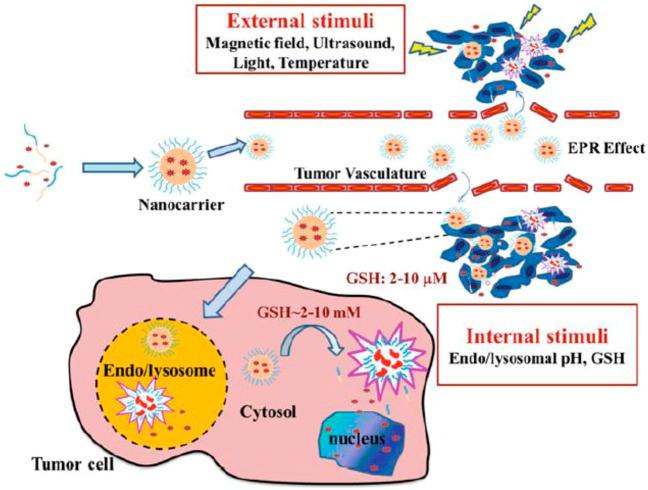
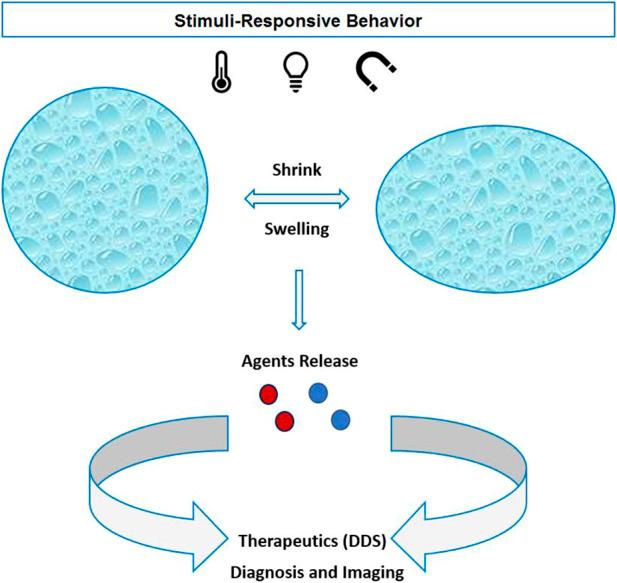
Nanoparticles offer numerous advantages in various fields of science, particularly in medicine. Over recent years, the use of nanoparticles in disease diagnosis and treatments has increased dramatically by the development of stimuli-responsive nano-systems, which can respond to internal or external stimuli. In the last 10 years, many preclinical studies were performed on physically triggered nano-systems to develop and optimize stable, precise, and selective therapeutic or diagnostic agents. In this regard, the systems must meet the requirements of efficacy, toxicity, pharmacokinetics, and safety before clinical investigation. Several undesired aspects need to be addressed to successfully translate these physical stimuli-responsive nano-systems, as biomaterials, into clinical practice. These have to be commonly taken into account when developing physically triggered systems; thus, also applicable for nano-systems based on nanomaterials. This review focuses on physically triggered nano-systems (PTNSs), with diagnostic or therapeutic and theranostic applications. Several types of physically triggered nano-systems based on polymeric micelles and hydrogels, mesoporous silica, and magnets are reviewed and discussed in various aspects.
纳米颗粒在科学的各个领域都具有诸多优势,尤其是在医学领域。近年来,随着可对内部或外部刺激做出响应的刺激响应性纳米系统的发展,纳米颗粒在疾病诊断和治疗中的应用急剧增加。在过去十年中,针对物理触发纳米系统开展了许多临床前研究,以开发和优化稳定、精确且具有选择性的治疗或诊断剂。在这方面,这些系统在进行临床研究之前必须满足疗效、毒性、药代动力学和安全性等要求。要成功地将这些作为生物材料的物理刺激响应性纳米系统转化为临床应用,需要解决几个不理想的方面。在开发物理触发系统时通常必须考虑这些方面;因此,它们也适用于基于纳米材料的纳米系统。本综述重点关注具有诊断或治疗以及诊疗应用的物理触发纳米系统(PTNSs)。基于聚合物胶束和水凝胶、介孔二氧化硅以及磁体的几种类型的物理触发纳米系统将在各个方面进行综述和讨论。
 Zotero 插件