Key Laboratory of Agriculture Animal Genetics, Breeding and Reproduction of Ministry of Education, College of Animal Science, Huazhong Agricultural University, Wuhan 430070, China.
The Cooperative Innovation Center for Sustainable Pig Production, Huazhong Agricultural University, Wuhan 430070, China.
Int J Mol Sci. 2018 Nov 2;19(11):3445. doi: 10.3390/ijms19113445.
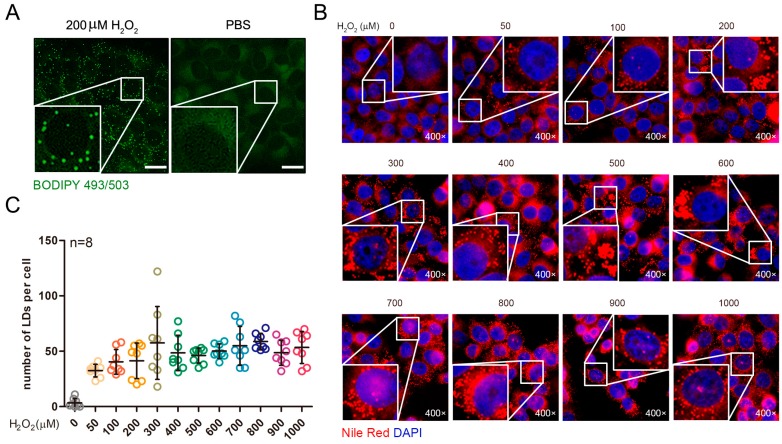
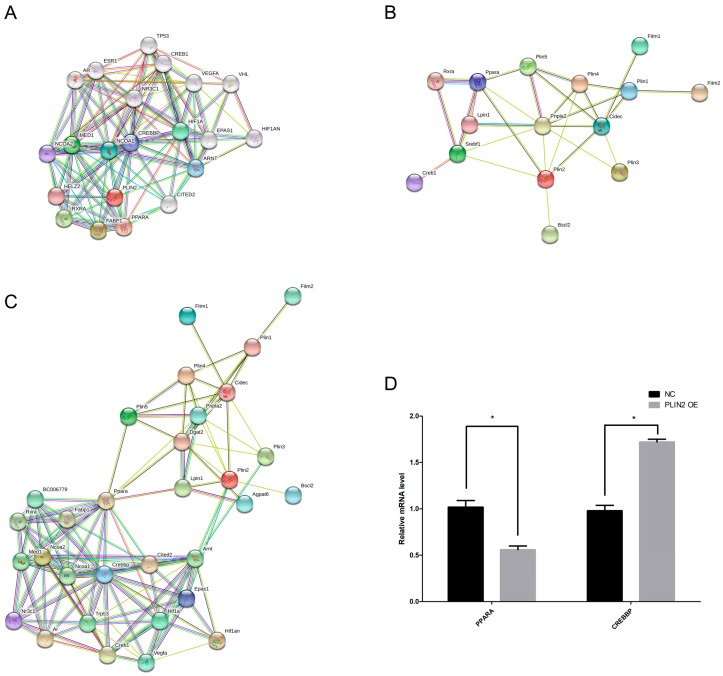
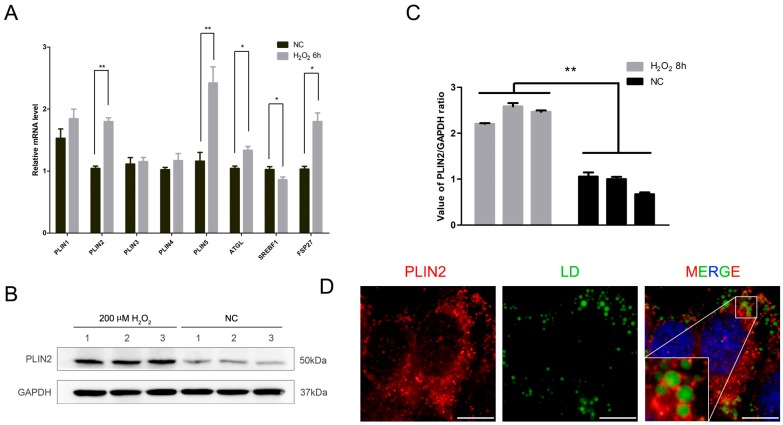
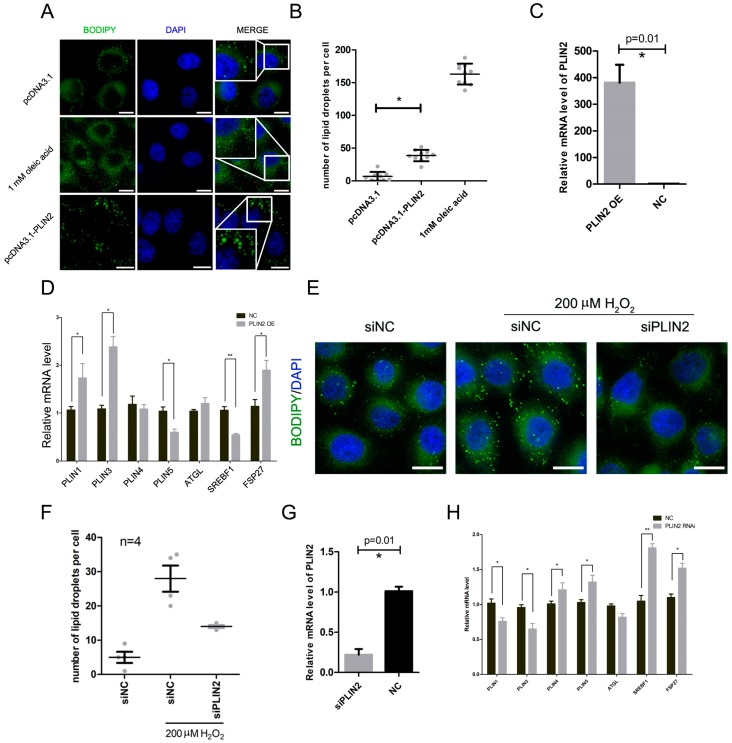
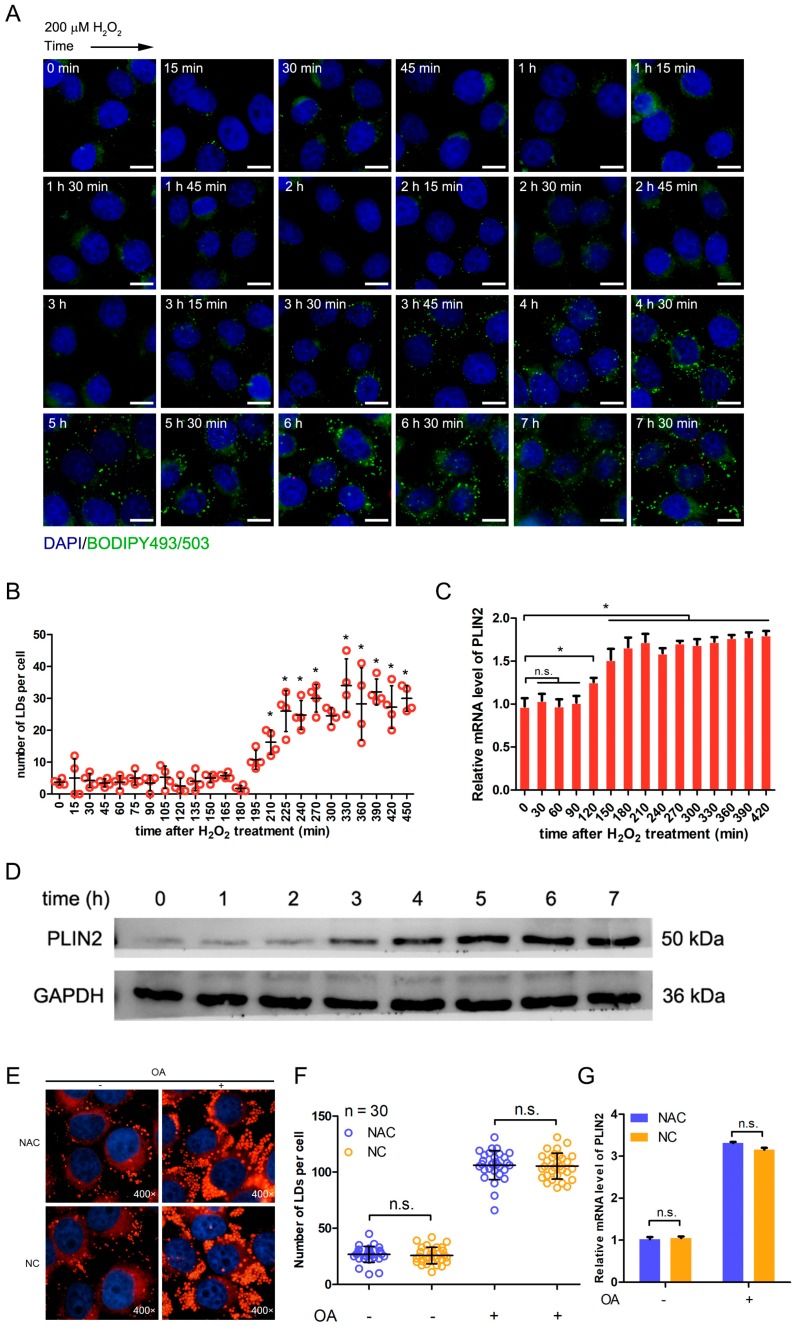
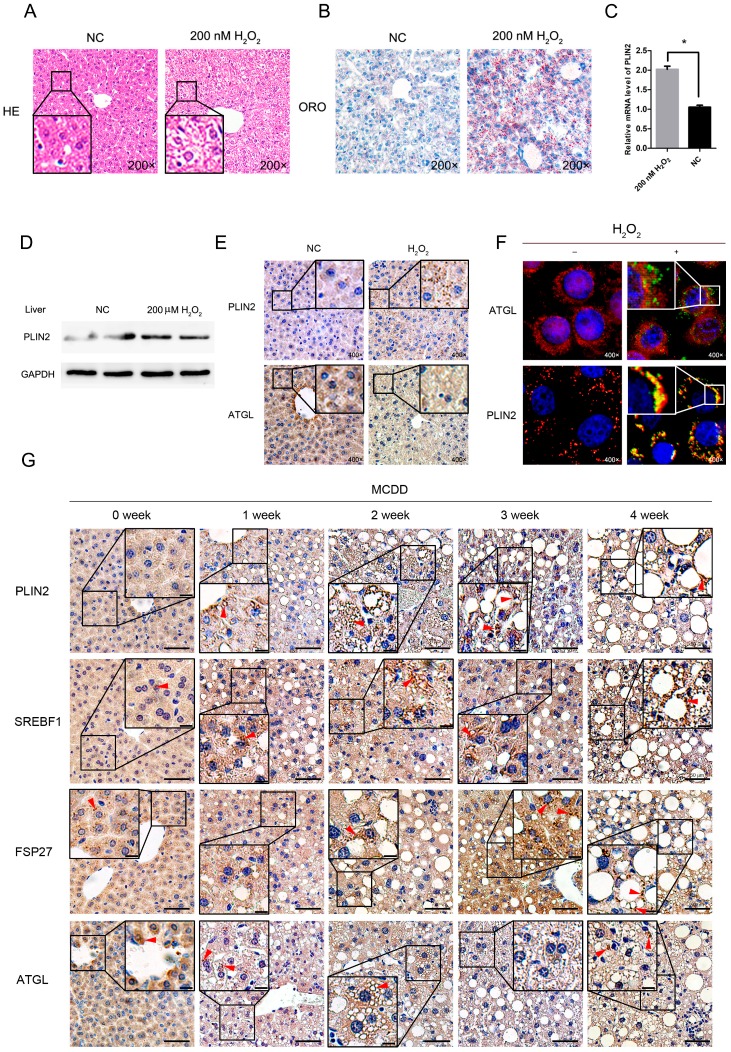
Non-alcoholic fatty liver disease (NAFLD) has become the world's most common liver disease. The disease can develop liver fibrosis or even carcinomas from the initial hepatic steatosis, and this process is influenced by many factors. Reactive oxygen species (ROS), as potent oxidants in cells, have been reported previously to play an important role in the development of NAFLD progression via promoting neutral lipid accumulation. Here, we found that ROS can promote lipid droplet formation in hepatocytes by promoting perilipin2 (PLIN2) expression. First, we used different concentrations of hydrogen peroxide to treat HepG2 cells and found that the number of lipid droplets in the cells increased, however also that this effect was dose-independent. Then, the mRNA level of several lipid droplet-associated genes was detected with hydrogen peroxide treatment and the expression of , , and genes was significantly up-regulated ( < 0.05). We overexpressed in HepG2 cells and found that the lipid droplets in the cells were markedly increased. Interference with inhibits ROS-induced lipid droplet formation, revealing that PLIN2 is a critical factor in this process. We subsequently analyzed the regulatory pathway and protein interaction network that is involved in PLIN2 and found that PLIN2 can regulate intracellular lipid metabolism through the PPARα/RXRA and CREB/CREBBP signaling pathways. The majority of the data indicated the correlation between hydrogen peroxide-induced PLIN2 and lipid droplet upregulation. In conclusion, ROS up-regulates the expression of PLIN2 in hepatocytes, whereas PLIN2 promotes the formation of lipid droplets resulting in lipid accumulation in liver tissues.
非酒精性脂肪性肝病(NAFLD)已成为世界上最常见的肝脏疾病。这种疾病可从最初的肝脂肪变性发展为肝纤维化甚至肝癌,其过程受多种因素影响。活性氧(ROS)作为细胞内的强氧化剂,先前已被报道在促进中性脂质积累方面在 NAFLD 进展的发展中起重要作用。在这里,我们发现 ROS 通过促进 perilipin2(PLIN2)表达来促进肝细胞中脂滴的形成。首先,我们使用不同浓度的过氧化氢处理 HepG2 细胞,发现细胞中的脂滴数量增加,但这种作用与剂量无关。然后,用过氧化氢处理检测几种与脂滴相关的基因的 mRNA 水平,发现 、 、 和 基因的表达明显上调( < 0.05)。我们在 HepG2 细胞中转染 ,发现细胞中的脂滴明显增加。干扰 抑制 ROS 诱导的脂滴形成,表明 PLIN2 是该过程中的关键因素。随后,我们分析了涉及 PLIN2 的调控途径和蛋白相互作用网络,发现 PLIN2 可以通过 PPARα/RXRA 和 CREB/CREBBP 信号通路调节细胞内脂质代谢。大多数数据表明了过氧化氢诱导的 PLIN2 与脂滴上调之间的相关性。总之,ROS 上调肝细胞中 PLIN2 的表达,而 PLIN2 促进脂滴的形成,导致肝组织中的脂质积累。