• 文献检索
  • 文档翻译
  • 深度研究
  • 学术资讯
  • Suppr Zotero 插件Zotero 插件
  • 邀请有礼
  • 套餐&价格
  • 历史记录
应用&插件
Suppr Zotero 插件Zotero 插件浏览器插件Mac 客户端Windows 客户端微信小程序
定价
高级版会员购买积分包购买API积分包
服务
文献检索文档翻译深度研究API 文档MCP 服务
关于我们
关于 Suppr公司介绍联系我们用户协议隐私条款
关注我们

Suppr 超能文献

核心技术专利:CN118964589B侵权必究
粤ICP备2023148730 号-1Suppr @ 2026

文献检索

告别复杂PubMed语法,用中文像聊天一样搜索,搜遍4000万医学文献。AI智能推荐,让科研检索更轻松。

立即免费搜索

文件翻译

保留排版,准确专业,支持PDF/Word/PPT等文件格式,支持 12+语言互译。

免费翻译文档

深度研究

AI帮你快速写综述,25分钟生成高质量综述,智能提取关键信息,辅助科研写作。

立即免费体验

在趋磁和趋气位移控制之间切换以增强MC-1磁趋气细菌作为抗癌纳米机器人的功效。

Switching between Magnetotactic and Aerotactic Displacement Controls to Enhance the Efficacy of MC-1 Magneto-Aerotactic Bacteria as Cancer-Fighting Nanorobots.

作者信息

Martel Sylvain, Mohammadi Mahmood

机构信息

NanoRobotics Laboratory, Department of Computer and Software Engineering, Institute of Biomedical Engineering, Polytechnique Montréal, Montréal, QC H3T 1J4, Canada.

出版信息

Micromachines (Basel). 2016 May 25;7(6):97. doi: 10.3390/mi7060097.

DOI:10.3390/mi7060097
PMID:30404272
原文链接:https://pmc.ncbi.nlm.nih.gov/articles/PMC6190448/
Abstract

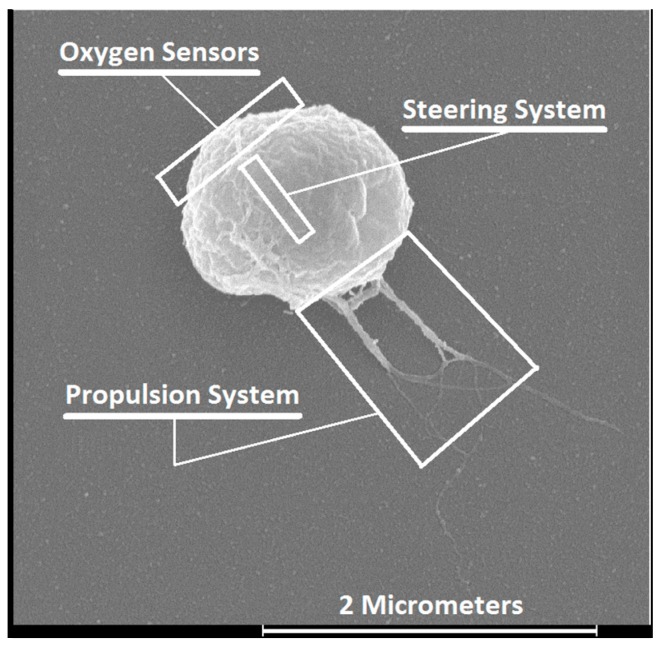
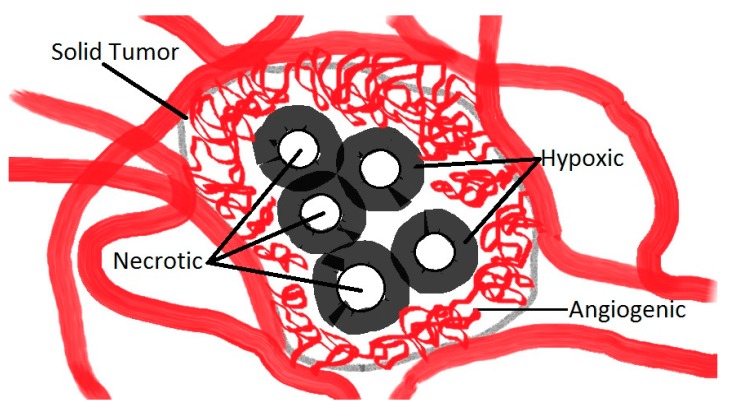
The delivery of drug molecules to tumor hypoxic areas could yield optimal therapeutic outcomes. This suggests that effective cancer-fighting micro- or nanorobots would require more integrated functionalities than just the development of directional propelling constructs which have so far been the main general emphasis in medical micro- and nanorobotic research. Development of artificial agents that would be most effective in targeting hypoxic regions may prove to be a very challenging task considering present technological constraints. Self-propelled, sensory-based and directionally-controlled agents in the form of Magnetotactic Bacteria (MTB) of the MC-1 strain have been investigated as effective therapeutic nanorobots in cancer therapy. Following computer-based magnetotactic guidance to reach the tumor area, the microaerophilic response of drug-loaded MC-1 cells could be exploited in the tumoral interstitial fluid microenvironments. Accordingly, their swimming paths would be guided by a decreasing oxygen concentration towards the hypoxic regions. However, the implementation of such a targeting strategy calls for a method to switch from a computer-assisted magnetotactic displacement control to an autonomous aerotactic displacement control. In this way, the MC-1 cells will navigate to tumoral regions and, once there, target hypoxic areas through their microaerophilic behavior. Here we show not only how the magnitude of the magnetic field can be used for this purpose but how the findings could help determine the specifications of a future compatible interventional platform within known technological and medical constraints.

摘要

将药物分子递送至肿瘤缺氧区域可产生最佳治疗效果。这表明,有效的抗癌微型或纳米机器人需要具备比目前主要侧重于开发定向推进结构更多的集成功能,而定向推进结构一直是医学微型和纳米机器人研究的主要重点。考虑到目前的技术限制,开发在靶向缺氧区域方面最有效的人工制剂可能是一项极具挑战性的任务。作为癌症治疗中有效的治疗性纳米机器人,已对MC-1菌株的趋磁细菌(MTB)形式的自推进、基于感官和方向可控的制剂进行了研究。在基于计算机的趋磁引导下到达肿瘤区域后,载药MC-1细胞的微需氧反应可在肿瘤间质液微环境中加以利用。因此,它们的游动路径将由氧气浓度降低引导至缺氧区域。然而,实施这种靶向策略需要一种从计算机辅助趋磁位移控制切换到自主趋氧位移控制的方法。通过这种方式,MC-1细胞将导航至肿瘤区域,并一旦到达那里,通过其微需氧行为靶向缺氧区域。在此,我们不仅展示了如何利用磁场强度实现这一目的,还展示了这些发现如何有助于在已知的技术和医学限制内确定未来兼容介入平台的规格。
https://cdn.ncbi.nlm.nih.gov/pmc/blobs/3e08/6190448/a57572b30699/micromachines-07-00097-g004.jpg
https://cdn.ncbi.nlm.nih.gov/pmc/blobs/3e08/6190448/e941ce730681/micromachines-07-00097-g001.jpg
https://cdn.ncbi.nlm.nih.gov/pmc/blobs/3e08/6190448/605977a5577e/micromachines-07-00097-g002.jpg
https://cdn.ncbi.nlm.nih.gov/pmc/blobs/3e08/6190448/6fe84ea9e249/micromachines-07-00097-g003.jpg
https://cdn.ncbi.nlm.nih.gov/pmc/blobs/3e08/6190448/a57572b30699/micromachines-07-00097-g004.jpg
https://cdn.ncbi.nlm.nih.gov/pmc/blobs/3e08/6190448/e941ce730681/micromachines-07-00097-g001.jpg
https://cdn.ncbi.nlm.nih.gov/pmc/blobs/3e08/6190448/605977a5577e/micromachines-07-00097-g002.jpg
https://cdn.ncbi.nlm.nih.gov/pmc/blobs/3e08/6190448/6fe84ea9e249/micromachines-07-00097-g003.jpg
https://cdn.ncbi.nlm.nih.gov/pmc/blobs/3e08/6190448/a57572b30699/micromachines-07-00097-g004.jpg

相似文献

1
Switching between Magnetotactic and Aerotactic Displacement Controls to Enhance the Efficacy of MC-1 Magneto-Aerotactic Bacteria as Cancer-Fighting Nanorobots.在趋磁和趋气位移控制之间切换以增强MC-1磁趋气细菌作为抗癌纳米机器人的功效。
Micromachines (Basel). 2016 May 25;7(6):97. doi: 10.3390/mi7060097.
2
Interventional procedure based on nanorobots propelled and steered by flagellated magnetotactic bacteria for direct targeting of tumors in the human body.基于由具鞭毛的趋磁细菌驱动和引导的纳米机器人的介入程序,用于直接靶向人体肿瘤。
Annu Int Conf IEEE Eng Med Biol Soc. 2008;2008:2497-500. doi: 10.1109/IEMBS.2008.4649707.
3
Magneto-aerotactic bacteria deliver drug-containing nanoliposomes to tumour hypoxic regions.磁趋化细菌将载药纳米脂质体递送至肿瘤乏氧区域。
Nat Nanotechnol. 2016 Nov;11(11):941-947. doi: 10.1038/nnano.2016.137. Epub 2016 Aug 15.
4
Flagellated Magnetotactic Bacteria as Controlled MRI-trackable Propulsion and Steering Systems for Medical Nanorobots Operating in the Human Microvasculature.鞭毛趋磁细菌作为用于在人体微血管中运行的医用纳米机器人的可控磁共振成像可追踪推进和转向系统。
Int J Rob Res. 2009 Apr 1;28(4):571-582. doi: 10.1177/0278364908100924.
5
MRI-based Medical Nanorobotic Platform for the Control of Magnetic Nanoparticles and Flagellated Bacteria for Target Interventions in Human Capillaries.基于磁共振成像的医学纳米机器人平台,用于控制磁性纳米颗粒和鞭毛细菌,以对人体毛细血管进行靶向干预。
Int J Rob Res. 2009 Sep 1;28(9):1169-1182. doi: 10.1177/0278364908104855.
6
Magneto-aerotaxis in marine coccoid bacteria.海洋球状细菌中的磁趋氧性。
Biophys J. 1997 Aug;73(2):994-1000. doi: 10.1016/S0006-3495(97)78132-3.
7
Encapsulation of magnetotactic bacteria for targeted and controlled delivery of anticancer agents for tumor therapy.用于肿瘤治疗的抗癌药物靶向和控释的趋磁细菌包封
Annu Int Conf IEEE Eng Med Biol Soc. 2011;2011:6668-71. doi: 10.1109/IEMBS.2011.6091644.
8
Covalent binding of nanoliposomes to the surface of magnetotactic bacteria for the synthesis of self-propelled therapeutic agents.纳米脂质体与趋磁细菌表面的共价结合用于自推进治疗剂的合成。
ACS Nano. 2014 May 27;8(5):5049-60. doi: 10.1021/nn5011304. Epub 2014 Apr 8.
9
Diversity of magneto-aerotactic behaviors and oxygen sensing mechanisms in cultured magnetotactic bacteria.培养的趋磁细菌中磁趋气行为和氧传感机制的多样性。
Biophys J. 2014 Jul 15;107(2):527-538. doi: 10.1016/j.bpj.2014.05.043.
10
Magnetotactic bacteria penetration into multicellular tumor spheroids for targeted therapy.趋磁细菌穿透多细胞肿瘤球体用于靶向治疗。
Annu Int Conf IEEE Eng Med Biol Soc. 2010;2010:4371-4. doi: 10.1109/IEMBS.2010.5627105.

引用本文的文献

1
Engineering Magnetotactic Bacteria as Medical Microrobots.将趋磁细菌工程化为医用微型机器人。
Adv Mater. 2025 Jul;37(27):e2416966. doi: 10.1002/adma.202416966. Epub 2025 Apr 17.
2
A Nanorobotics-Based Approach of Breast Cancer in the Nanotechnology Era.基于纳米机器人的纳米技术时代乳腺癌治疗方法。
Int J Mol Sci. 2024 May 2;25(9):4981. doi: 10.3390/ijms25094981.
3
Advances of medical nanorobots for future cancer treatments.医学纳米机器人在未来癌症治疗中的进展。

本文引用的文献

1
Diversity of magneto-aerotactic behaviors and oxygen sensing mechanisms in cultured magnetotactic bacteria.培养的趋磁细菌中磁趋气行为和氧传感机制的多样性。
Biophys J. 2014 Jul 15;107(2):527-538. doi: 10.1016/j.bpj.2014.05.043.
2
Presenting a new paradigm in cancer therapy: delivering therapeutic agents using navigable microcarriers.
IEEE Pulse. 2014 May-Jun;5(3):48-55. doi: 10.1109/MPUL.2014.2309581.
3
Covalent binding of nanoliposomes to the surface of magnetotactic bacteria for the synthesis of self-propelled therapeutic agents.纳米脂质体与趋磁细菌表面的共价结合用于自推进治疗剂的合成。
J Hematol Oncol. 2023 Jul 14;16(1):74. doi: 10.1186/s13045-023-01463-z.
4
Artificial Intelligence in Colorectal Cancer Screening, Diagnosis and Treatment. A New Era.人工智能在结直肠癌筛查、诊断和治疗中的应用。新时代。
Curr Oncol. 2021 Apr 23;28(3):1581-1607. doi: 10.3390/curroncol28030149.
5
Application of artificial intelligence to the diagnosis and therapy of colorectal cancer.人工智能在结直肠癌诊断与治疗中的应用。
Am J Cancer Res. 2020 Nov 1;10(11):3575-3598. eCollection 2020.
6
Rise of cyborg microrobot: different story for different configuration.类器官微机器人的兴起:不同的配置有不同的故事。
IET Nanobiotechnol. 2019 Sep;13(7):651-664. doi: 10.1049/iet-nbt.2018.5374.
7
The Hidden Charm of Life.生活的隐秘魅力。
Life (Basel). 2019 Jan 7;9(1):5. doi: 10.3390/life9010005.
ACS Nano. 2014 May 27;8(5):5049-60. doi: 10.1021/nn5011304. Epub 2014 Apr 8.
4
Bacterial microsystems and microrobots.细菌微系统和微型机器人。
Biomed Microdevices. 2012 Dec;14(6):1033-45. doi: 10.1007/s10544-012-9696-x.
5
Delivering nanomedicine to solid tumors.将纳米药物递送至实体瘤。
Nat Rev Clin Oncol. 2010 Nov;7(11):653-64. doi: 10.1038/nrclinonc.2010.139. Epub 2010 Sep 14.
6
Bacteria in cancer therapy: a novel experimental strategy.细菌在癌症治疗中的作用:一种新的实验策略。
J Biomed Sci. 2010 Mar 23;17(1):21. doi: 10.1186/1423-0127-17-21.
7
Enhanced permeability and retention (EPR) effect for anticancer nanomedicine drug targeting.用于抗癌纳米药物靶向的增强渗透与滞留(EPR)效应
Methods Mol Biol. 2010;624:25-37. doi: 10.1007/978-1-60761-609-2_3.
8
Passive and active drug targeting: drug delivery to tumors as an example.被动和主动药物靶向:以肿瘤药物递送为例
Handb Exp Pharmacol. 2010(197):3-53. doi: 10.1007/978-3-642-00477-3_1.
9
Inhibition of tumor growth and metastasis by a combination of Escherichia coli-mediated cytolytic therapy and radiotherapy.大肠杆菌介导的细胞溶解疗法联合放射治疗抑制肿瘤生长和转移。
Mol Ther. 2010 Mar;18(3):635-42. doi: 10.1038/mt.2009.295. Epub 2010 Jan 5.
10
Flagellated Magnetotactic Bacteria as Controlled MRI-trackable Propulsion and Steering Systems for Medical Nanorobots Operating in the Human Microvasculature.鞭毛趋磁细菌作为用于在人体微血管中运行的医用纳米机器人的可控磁共振成像可追踪推进和转向系统。
Int J Rob Res. 2009 Apr 1;28(4):571-582. doi: 10.1177/0278364908100924.