Zomer Helena Debiazi, Roballo Kelly Cs, Lessa Thais Borges, Bressan Fabiana Fernandes, Gonçalves Natália Nardeli, Meirelles Flávio Vieira, Trentin Andrea Gonçalves, Ambrósio Carlos Eduardo
Department of Cell Biology, Embryology and Genetic, Faculty of Biological Sciences, Santa Catarina Federal University (UFSC), Florianópolis, Brazil.
Department of Surgery, Sector Anatomy, Faculty of Veterinary Medicine and Animal Science, University of São Paulo, São Paulo, Brazil,
Stem Cells Cloning. 2018 Oct 23;11:43-54. doi: 10.2147/SCCAA.S175749. eCollection 2018.
Owing to their similarity with humans, rabbits are useful for multiple applications in biotechnology and translational research from basic to preclinical studies. In this sense, mesenchymal stem cells (MSCs) are known for their therapeutic potential and promising future in regenerative medicine. As many studies have been using rabbit adipose-derived MSCs (ASCs) as a model of human ASCs (hASCs), it is fundamental to compare their characteristics and understand how distinct features could affect the translation to human medicine.
The aim of this study was to comparatively characterize rabbit ASCs (rASCs) and hASCs to further uses in biotechnology and translational studies.
rASCs and hASCs were isolated and characterized by their immunophenotype, differentiation potential, proliferative profile, and nuclear stability in vitro.
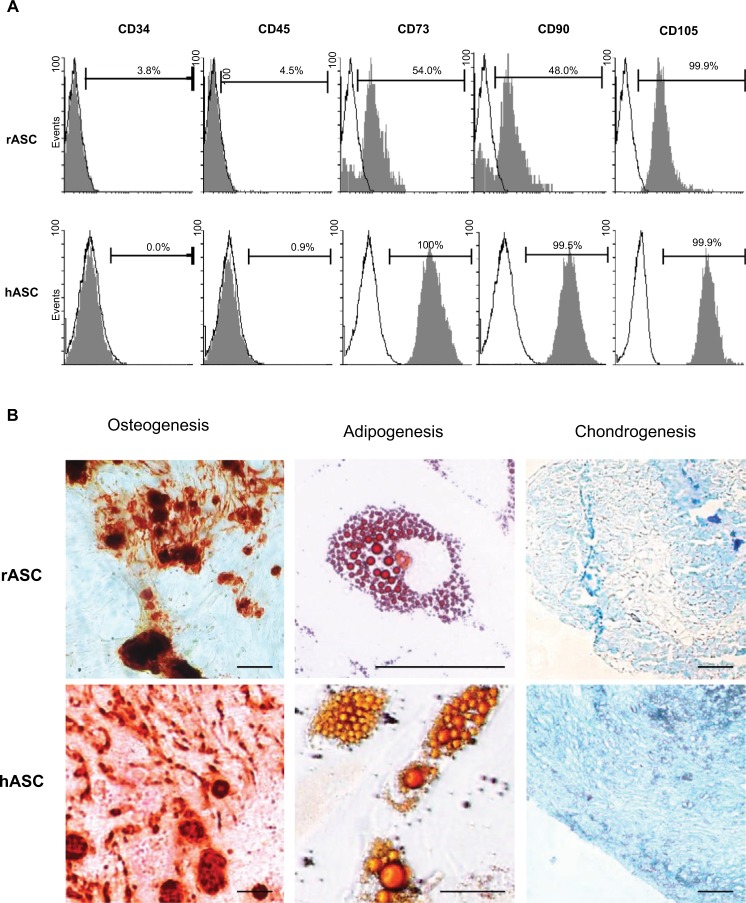
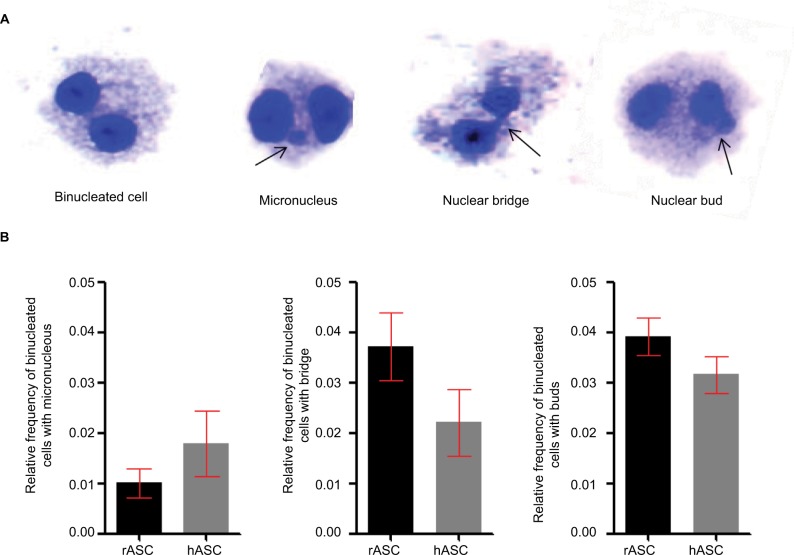
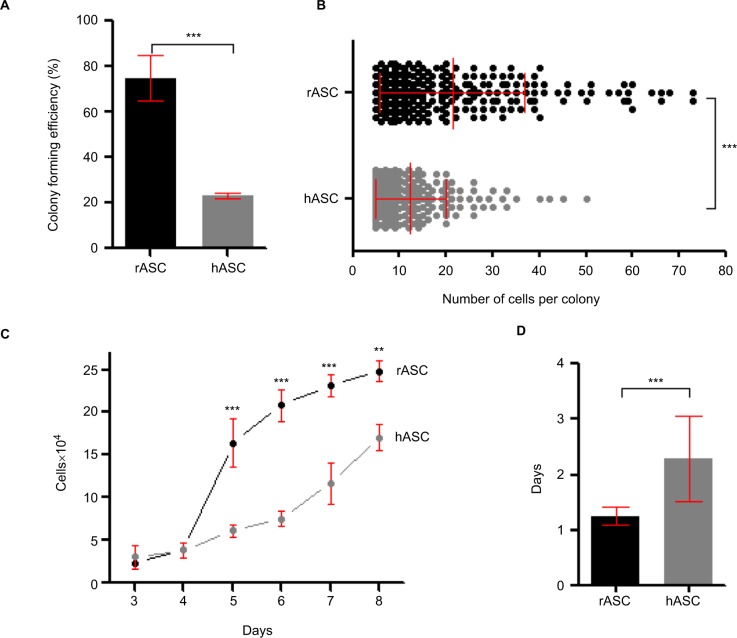
Both ASCs presented differentiation potential to osteocytes, chondrocytes, and adipocytes and shared similar immunophenotype expression to CD105+, CD34-, and CD45-, but rabbit cells expressed significantly lower CD73 and CD90 than human cells. In addition, rASCs presented greater clonogenic potential and proliferation rate than hASCs but no difference in nuclear alterations.
The distinct features of rASCs and hASCs can positively or negatively affect their use for different applications in biotechnology (such as cell reprogramming) and translational studies (such as cell transplantation, tissue engineering, and pharmacokinetics). Nevertheless, the particularities between rabbit and human MSCs should not prevent rabbit use in preclinical models, but care should be taken to interpret results and properly translate animal findings to medicine.
由于兔子与人类具有相似性,因此在从基础研究到临床前研究的生物技术和转化研究的多种应用中都很有用。从这个意义上讲,间充质干细胞(MSC)以其治疗潜力和在再生医学中的广阔前景而闻名。由于许多研究一直将兔脂肪来源的间充质干细胞(ASC)用作人类ASC(hASC)的模型,因此比较它们的特征并了解不同特征如何影响向人类医学的转化至关重要。
本研究的目的是比较兔ASC(rASC)和hASC的特征,以便在生物技术和转化研究中进一步应用。
分离rASC和hASC,并通过其免疫表型、分化潜能、增殖特性和体外核稳定性进行表征。
两种ASC都具有向骨细胞、软骨细胞和脂肪细胞分化的潜能,并且在CD105 +、CD34 - 和CD45 - 的免疫表型表达上相似,但兔细胞的CD73和CD90表达明显低于人类细胞。此外,rASC比hASC具有更大的克隆形成潜能和增殖率,但在核改变方面没有差异。
rASC和hASC的不同特征可能对它们在生物技术(如细胞重编程)和转化研究(如细胞移植、组织工程和药代动力学)中的不同应用产生积极或消极影响。然而,兔和人类MSC之间的特殊性不应妨碍在临床前模型中使用兔子,但在解释结果并将动物研究结果正确转化为医学应用时应谨慎。