Department of Preventive Medicine, Public Health and Microbiology, Universidad Autónoma, E-28029 Madrid, Spain.
Viruses. 2018 Nov 13;10(11):629. doi: 10.3390/v10110629.
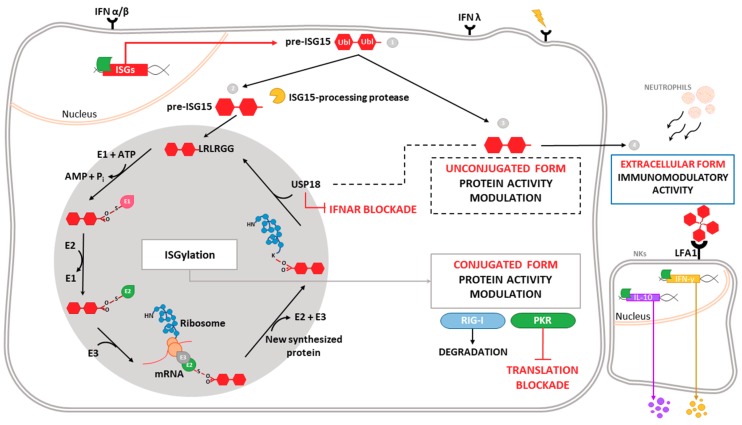
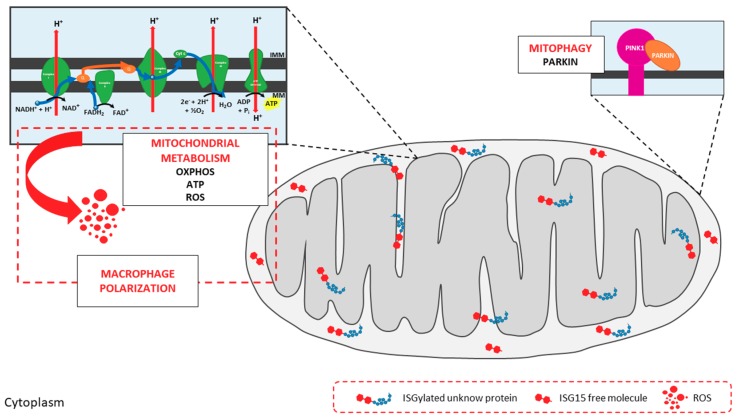
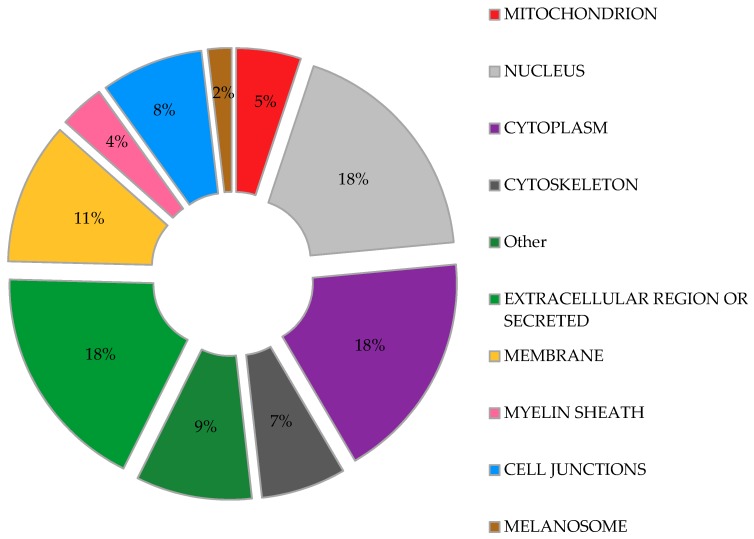
Viruses are responsible for the majority of infectious diseases, from the common cold to HIV/AIDS or hemorrhagic fevers, the latter with devastating effects on the human population. Accordingly, the development of efficient antiviral therapies is a major goal and a challenge for the scientific community, as we are still far from understanding the molecular mechanisms that operate after virus infection. Interferon-stimulated gene 15 (ISG15) plays an important antiviral role during viral infection. ISG15 catalyzes a ubiquitin-like post-translational modification termed ISGylation, involving the conjugation of ISG15 molecules to synthesized viral or cellular proteins, which regulates their stability and function. Numerous biomedically relevant viruses are targets of ISG15, as well as proteins involved in antiviral immunity. Beyond their role as cellular powerhouses, mitochondria are multifunctional organelles that act as signaling hubs in antiviral responses. In this review, we give an overview of the biological consequences of ISGylation for virus infection and host defense. We also compare several published proteomic studies to identify and classify potential mitochondrial ISGylation targets. Finally, based on our recent observations, we discuss the essential functions of mitochondria in the antiviral response and examine the role of ISG15 in the regulation of mitochondrial processes, specifically OXPHOS and mitophagy.
病毒是大多数传染病的罪魁祸首,从普通感冒到艾滋病或出血热,后者对人类人口造成了毁灭性的影响。因此,开发有效的抗病毒疗法是科学界的主要目标和挑战,因为我们仍然远未了解病毒感染后起作用的分子机制。干扰素刺激基因 15 (ISG15) 在病毒感染过程中发挥重要的抗病毒作用。ISG15 催化一种称为 ISGylation 的泛素样翻译后修饰,涉及 ISG15 分子与合成的病毒或细胞蛋白的缀合,从而调节其稳定性和功能。许多与医学相关的病毒是 ISG15 的靶标,也是抗病毒免疫中涉及的蛋白质的靶标。线粒体除了作为细胞的动力源外,还是多功能细胞器,在抗病毒反应中充当信号枢纽。在这篇综述中,我们概述了 ISGylation 对病毒感染和宿主防御的生物学影响。我们还比较了几项已发表的蛋白质组学研究,以鉴定和分类潜在的线粒体 ISGylation 靶标。最后,基于我们最近的观察结果,我们讨论了线粒体在抗病毒反应中的基本功能,并研究了 ISG15 在调节线粒体过程(特别是 OXPHOS 和线粒体自噬)中的作用。