Xu Rui, Zhang Chuncui, He Feng, Zhao Xin, Qi Hongzhi, Zhou Peng, Zhang Lixin, Ming Dong
Lab of Neural Engineering & Rehabilitation, Department of Biomedical Engineering, College of Precision Instruments and Optoelectronics Engineering, Tianjin University, Tianjin, China.
Tianjin International Joint Research Center for Neural Engineering, Academy of Medical Engineering and Translational Medicine, Tianjin University, Tianjin, China.
Front Neurol. 2018 Oct 31;9:915. doi: 10.3389/fneur.2018.00915. eCollection 2018.
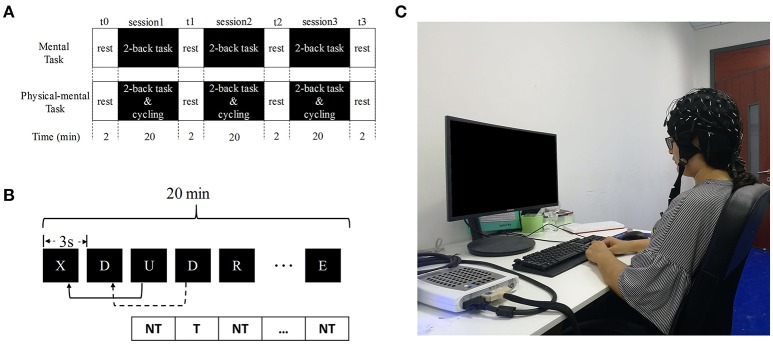
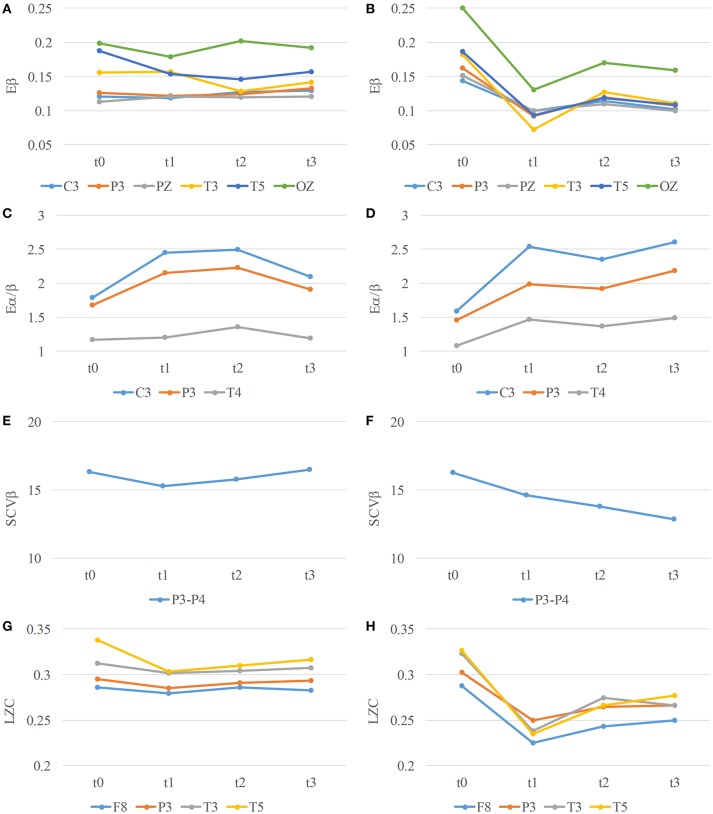
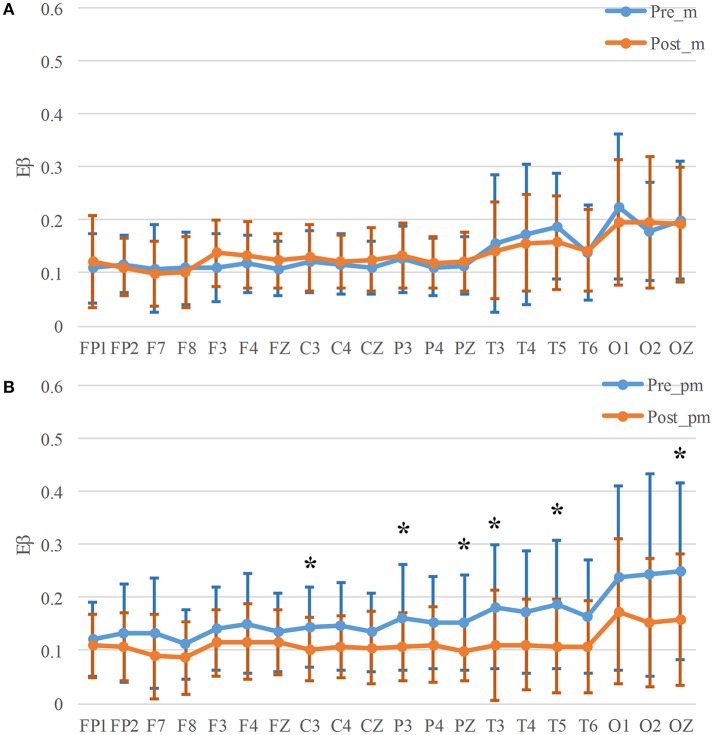
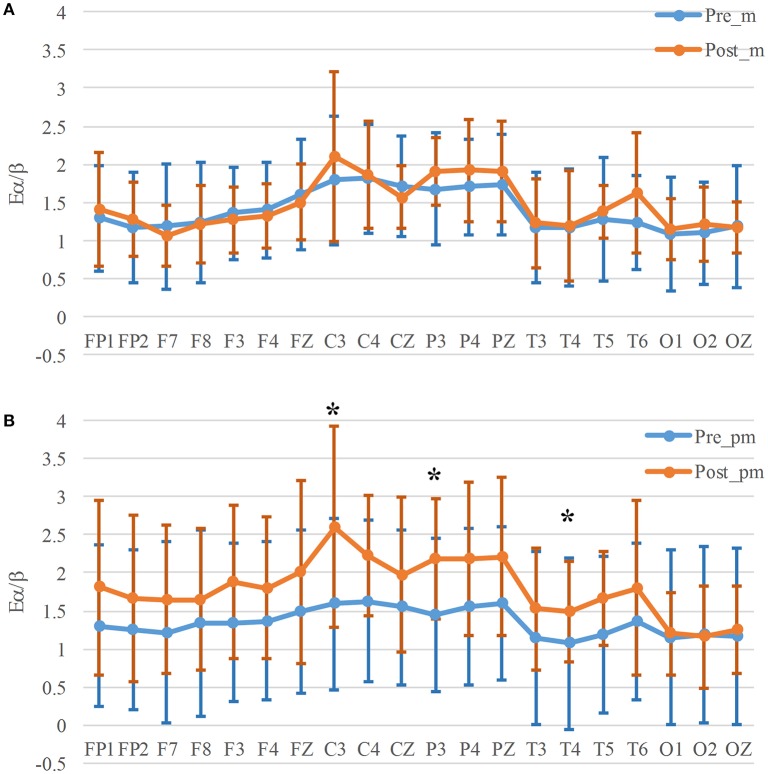
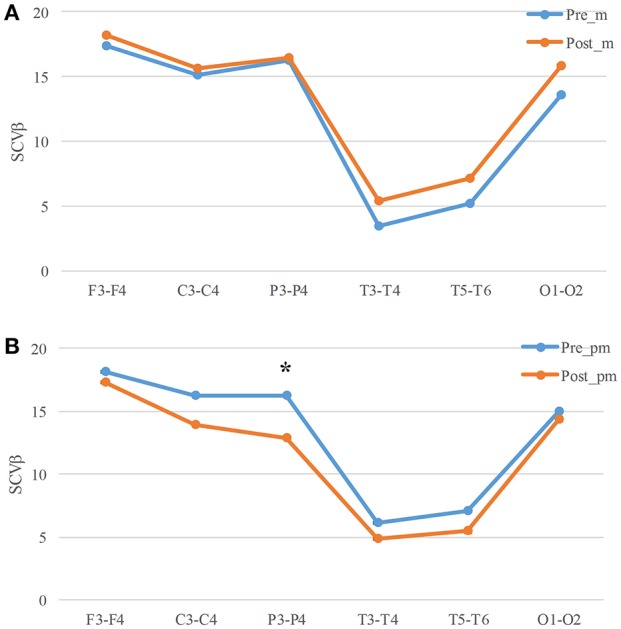
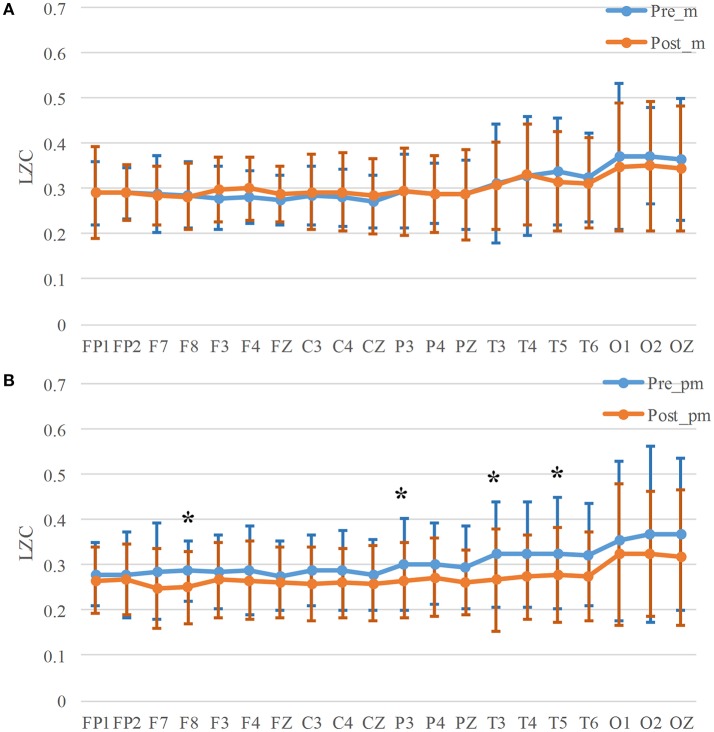
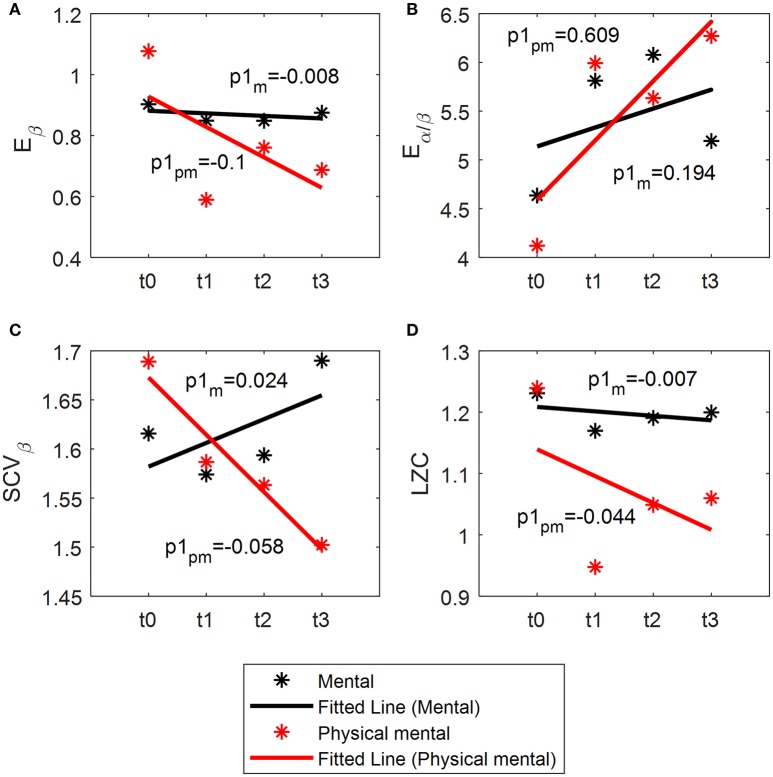
Many studies have verified that there is an interaction between physical activities and mental fatigue. However, few studies are focused on the effect of physical activities on mental fatigue. This study was to analyze the states of mental fatigue based on electroencephalography (EEG) and investigate how physical activities affect mental fatigue. Fourteen healthy participants participated in an experiment including a 2-back mental task (the control) and the same mental task with cycling simultaneously (physical-mental task). Each experiment consisted of three 20 min fatigue-inducing sessions repeatedly (mental fatigue for mental tasks or mental fatigue plus physical activities for physical-mental tasks). During the evaluation sessions (before and after the fatigue-inducing sessions), the states of the participants were assessed by EEG parameters. Wavelet Packet Energy (WPE), Spectral Coherence Value (SCV), and Lempel-Ziv Complexity (LZC) were used to indicate mental fatigue from the perspectives of activation, functional connectivity, and complexity of the brain. The indices are the beta band energy , the energy ratio , inter-hemispheric SCV of beta band and LZC. The statistical analysis shows that mental fatigue was detected by , , , and LZC in physical-mental task. The slopes of the linear fit on these indices verified that the mental fatigue increased more fast during physical-mental task. It is concluded form the result that physical activities can enhance the mental fatigue and speed up the fatigue process based on brain activation, functional connection, and complexity. This result differs from the traditional opinion that physical activities have no influence on mental fatigue, and finds that physical activities can increase mental fatigue. This finding helps fatigue management through exercise instruction.
许多研究已经证实体育活动与精神疲劳之间存在相互作用。然而,很少有研究关注体育活动对精神疲劳的影响。本研究旨在基于脑电图(EEG)分析精神疲劳状态,并探究体育活动如何影响精神疲劳。14名健康参与者参加了一项实验,该实验包括一个2-back心理任务(对照组)和同时进行骑自行车的相同心理任务(身心任务)。每个实验由三个20分钟的疲劳诱导环节重复进行(心理任务导致的精神疲劳或身心任务导致的精神疲劳加体育活动)。在评估环节(疲劳诱导环节前后),通过EEG参数评估参与者的状态。小波包能量(WPE)、谱相干值(SCV)和莱姆普尔-齐夫复杂度(LZC)用于从大脑激活、功能连接和复杂性的角度指示精神疲劳。这些指标是β波段能量 、能量比 、β波段半球间SCV和LZC。统计分析表明,在身心任务中, 、 、 和LZC检测到了精神疲劳。这些指标的线性拟合斜率证实,在身心任务中精神疲劳增加得更快。从结果得出结论,基于大脑激活、功能连接和复杂性,体育活动可以增强精神疲劳并加速疲劳过程。这一结果与体育活动对精神疲劳没有影响的传统观点不同,发现体育活动会增加精神疲劳。这一发现有助于通过运动指导进行疲劳管理。