Department of Food Science and Nutrition, Kyungpook National University, Daegu 41566, Korea.
Center for Food and Nutritional Genomics Research, Kyungpook National University, Daegu 41566, Korea.
Nutrients. 2018 Nov 19;10(11):1797. doi: 10.3390/nu10111797.
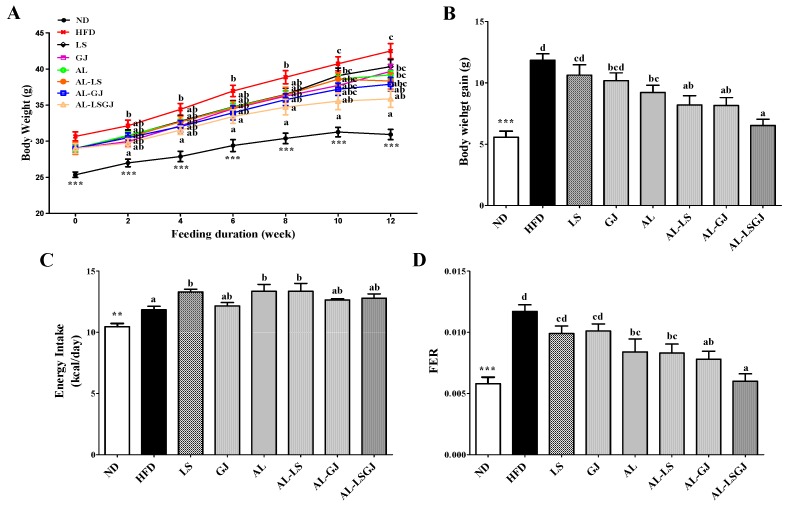
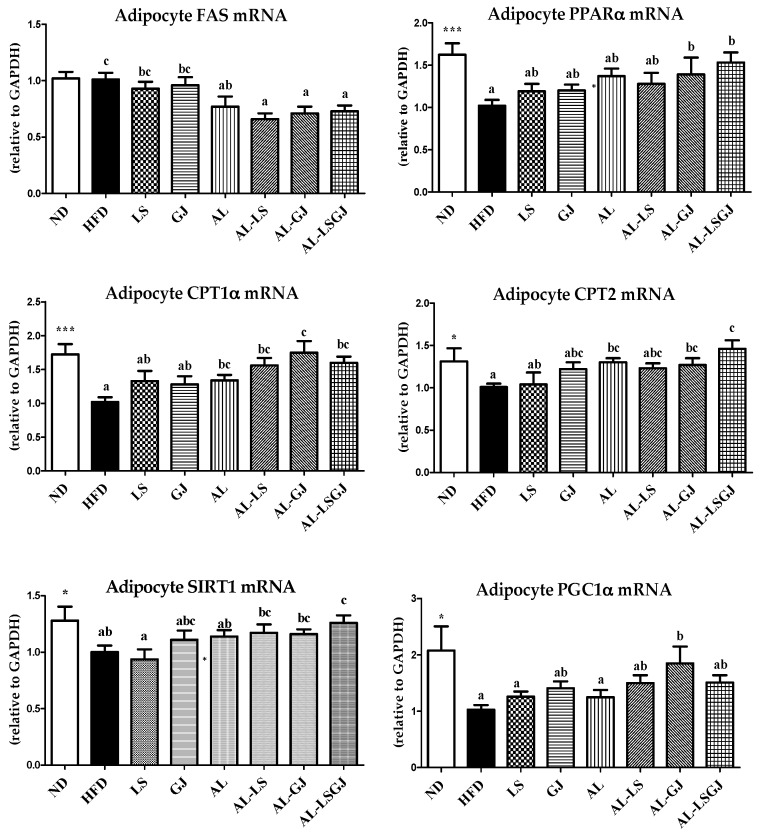
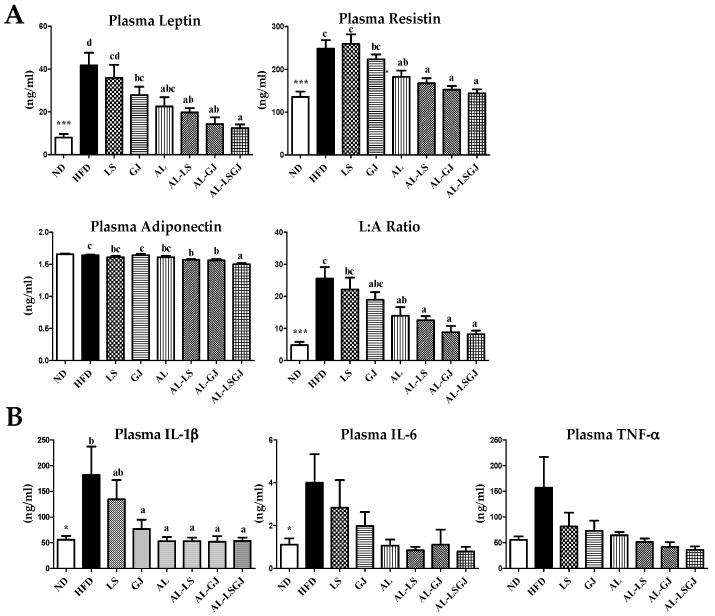
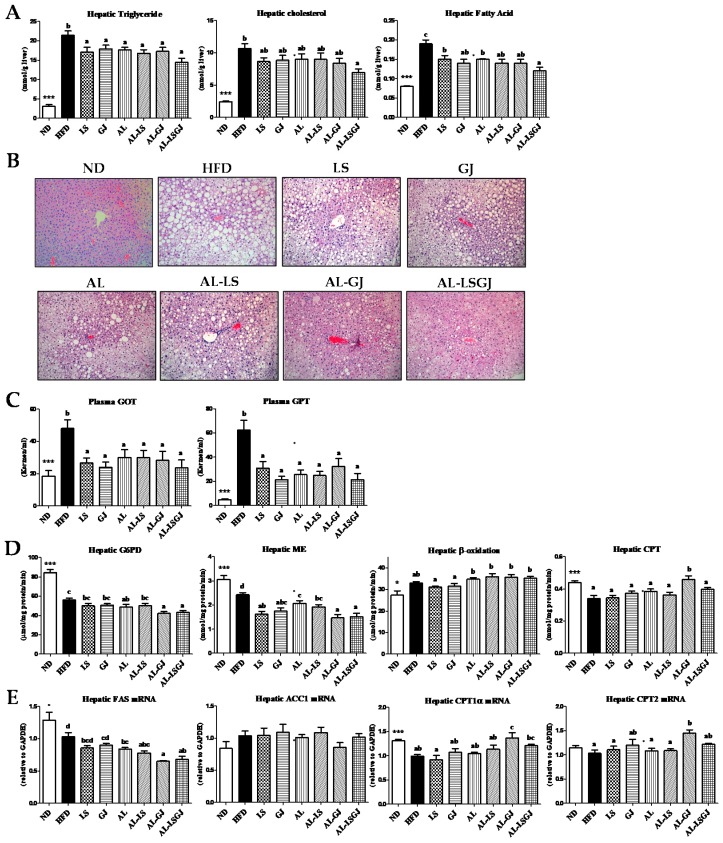
The effects of allulose and two probiotic species on diet-induced obese (DIO) mice were investigated. LS03 (10⁸ cfu/day) and GJ2 (10⁸ cfu/day) were used as probiotics, and allulose (AL) as a prebiotic. The synergistic effect of prebiotics and probiotics in improving obesity was evaluated. Orally fed LS03 (LS) or GJ2 (GJ), significantly decreased hepatic triglyceride (TG) and fatty acid (FA) compared to the high-fat diet (HFD) control. AL markedly decreased visceral adiposity and pro-inflammatory adipokines (leptin and resistin) and cytokines (IL-6 and IL-1β) as well as hepatic TG and FA. In addition, AL exerted synergic effects with probiotics (LS and/or GJ) on the reduction of visceral white adipose tissue (WAT), associated with a decreased leptin: adiponectin ratio. There was no significant differences between the AL-SL and AL group, allulose and GJ combination (AL-GJ) was more effective than allulose in improving dyslipidemia, and decreasing WAT weight and hepatic FA, suggesting allulose may act as a favorable prebiotic for GJ supplement than LS. Combination of allulose with LS and GJ supplementation (AL-LSGJ) was the most effective for improving obesity related complications among the synbiotics groups containing allulose. In conclusion, this study demonstrated that the synbiotic mixture with allulose was more effective in suppressing diet-induced obese (DIO) and its complications via the regulation of lipid metabolism, than the probiotics or allulose alone, suggesting allulose may act as a prebiotic for the two probiotics tested in the study. This new synbiotic mixture with allulose may help ameliorate the deleterious effects of diet-induced obesity and contribute to the growth of the food industry.
研究了阿洛酮糖(AL)和两种益生菌对饮食诱导肥胖(DIO)小鼠的影响。LS03(10⁸ cfu/天)和 GJ2(10⁸ cfu/天)用作益生菌,而阿洛酮糖(AL)用作益生元。评估了益生元和益生菌协同改善肥胖的效果。口服 LS03(LS)或 GJ2(GJ),与高脂肪饮食(HFD)对照组相比,肝甘油三酯(TG)和脂肪酸(FA)明显降低。AL 显著降低内脏脂肪堆积和促炎脂肪因子(瘦素和抵抗素)和细胞因子(IL-6 和 IL-1β)以及肝 TG 和 FA。此外,AL 与益生菌(LS 和/或 GJ)协同作用降低内脏白色脂肪组织(WAT),与瘦素:脂联素比值降低有关。AL-SL 和 AL 组之间没有显著差异,AL 与 GJ 联合(AL-GJ)比 AL 更有效地改善血脂异常,减少 WAT 重量和肝 FA,表明 AL 可能比 LS 更适合作为 GJ 补充的有利益生元。AL 与 LS 和 GJ 补充剂(AL-LSGJ)的组合是所有含有 AL 的合生元组中最有效的改善肥胖相关并发症的方法。总之,这项研究表明,与单独使用益生菌或阿洛酮糖相比,含阿洛酮糖的合生元混合物通过调节脂质代谢更有效地抑制饮食诱导的肥胖(DIO)及其并发症,这表明阿洛酮糖可能作为两种益生菌的益生元。这种含有阿洛酮糖的新型合生元混合物可能有助于改善饮食诱导肥胖的有害影响,并有助于食品工业的发展。