Centre for Clinical Research, North Denmark Regional Hospital, Hjørring, Denmark.
Department of Clinical Medicine, Aalborg University, Aalborg, Denmark.
Sci Rep. 2018 Nov 26;8(1):17367. doi: 10.1038/s41598-018-35843-0.
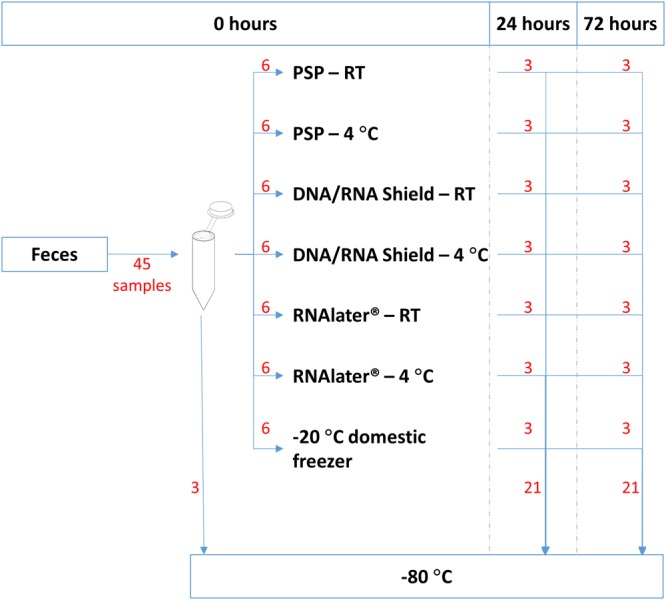
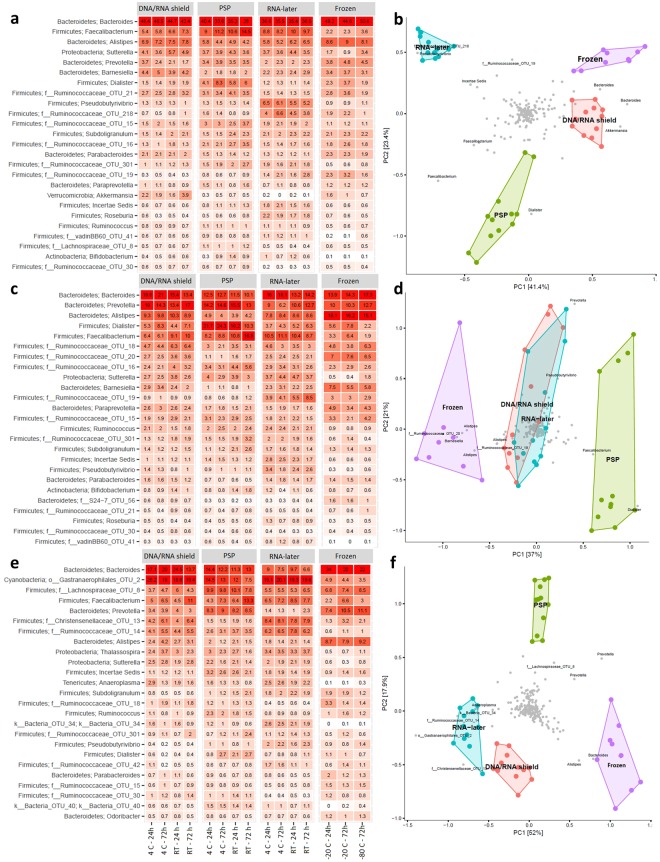
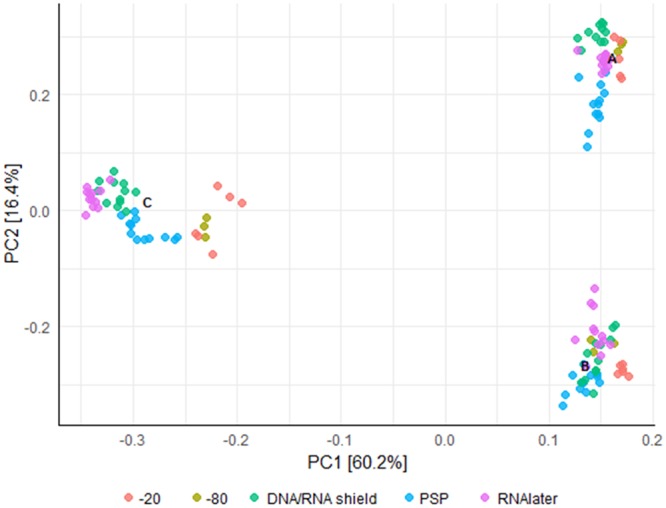
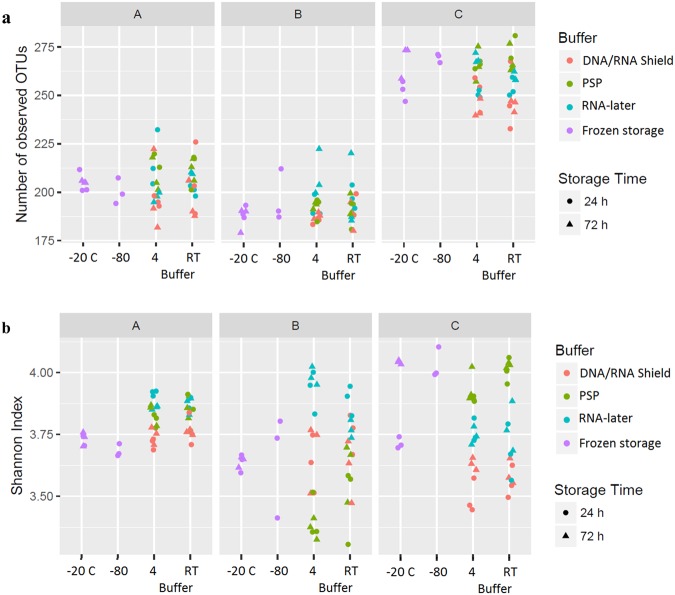
Due to ease of acquisition, fecal samples are often used in studies investigating gut microbiota. Improper handling of these samples can lead to bacterial growth and alter bacterial composition. While freezing samples at -80 °C is considered gold standard, this is not suitable for studies utilizing self-sampling by lay participants or field studies. Thus to effectively prevent bacterial growth, techniques that allow efficient fecal storage outside laboratory facilities are needed. Fecal samples were collected from three donors. From each donor feces, 45 samples were collected and stored either freshly frozen at -80 or -20 °C, or in three separate storage buffers at room temperature or 4 °C for 24 or 72 hours. Bacterial composition was analyzed using Illumina amplicon sequencing of the V4 region of the 16 S rRNA gene. While storage conditions did affect bacterial composition and diversity compared to storage at -80 °C, the variation between donors superseded the variations introduced by storage. Samples stored at -20 °C most closely resembled those stored at -80 °C. When investigating variations in bacterial composition between separate study populations, fecal samples can efficiently be stored in -20 °C freezers or in one of the presented storage buffers, without severe alterations in bacterial composition.
由于获取方便,粪便样本常用于研究肠道微生物群。如果这些样本处理不当,可能会导致细菌生长和细菌组成的改变。虽然将样本在-80°C 下冷冻被认为是黄金标准,但这并不适用于需要研究对象自行采样或现场研究的情况。因此,为了有效防止细菌生长,需要能够在实验室外高效储存粪便的技术。本研究从 3 名供体中采集粪便样本。每个供体的粪便中,采集 45 个样本,分别在-80°C 或-20°C 下新鲜冷冻保存,或在室温或 4°C 下的三种不同储存缓冲液中保存 24 或 72 小时。通过扩增子测序(16S rRNA 基因 V4 区)分析细菌组成。虽然与-80°C 储存相比,储存条件确实会影响细菌组成和多样性,但供体之间的差异超过了储存带来的差异。在-20°C 下储存的样本最接近在-80°C 下储存的样本。当研究不同研究人群之间的细菌组成变化时,粪便样本可以有效地储存在-20°C 冰箱中,或储存在本研究中提出的储存缓冲液之一中,而不会对细菌组成产生严重影响。