Department of Electrical and Computer Engineering, University of Minnesota, Minneapolis, MN, 55455, USA.
Institute of Bioengineering, École Polytechnique Fédérale de Lausanne (EPFL), Lausanne, 1015, Switzerland.
Nat Commun. 2018 Dec 10;9(1):5263. doi: 10.1038/s41467-018-06419-3.
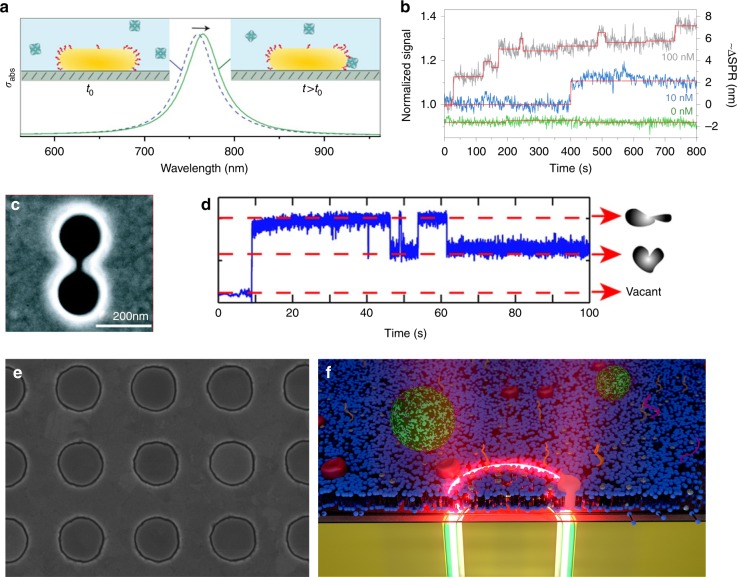
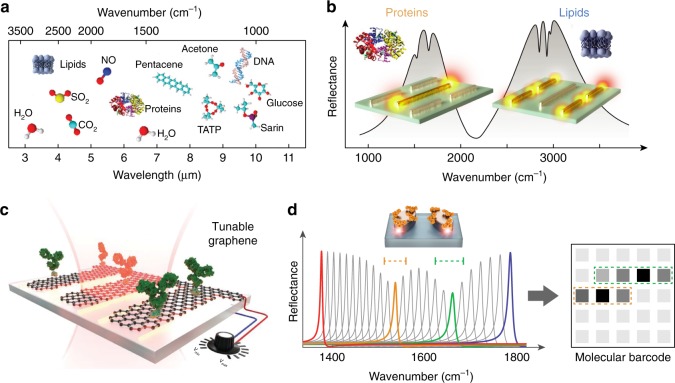
Nanoplasmonic structures can tightly confine light onto a material's surface to probe biomolecular interactions not easily accessed by other sensing techniques. New and exciting developments in nanofabrication processes, nano-optical trapping, graphene devices, mid-infrared spectroscopy, and metasurfaces will greatly empower the performance and functionalities of nanoplasmonic sensors.
纳米等离子体结构可以将光紧密限制在材料表面,从而探测其他传感技术不易探测到的生物分子相互作用。在纳米制造工艺、纳米光学捕获、石墨烯器件、中红外光谱学和超表面等领域的新的令人兴奋的发展,将极大地增强纳米等离子体传感器的性能和功能。