Amiri-Dashatan Nasrin, Koushki Mehdi, Abbaszadeh Hojjat-Allah, Rostami-Nejad Mohammad, Rezaei-Tavirani Mostafa
Proteomics Research Center, Shahid Beheshti University of Medical Sciences, Tehran, Iran.
Department of Biochemistry, Medicine Faculty, Tehran University of Medical Sciences, Tehran, Iran.
Iran J Pharm Res. 2018 Fall;17(4):1523-1536.
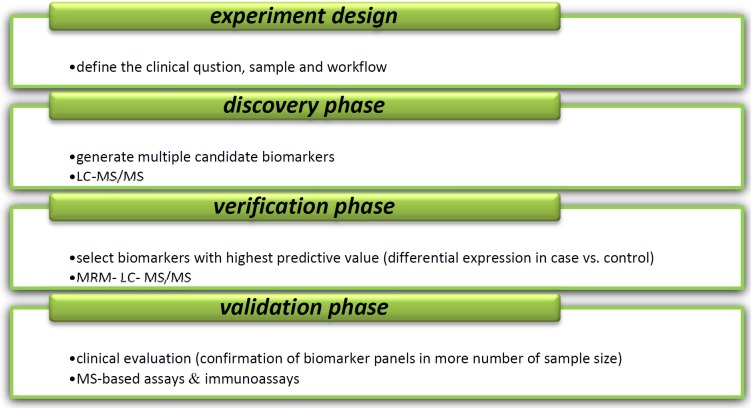
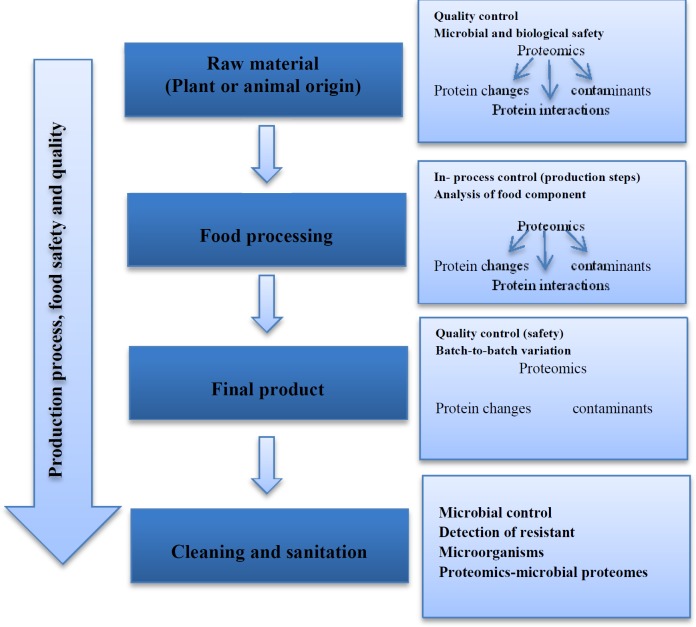
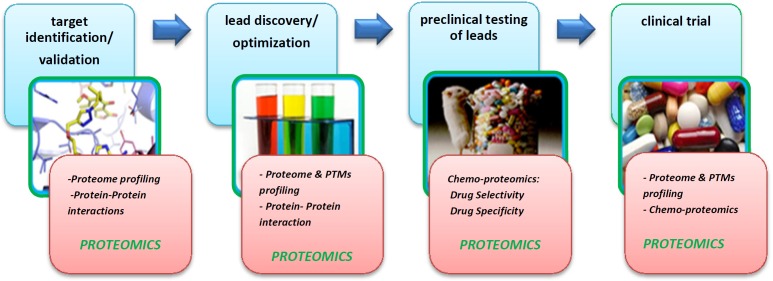
Advancing in genome sequencing has greatly propelled the understanding of the living world; however, it is insufficient for full description of a biological system. Focusing on proteomics has emerged as another large-scale platform for improving the understanding of biology. Proteomic experiments can be used for different aspects of clinical and health sciences such as food technology, biomarker discovery and drug target identification. Since proteins are main constituents of foods, proteomic technology can monitor and characterize protein content of foods and their change during production process. The proteomic biomarker discovery is advanced in various diseases such as cancer, cardiovascular diseases, AIDS, and renal diseases which provide non-invasive methods by the use of body fluids such as urine and serum. Proteomics is also used in drug target identification using different approaches such as chemical proteomics and protein interaction networks. The development and application of proteomics has increased tremendously over the last decade. Advances in proteomics methods offer many promising new directions of studying in clinical fields. In this regard, we want to discuss proteomics technology application in food investigations, drug, and biomarker discovery.
基因组测序技术的进步极大地推动了人们对生物世界的理解;然而,它对于全面描述生物系统来说还不够。专注于蛋白质组学已成为另一个用于增进对生物学理解的大规模平台。蛋白质组学实验可用于临床和健康科学的不同方面,如食品技术、生物标志物发现和药物靶点鉴定。由于蛋白质是食物的主要成分,蛋白质组学技术可以监测和表征食物中的蛋白质含量及其在生产过程中的变化。蛋白质组学生物标志物的发现已在各种疾病中取得进展,如癌症、心血管疾病、艾滋病和肾脏疾病,通过使用尿液和血清等体液提供了非侵入性方法。蛋白质组学还通过化学蛋白质组学和蛋白质相互作用网络等不同方法用于药物靶点鉴定。在过去十年中,蛋白质组学的发展和应用大幅增加。蛋白质组学方法的进步为临床领域的研究提供了许多有前景的新方向。在这方面,我们想讨论蛋白质组学技术在食品研究、药物和生物标志物发现中的应用。