Department of Bionanosystem Engineering, Graduate School, Chonbuk National University, Jeonju, Jeonbuk, 561-756, Republic of Korea.
Division of Mechanical Design Engineering, Chonbuk National University, Jeonju, Jeonbuk, 561-756, Republic of Korea.
Sci Rep. 2019 Jan 15;9(1):117. doi: 10.1038/s41598-018-36545-3.
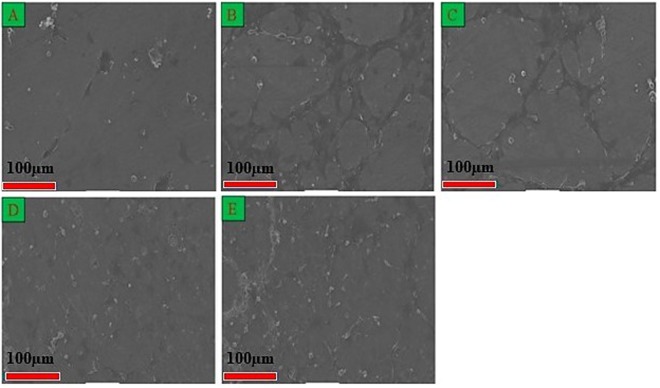
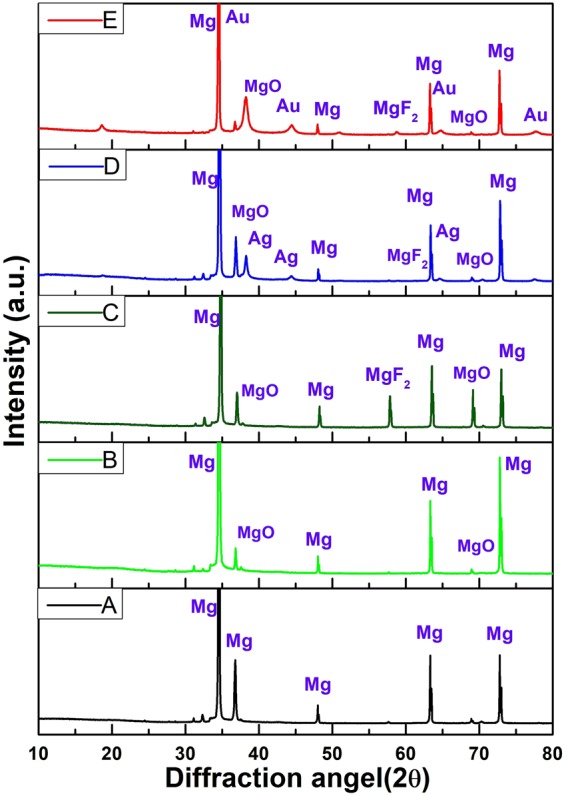
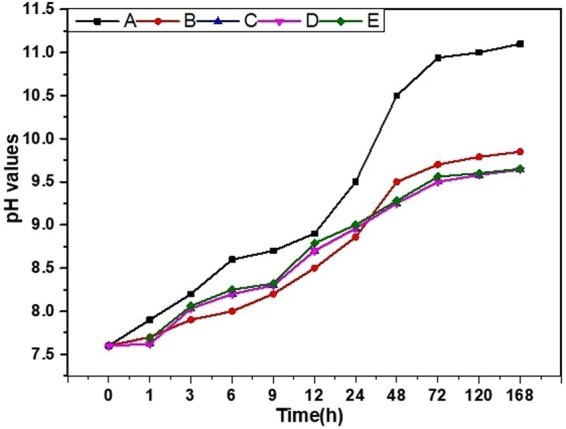
Magnesium (Mg) and its alloys have attracted much attention as a promising candidate for degradable implant applications however the rapid corrosion of magnesium inside the human body greatly limits its use as an implant material. Therefore, coating the alloy surface with a multifunctional film is a promising way to overcome the drawbacks. Here we propose for the first time a multifunction layer coating to enhance the cell viability, antibacterial property and decelerated corrosion rates to act as a novel material to be used for degradable implant Applications. For that, the magnesium alloy (AZ31) was first treated with hydrofluoric acid (HF) and then dopamine tris Hydrochloric acid (tris-HCL) solution. The reducing catechol groups in the polydopamine (PD) layer subsequently immobilize silver/gold ions in situ to form uniformly dispersed Ag/Au nanoparticles on the coating layer. The successful formation of Ag/Au nanoparticles on the HF-PD AZ31 alloy was confirmed using XPS and XRD, and the morphology of all the coated samples were investigated using SEM images. The alloy with HF-PDA exhibit enhanced cell attachment and proliferation. Moreover, the nanoparticle immobilized HF-PD alloy exhibited dramatic corrosion resistance enhancement with superior antibacterial properties and accountable biocompatibility. Thus the result suggest that HF-PD Ag/Au alloy has great potential in the application of degradable implant and the surface modification method is of great significance to determine its properties.
镁(Mg)及其合金作为可降解植入物的候选材料受到了广泛关注,然而镁在人体内的快速腐蚀极大地限制了其作为植入物材料的应用。因此,在合金表面涂覆多功能薄膜是克服这些缺点的一种有前途的方法。在这里,我们首次提出了一种多功能层涂层,以提高细胞活力、抗菌性能和减缓腐蚀速率,作为一种可用于可降解植入物应用的新型材料。为此,首先用氢氟酸(HF)处理镁合金(AZ31),然后用多巴胺三盐酸盐(tris-HCL)溶液处理。聚多巴胺(PD)层中的还原儿茶酚基团随后将银/金离子原位固定在涂层上,形成均匀分散的Ag/Au 纳米粒子。HF-PD AZ31 合金上成功形成 Ag/Au 纳米粒子的情况使用 XPS 和 XRD 进行了确认,并且使用 SEM 图像研究了所有涂覆样品的形态。HF-PDA 处理的合金表现出增强的细胞附着和增殖。此外,固定纳米粒子的 HF-PD 合金表现出优异的抗菌性能和可解释的生物相容性,具有显著的耐腐蚀性增强。因此,结果表明 HF-PD Ag/Au 合金在可降解植入物的应用中有很大的潜力,表面改性方法对确定其性能具有重要意义。