Ademe Sewunet, Aga Fekadu, Gela Debela
Department of Adult Health Nursing, School of Nursing & Midwifery, Wollo University, P.O. Box: 1145, Dessie, Ethiopia.
Department of Nursing, School of Nursing & Midwifery, College of Health Science, Addis Ababa University, P.O. Box: 9083, Addis Ababa, Ethiopia.
BMC Health Serv Res. 2019 Jan 21;19(1):51. doi: 10.1186/s12913-019-3880-0.
Hypertension self-care practice is essential for blood pressure control and reduction of hypertension complications. Nevertheless, we know little concerning hypertension self-care practice in Ethiopia. The purpose of this study was to assess hypertension self-care practice and associated factors among patients in public health facilities in Dessie town, Ethiopia.
In this cross-sectional study, 309 hypertensive patients (mean age 58.8 years, 53.4% women) completed the interviewer-administered questionnaire in Amharic language. Descriptive and logistic regression analyses were conducted using SPSS version 22.
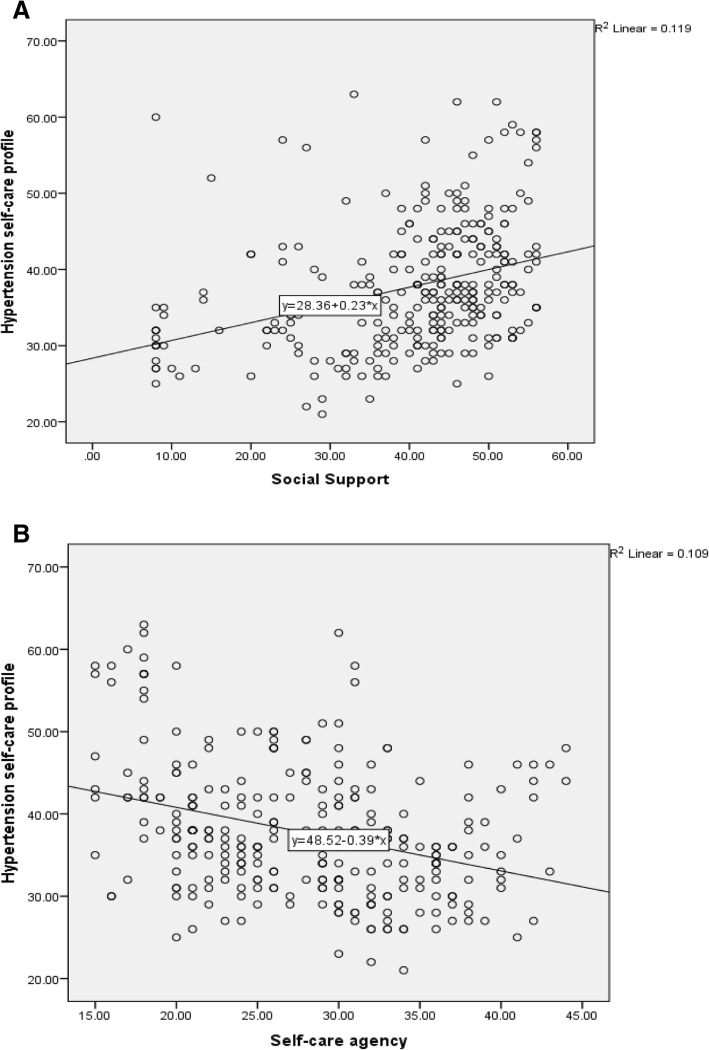
The mean score for hypertension self-care was 37.7 ± 8.2 and 51% scored below the mean. Divorced participants (AOR = 0.115, 95% CI = 0.026, 0.508, p-value < 0.01) and those who lack source of information (AOR = 0.084, 95% CI = 0.022, 0.322, p-value < 0.01) were less likely to have good self-care practice. But, participants who had convenient place for exercise (AOR = 2.968, 95% CI = 1.826, 4.825, p-value < 0.01), who had good social support (AOR = 2.204, 95% CI = 1.272, 3.821, p-value < 0.01), who had traditional clergy-based teaching (AOR = 2.209, 95% CI = 1.064, 4.584, p-value < 0.05), and who had good self-care agency (AOR = 1.222, 2.956, p-value < 0.05) were more likely to have good self-care practice.
Most of the study participants reported poor self-care practices. Factors associated with hypertension self-care practice are marital status, education, source of self-care information, place for exercise, social support, and self-care agency. Targeted interventions are needed to improve hypertension self-care practice.
高血压自我护理行为对于控制血压和减少高血压并发症至关重要。然而,我们对埃塞俄比亚的高血压自我护理行为了解甚少。本研究的目的是评估埃塞俄比亚德西镇公共卫生机构中患者的高血压自我护理行为及其相关因素。
在这项横断面研究中,309名高血压患者(平均年龄58.8岁,53.4%为女性)用阿姆哈拉语完成了由访谈员主导的问卷调查。使用SPSS 22版进行描述性分析和逻辑回归分析。
高血压自我护理的平均得分为37.7±8.2,51%的得分低于平均分。离婚参与者(比值比=0.115,95%置信区间=0.026,0.508,p值<0.01)以及缺乏信息来源的参与者(比值比=0.084,95%置信区间=0.022,0.322,p值<0.01)进行良好自我护理行为的可能性较小。但是,有便利运动场所的参与者(比值比=2.968,95%置信区间=1.826,4.825,p值<0.01)、有良好社会支持的参与者(比值比=2.204,95%置信区间=1.272,3.821,p值<0.01)、接受过基于传统神职人员教导的参与者(比值比=2.209,95%置信区间=1.064,4.584,p值<0.05)以及有良好自我护理能力的参与者(比值比=1.222,95%置信区间=1.052,2.956,p值<0.05)进行良好自我护理行为的可能性更大。
大多数研究参与者报告自我护理行为较差。与高血压自我护理行为相关的因素包括婚姻状况、教育程度、自我护理信息来源、运动场所、社会支持和自我护理能力。需要采取有针对性的干预措施来改善高血压自我护理行为。