Department of Gastroenterology, The First Affiliated Hospital of Kunming Medical University, Yunnan Institute of Digestive Disease, Kunming, Yunnan Province, China.
Computational Biology and Medical Lab, State Key Laboratory of Genetic Resources and Evolution, Kunming Institute of Zoology, Chinese Academy of Sciences, Kunming, China.
Sci Rep. 2019 Jan 24;9(1):440. doi: 10.1038/s41598-018-37143-z.
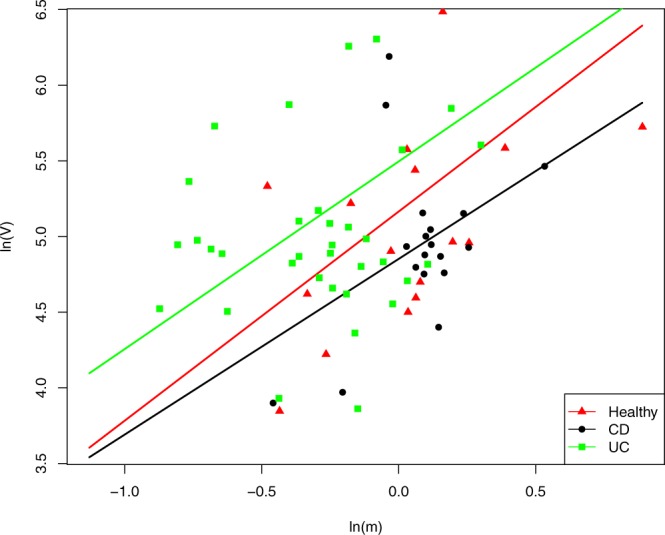
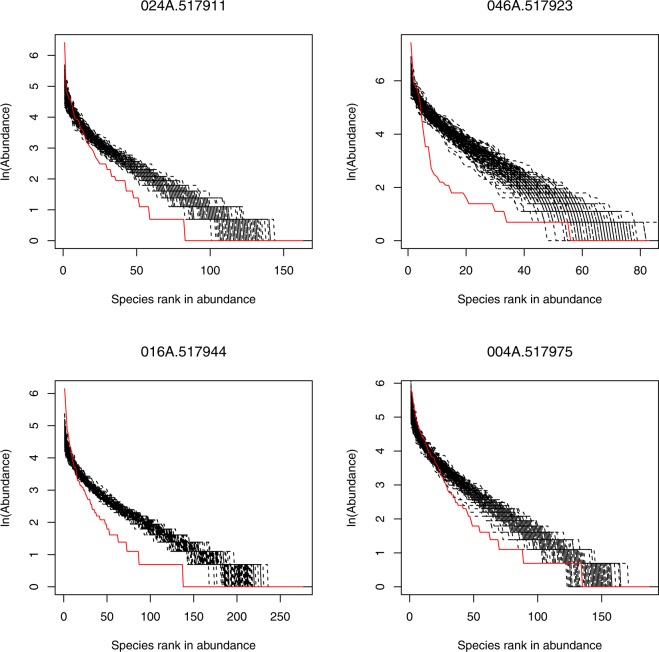
Inflammatory bowel disease (IBD) is an immunologically mediated disease and may be caused by abnormal immunological response to gut microbes. Although several studies on the ecological changes associated with IBD, such as community diversities, were reported, no previous studies have investigated the changes in the spatial heterogeneity and the mechanism of community assembly of the gut microbiota associated with IBD. In the present study, we first applied the Taylor's power law extensions to compare the community spatial heterogeneity between the gut microbial communities of the IBD patients and those of the healthy individuals. We found that the community spatial heterogeneity of gut microbiota in IBD patients is slightly lower than in the healthy individuals. This finding suggests that IBD may lower the spatial heterogeneity of gut microbiota, possibly via lowering the abundance of dominant species. We further applied the neutral theory of biodiversity to comparatively investigate the community assembly and diversity maintenance of the gut microbiota with and without IBD, and our application suggested that deterministic factors such as host immunity should be dominant forces shaping gut microbiota assembly, and diseases such as IBD may not be strong enough to change the trend set by the deterministic host factors.
炎症性肠病(IBD)是一种免疫介导的疾病,可能是由对肠道微生物的异常免疫反应引起的。尽管已经有几项关于与 IBD 相关的生态变化的研究,如群落多样性,但以前没有研究调查过与 IBD 相关的肠道微生物群落的空间异质性和群落组装机制的变化。在本研究中,我们首先应用泰勒幂律扩展来比较 IBD 患者和健康个体肠道微生物群落的社区空间异质性。我们发现 IBD 患者肠道微生物群落的社区空间异质性略低于健康个体。这一发现表明,IBD 可能会降低肠道微生物群落的空间异质性,可能是通过降低优势物种的丰度。我们进一步应用生物多样性中性理论来比较性地研究有无 IBD 时肠道微生物群落的组装和多样性维持,我们的应用表明,宿主免疫等决定性因素应该是塑造肠道微生物群落组装的主要力量,而像 IBD 这样的疾病可能不足以改变由决定性宿主因素设定的趋势。