Guo Lisha, Meng Mei, Wei Yaping, Lin Feixue, Jiang Ying, Cui Xianzhen, Wang Guirong, Wang Chunting, Guo Xiaosun
Department of Critical Care Medicine, Shandong Provincial Hospital Affiliated to Shandong University, Jinan, China.
Department of Emergency, Binzhou Medical University Hospital, Binzhou, China.
Front Pharmacol. 2019 Jan 21;9:1506. doi: 10.3389/fphar.2018.01506. eCollection 2018.
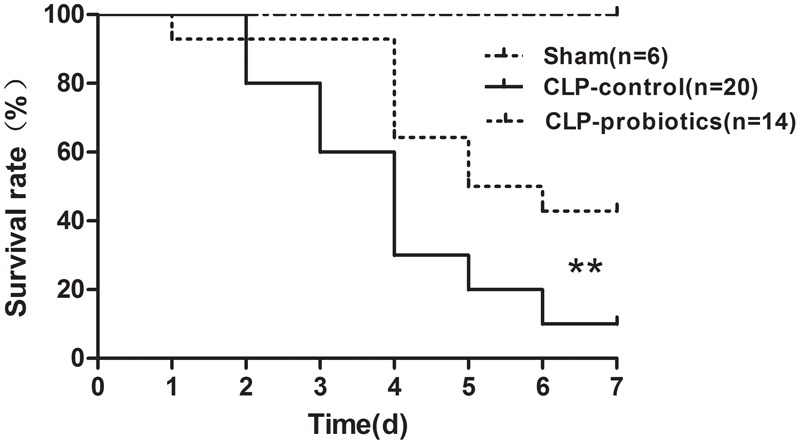
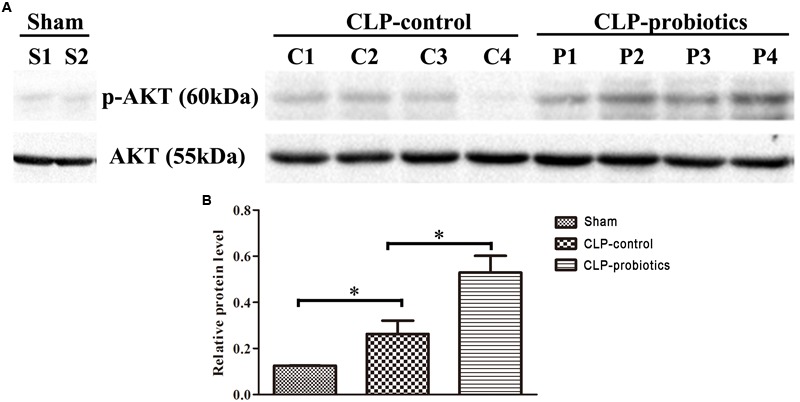
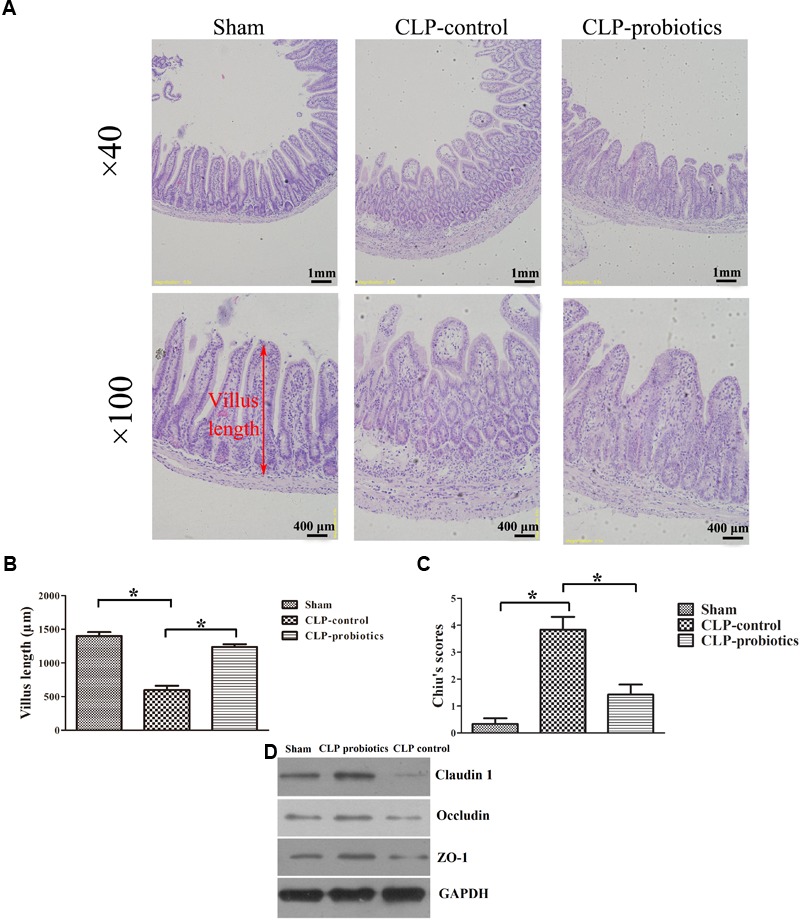
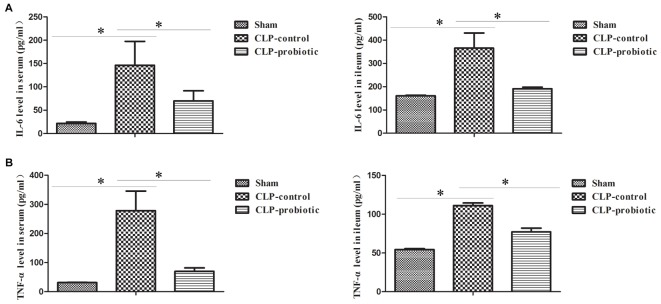
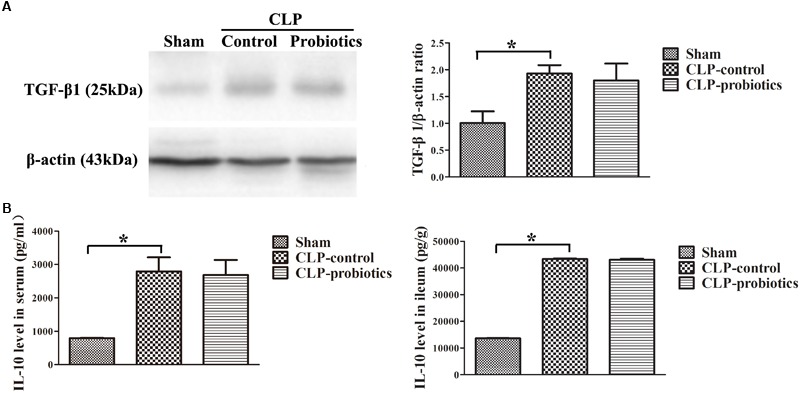
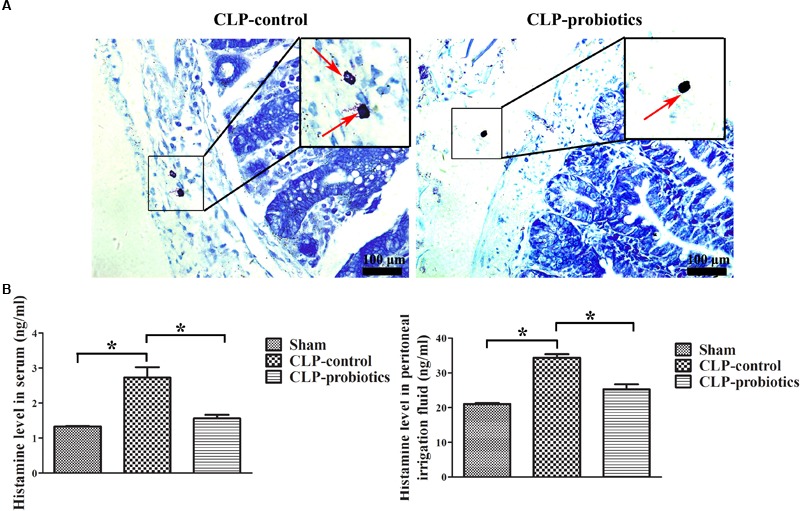
Clinical studies showed that the use of probiotics during critical illness reduced nosocomial infection and improved clinical outcome. However, the functional mechanisms of probiotics is remains unclear. Therefore the aim of current study is to explore the protective effects and understand the underlying mechanisms for the beneficial effects of live combined and (LCBE) in cecal ligation puncture (CLP)-induced sepsis. Seven-week-old C57BL/6J mice were divided into three groups: sham group (6 mice), CLP-control group (20 mice, pretreatment with saline for 7 days before CLP surgery) and CLP-probiotics group (14 mice, pretreatment with LCBE enteric-coated capsules for 7 days before CLP surgery). In survival experiment, mice were monitored for 7 days after CLP. After the procedure, mice were sacrificed, and, serum, and peritoneal lavage fluid were collected and intestinal ileal samples were harvested. Our results showed that the mortality was significantly reduced in mice CLP-probiotics group vs. CLP-control group ( < 0.05). Also, treatment CLP-probiotics group decreased the injury scores CLP-probiotics group when compared to CLP-control group. Additionally, levels of pro-inflammatory cytokines IL-6 and TNF-α levels in the serum and intestinal ileal tissues of CLP-probiotics group were reduced when compared to CLP-control group ( < 0.05). However, no significant differences in anti-inflammatory levels of IL-10 and TGF-β1 were observed between CLP-control and CLP-probiotic groups. Furthermore, our experiments showed that that probiotic treatment suppressed the macrophage activation and transformation from M-type to M1-type, inhibited the mast cells (MCs) degranulation, and activation of AKT (kinase B) pathway. In conclusion, our data shows that probiotics have a protective role in CLP septic mice through reducing intestinal inflammation, altering macrophage polarization and MCs degranulation, and regulating AKT signaling. This study demonstrated the protective effects and mechanisms involved in the protective role of live combined and (LCBE) in CLP-induced septic mice model.
临床研究表明,在危重病期间使用益生菌可减少医院感染并改善临床结局。然而,益生菌的功能机制仍不清楚。因此,本研究的目的是探讨活的复合嗜酸乳杆菌和双歧杆菌(LCBE)在盲肠结扎穿刺(CLP)诱导的脓毒症中的保护作用,并了解其有益作用的潜在机制。将7周龄的C57BL/6J小鼠分为三组:假手术组(6只小鼠)、CLP对照组(20只小鼠,在CLP手术前用生理盐水预处理7天)和CLP益生菌组(14只小鼠,在CLP手术前用LCBE肠溶胶囊预处理7天)。在生存实验中,对CLP术后的小鼠进行7天的监测。手术后,处死小鼠,收集血清、腹腔灌洗液,并采集回肠样本。我们的结果表明,与CLP对照组相比,CLP益生菌组小鼠的死亡率显著降低(P<0.05)。此外,与CLP对照组相比,CLP益生菌组的损伤评分降低。此外,与CLP对照组相比,CLP益生菌组血清和回肠组织中促炎细胞因子IL-6和TNF-α水平降低(P<0.05)。然而,CLP对照组和CLP益生菌组之间抗炎因子IL-10和TGF-β1水平未观察到显著差异。此外,我们的实验表明,益生菌治疗可抑制巨噬细胞活化并从M2型转变为M1型,抑制肥大细胞(MCs)脱颗粒,并激活AKT(蛋白激酶B)通路。总之,我们的数据表明,益生菌通过减轻肠道炎症、改变巨噬细胞极化和MCs脱颗粒以及调节AKT信号传导,对CLP脓毒症小鼠具有保护作用。本研究证明了活的复合嗜酸乳杆菌和双歧杆菌(LCBE)在CLP诱导的脓毒症小鼠模型中的保护作用及相关机制。