Department of Biology/Chemistry, University of Osnabrück, Osnabrück, Germany.
Department of Chemistry, Ludwig Maximilians University Munich, Munich, Germany.
Elife. 2019 Feb 5;8:e43230. doi: 10.7554/eLife.43230.
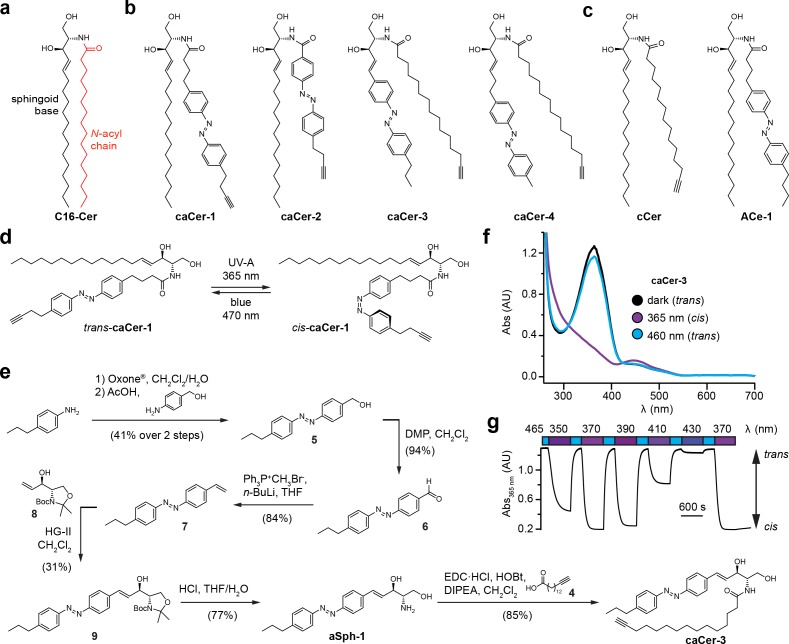
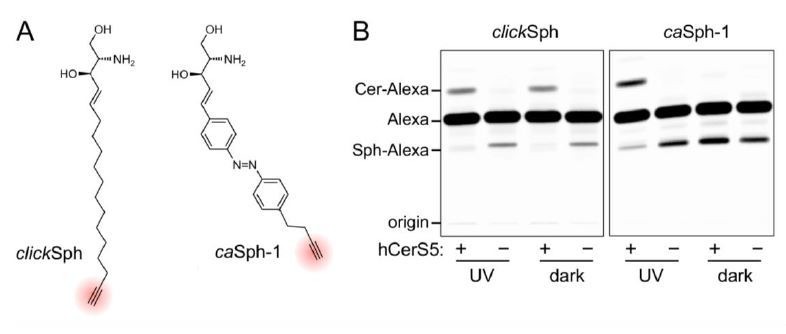
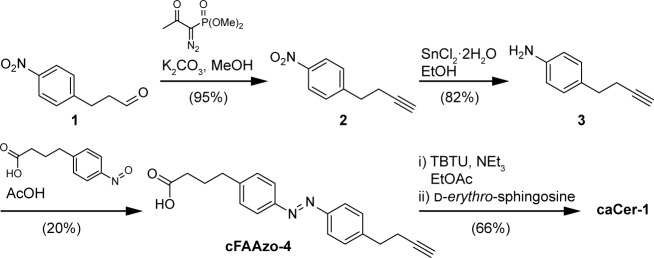
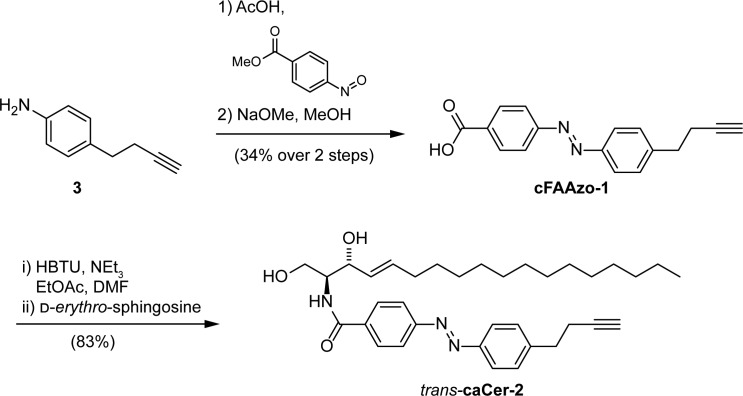
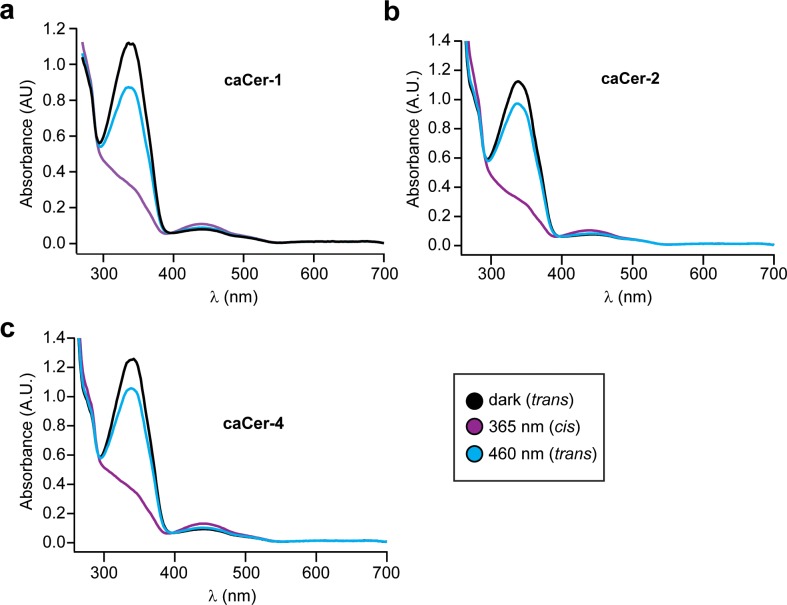
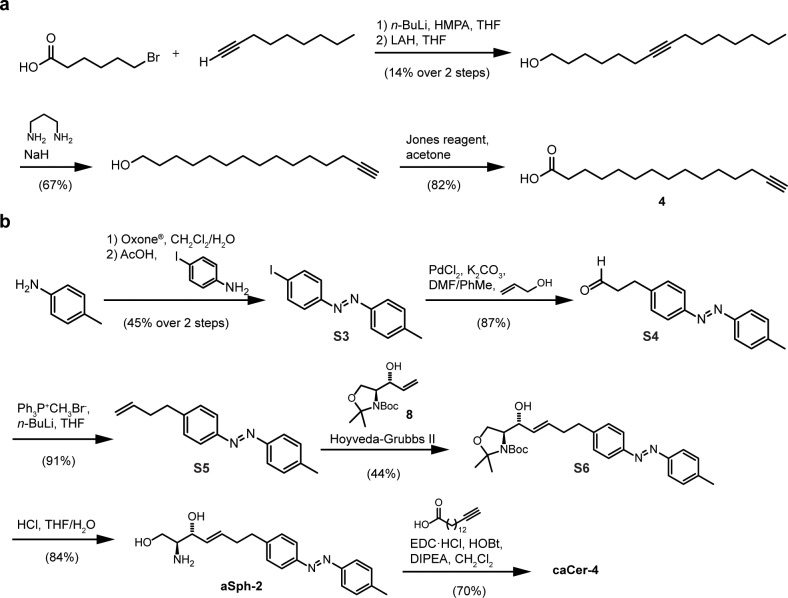
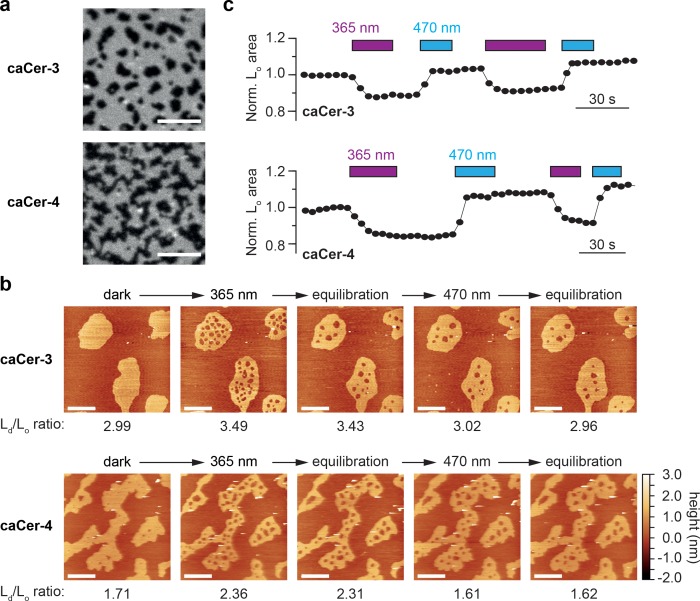
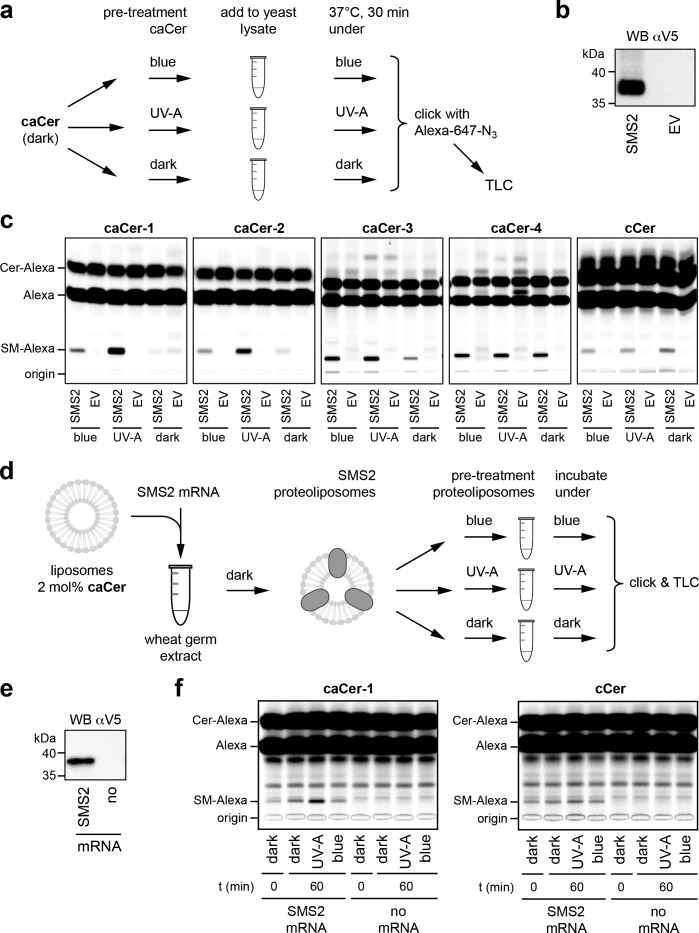
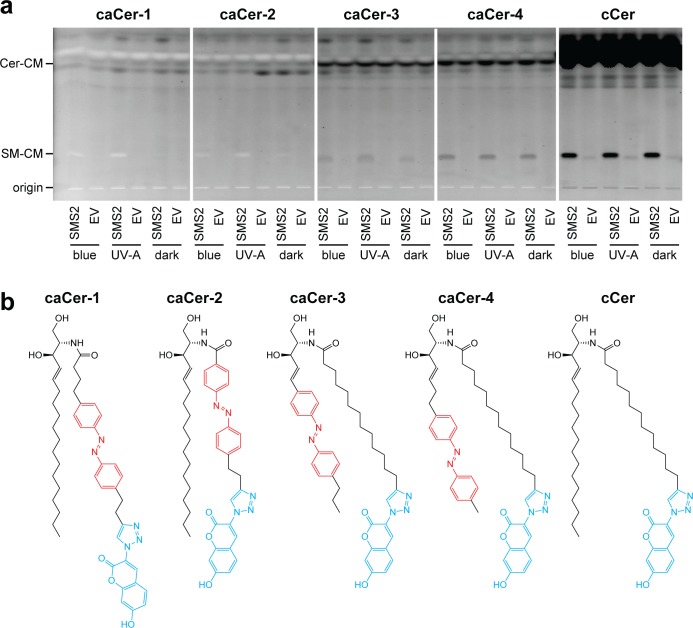
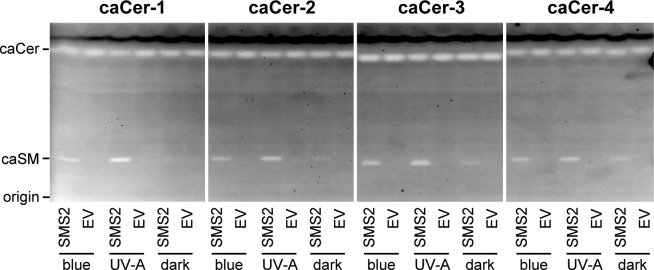
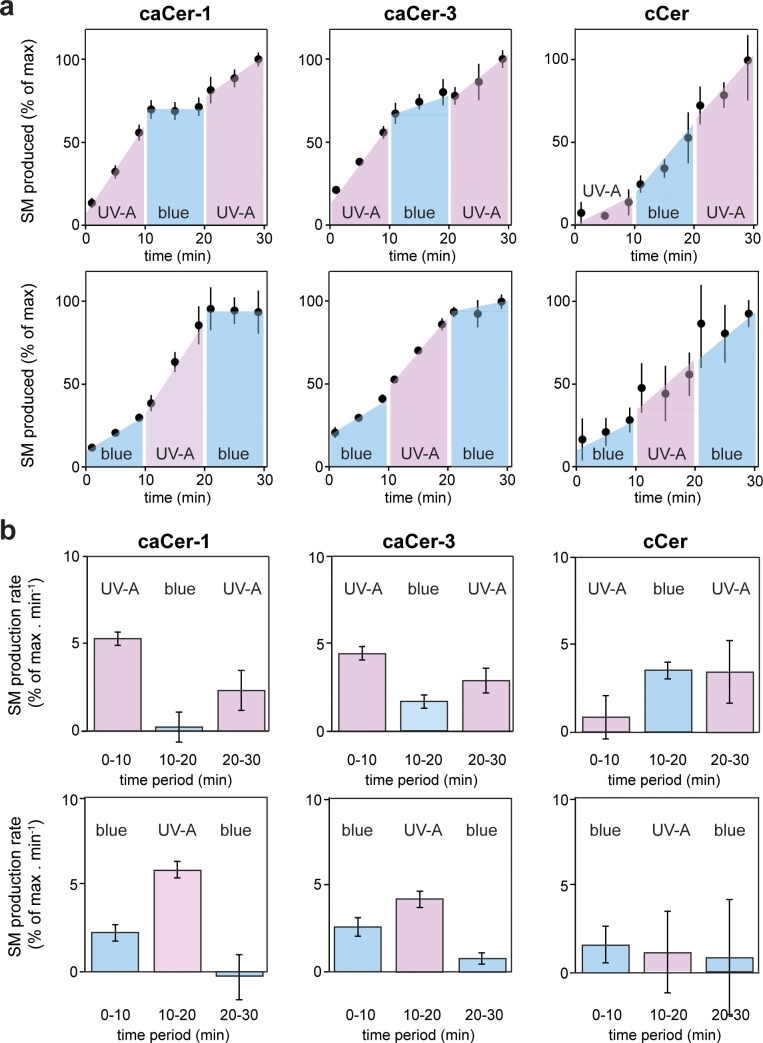
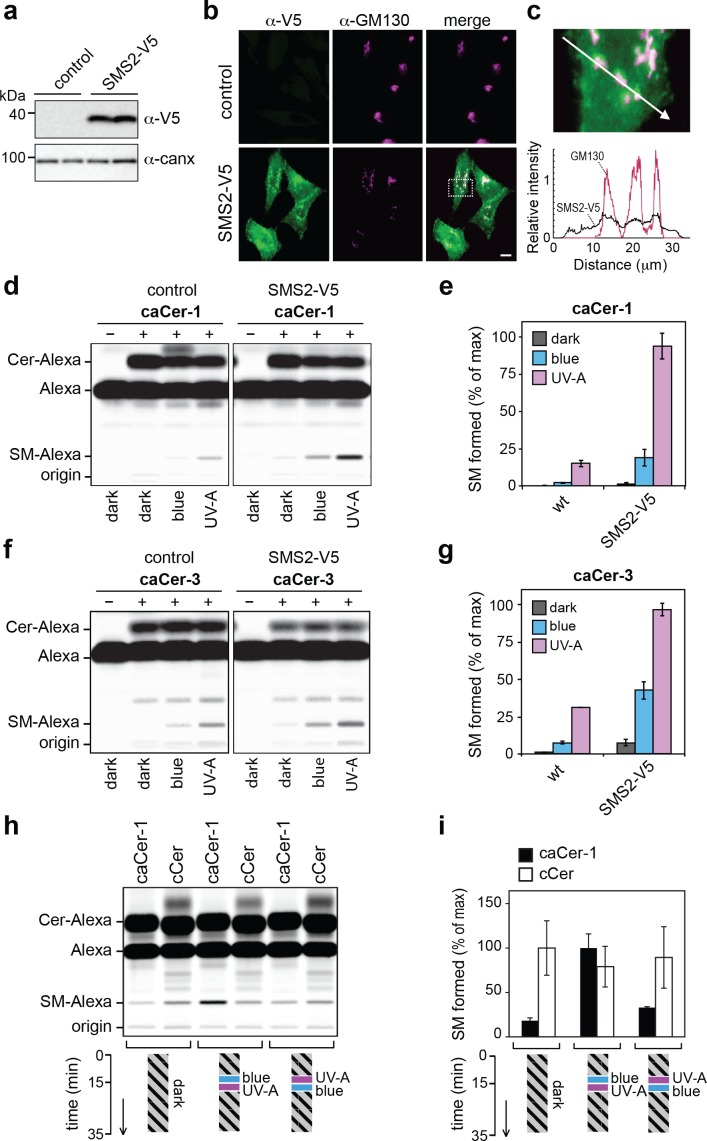
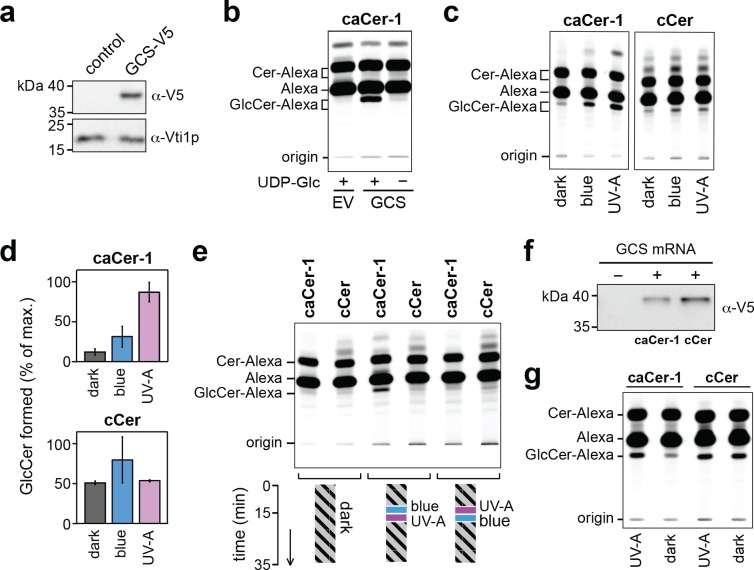
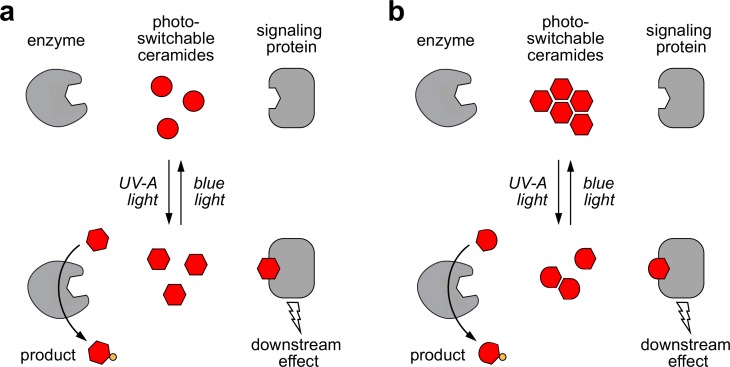
Ceramides are central intermediates of sphingolipid metabolism that also function as potent messengers in stress signaling and apoptosis. Progress in understanding how ceramides execute their biological roles is hampered by a lack of methods to manipulate their cellular levels and metabolic fate with appropriate spatiotemporal precision. Here, we report on clickable, azobenzene-containing ceramides, caCers, as photoswitchable metabolic substrates to exert optical control over sphingolipid production in cells. Combining atomic force microscopy on model bilayers with metabolic tracing studies in cells, we demonstrate that light-induced alterations in the lateral packing of caCers lead to marked differences in their metabolic conversion by sphingomyelin synthase and glucosylceramide synthase. These changes in metabolic rates are instant and reversible over several cycles of photoswitching. Our findings disclose new opportunities to probe the causal roles of ceramides and their metabolic derivatives in a wide array of sphingolipid-dependent cellular processes with the spatiotemporal precision of light.
神经酰胺是神经鞘脂代谢的核心中间产物,在应激信号转导和细胞凋亡中也具有重要的信使功能。由于缺乏适当的时空精度来操纵细胞内神经酰胺的水平和代谢命运,因此对其执行生物学功能的理解进展受到了阻碍。在这里,我们报告了一种可点击的、含有偶氮苯的神经酰胺 caCers,它是一种光致变色的代谢底物,可对细胞中的神经鞘脂生成进行光学控制。通过原子力显微镜在模型双层膜上的研究与细胞内代谢追踪研究相结合,我们证明了光诱导的 caCers 侧向堆积的改变会导致其被神经鞘磷脂合酶和葡萄糖神经酰胺合酶代谢转化的显著差异。这些代谢速率的变化是瞬间的,并且可以在几个光开关循环中进行可逆转换。我们的研究结果揭示了新的机会,可以用光的时空精度来探测神经酰胺及其代谢衍生物在广泛的依赖于神经鞘脂的细胞过程中的因果作用。