Instituto de Neurociencias de Alicante (CSIC-UMH), San Juan de Alicante, Spain; Cardiff University Brain Research Imaging Centre (CUBRIC), Cardiff University, Cardiff, UK.
Department of Clinical Neuroscience, Karolinska Institutet, Stockholm, Sweden; Department of Radiology, Karolinska University Hospital, Stockholm, Sweden; Athinoula A. Martinos Center for Biomedical Imaging and Harvard Medical School, Boston, MA, USA.
Neuroimage Clin. 2019;22:101699. doi: 10.1016/j.nicl.2019.101699. Epub 2019 Jan 30.
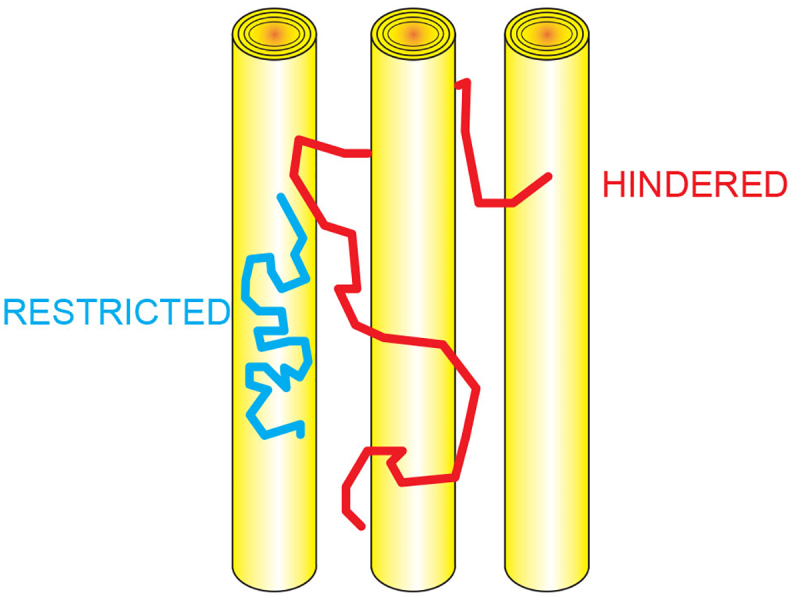
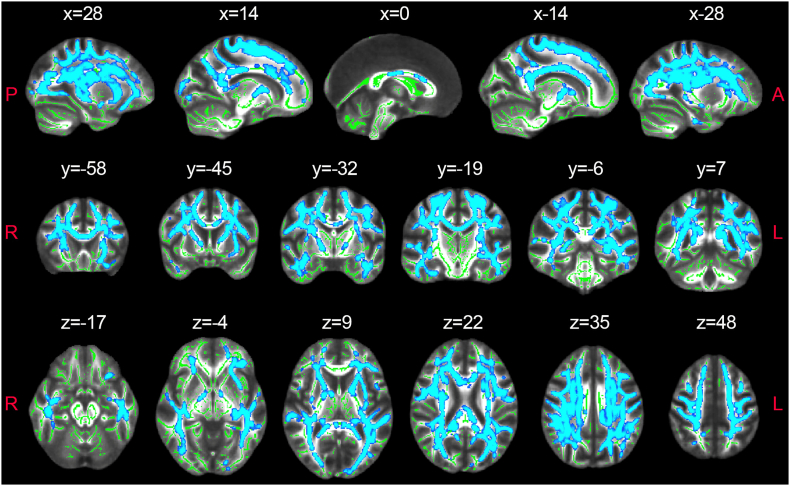
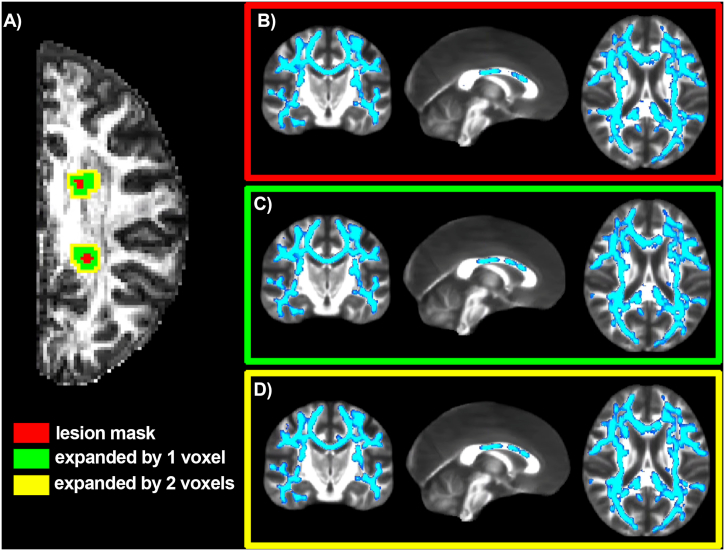
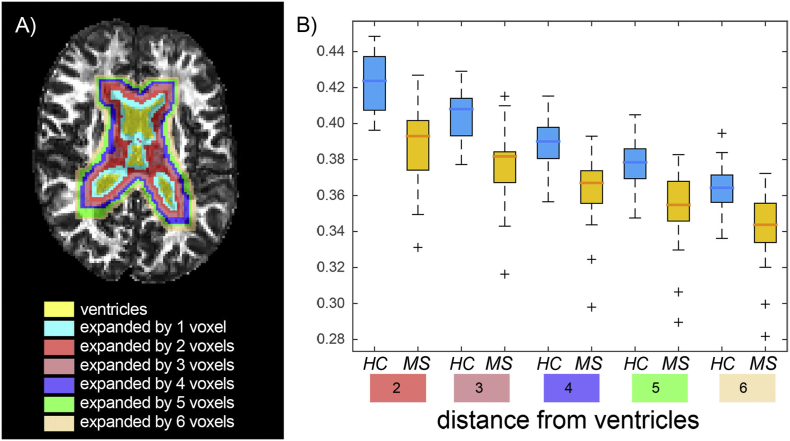
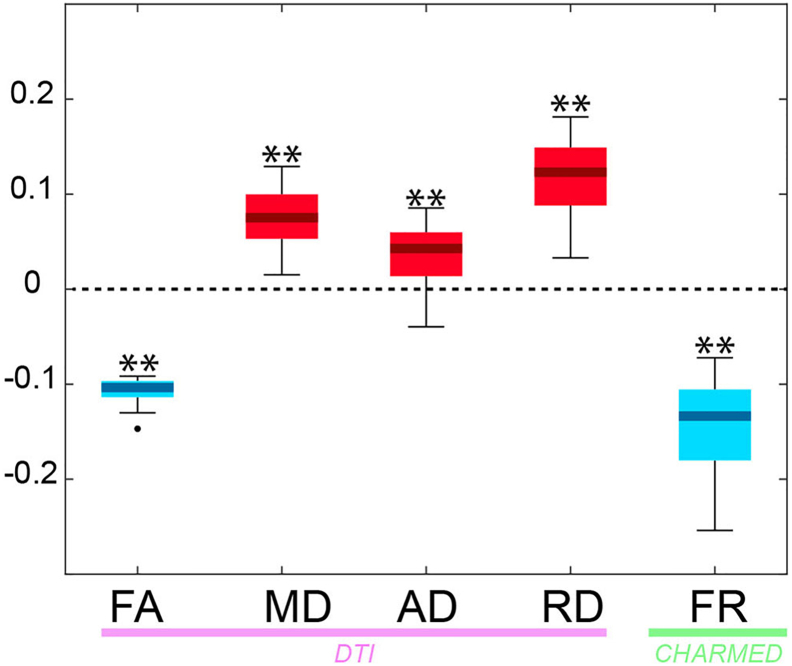
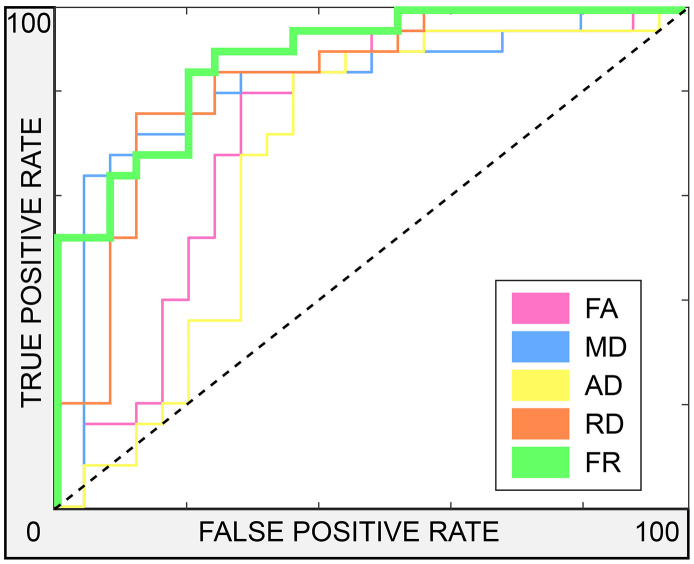
Irreversible white matter (WM) damage, including severe demyelination and axonal loss, is a main determinant of long-term disability in multiple sclerosis (MS). Non-invasive detection of changes in microstructural WM integrity in the disease is challenging since commonly used imaging metrics lack the necessary sensitivity, especially in the early phase of the disease. This study aims at assessing microstructural WM abnormalities in early-stage MS by using ultra-high gradient strength multi-shell diffusion MRI and the restricted signal fraction (FR) from the Composite Hindered and Restricted Model of Diffusion (CHARMED), a metric sensitive to the volume fraction of axons. In 22 early MS subjects (disease duration ≤5 years) and 15 age-matched healthy controls, restricted fraction estimates were obtained through the CHARMED model along with conventional Diffusion Tensor Imaging (DTI) metrics. All imaging parameters were compared cross-sectionally between the MS subjects and controls both in WM lesions and normal-appearing white matter (NAWM). We found a significant reduction in FR focally in WM lesions and widespread in the NAWM in MS patients relative to controls (corrected p < .05). Signal fraction changes in NAWM were not driven by perilesional tissue, nor were they influenced by proximity to the ventricles, challenging the hypothesis of an outside-in pathological process driven by CSF-mediated immune cytotoxic factors. No significant differences were found in conventional DTI parameters. In a cross-validated classification task, FR showed the largest effect size and outperformed all other diffusion imaging metrics in discerning lesions from contralateral NAWM. Taken together, our data provide evidence for the presence of widespread microstructural changes in the NAWM in early MS stages that are, at least in part, unrelated to focal demyelinating lesions. Interestingly, these pathological changes were not yet detectable by conventional diffusion imaging at this early disease stage, highlighting the sensitivity and value of multi-shell diffusion imaging for better characterizing axonal microstructure in MS.
不可逆的脑白质(WM)损伤,包括严重的脱髓鞘和轴突丢失,是多发性硬化症(MS)长期残疾的主要决定因素。由于常用的成像指标缺乏必要的敏感性,特别是在疾病的早期阶段,因此很难无创地检测疾病中微观结构 WM 完整性的变化。本研究旨在通过使用超高梯度强度多壳扩散 MRI 和受限信号分数(FR)来评估早期 MS 中的微观结构 WM 异常,受限信号分数是一种对轴突体积分数敏感的扩散复合受限和受限模型(CHARMED)的指标。在 22 名早期 MS 患者(病程≤5 年)和 15 名年龄匹配的健康对照者中,通过 CHARMED 模型获得受限分数估计值,以及常规扩散张量成像(DTI)指标。在 MS 患者和对照组的 WM 病变和正常表现的白质(NAWM)之间,比较了所有成像参数的横截面差异。与对照组相比,MS 患者的 WM 病变和 NAWM 中存在明显的 FR 局灶性降低和广泛降低(校正后 p<0.05)。NAWM 中的信号分数变化不是由病变周围组织驱动的,也不受与脑室接近程度的影响,这对 CSF 介导的免疫细胞毒性因子驱动的由外向内的病理过程假说提出了挑战。在常规 DTI 参数中未发现显著差异。在交叉验证分类任务中,FR 显示出最大的效应量,并且在辨别病变与对侧 NAWM 方面优于所有其他扩散成像指标。综上所述,我们的数据提供了证据,证明在早期 MS 阶段,NAWM 中存在广泛的微观结构变化,至少部分与局灶性脱髓鞘病变无关。有趣的是,在疾病的早期阶段,这些病理变化还不能通过常规扩散成像检测到,这凸显了多壳扩散成像的敏感性和价值,有助于更好地描述 MS 中的轴突微观结构。