University of Maryland, College Park, MD.
University of Maryland, College Park, MD.
J Am Acad Child Adolesc Psychiatry. 2019 Aug;58(8):768-775.e1. doi: 10.1016/j.jaac.2018.06.040. Epub 2019 Jan 9.
Children with the temperament of behavioral inhibition (BI) face increased risk for developing an anxiety disorder later in life. However, not all children with BI manifest anxiety symptoms, and use of a cognitive control strategy could moderate the pathway between BI and anxiety. Individuals vary widely in the strategy used to instantiate control. The present study examined whether a more planful style of cognitive control (ie, proactive control) or a more impulsive strategy of control (ie, reactive control) would moderate the association between early BI and later anxiety symptoms.
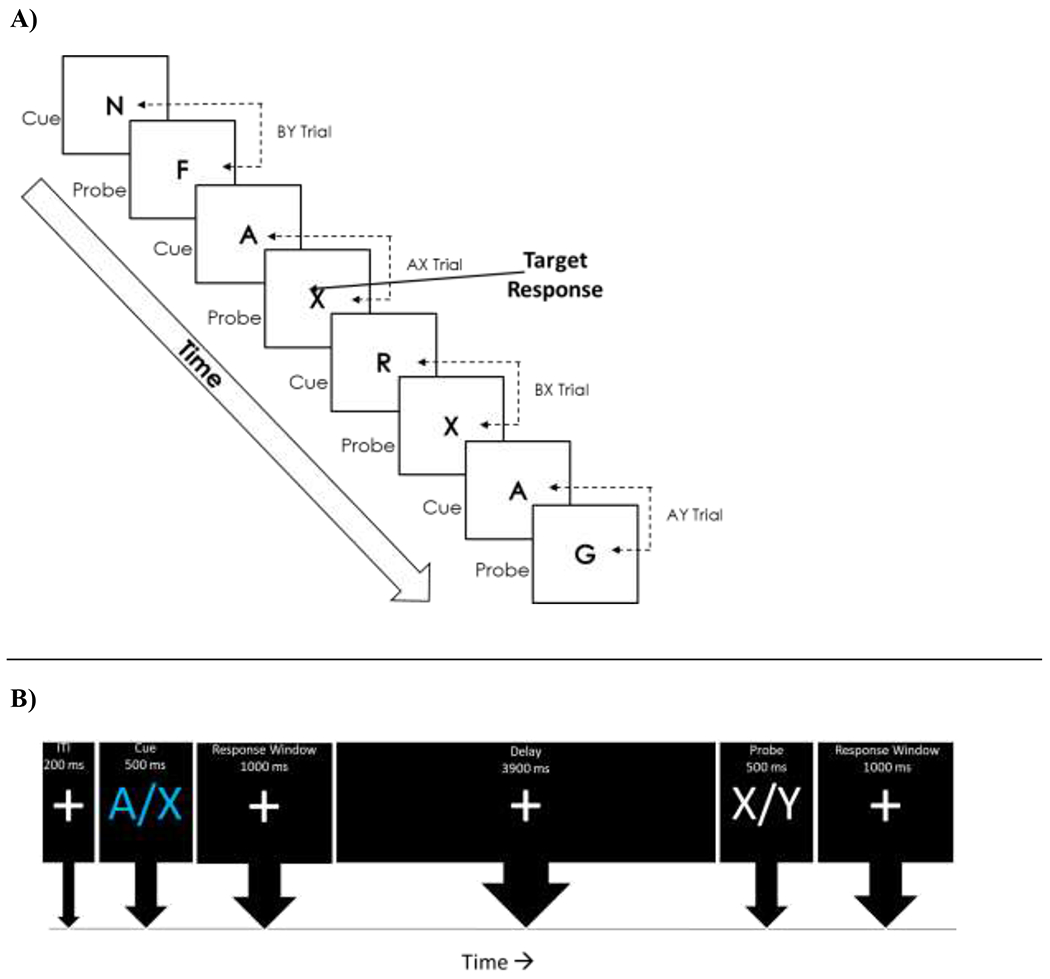
Participants were part of a longitudinal study examining the relations between BI (measured at 2-3 years of age) and later anxiety symptoms (measured at 13 years). Use of a cognitive control strategy was assessed at 13 years using the AX variant of the continuous performance task.
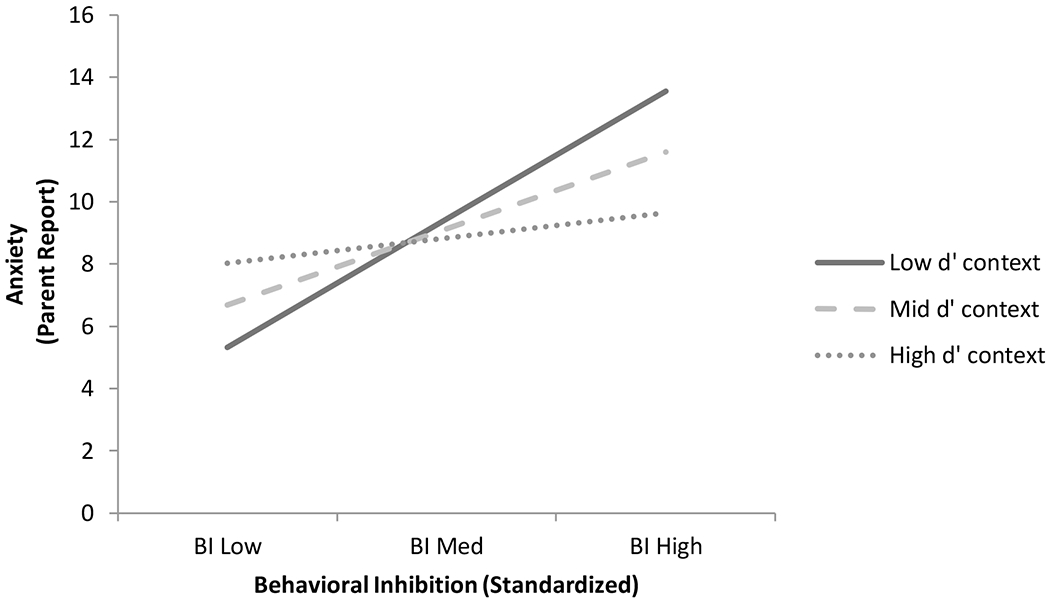
BI in toddlerhood significantly predicted increased use of a more reactive cognitive control style in adolescence. In addition, cognitive control strategy moderated the relation between BI and anxious symptoms, such that reliance on a more reactive strategy predicted higher levels of anxiety for children high in BI.
The present study is the first to identify the specific control strategy that increases risk for anxiety. Thus, it is not cognitive control per se, but the specific control strategy children adopt that could increase risk for anxiety later in life. These findings have important implications for future evidence-based interventions because they suggest that an emphasis on decreasing reactive cognitive control and increasing proactive cognitive control might decrease anxious cognition.
具有行为抑制气质(BI)的儿童在以后的生活中患焦虑症的风险增加。然而,并非所有具有 BI 的儿童都会表现出焦虑症状,并且使用认知控制策略可以调节 BI 与焦虑之间的途径。个体在使用控制策略方面存在很大差异。本研究考察了更计划性的认知控制策略(即主动控制)或更冲动的控制策略(即被动控制)是否会调节早期 BI 与以后焦虑症状之间的关联。
参与者是一项纵向研究的一部分,该研究考察了 BI(在 2-3 岁时测量)与以后的焦虑症状(在 13 岁时测量)之间的关系。在 13 岁时使用连续作业任务的 AX 变体评估认知控制策略的使用情况。
幼儿期的 BI 显著预测青少年时期更被动的认知控制风格的增加使用。此外,认知控制策略调节了 BI 和焦虑症状之间的关系,即对于 BI 较高的儿童来说,依赖更被动的策略会预测更高水平的焦虑。
本研究首次确定了增加焦虑风险的特定控制策略。因此,增加焦虑风险的不是认知控制本身,而是儿童采用的特定控制策略。这些发现对未来基于证据的干预措施具有重要意义,因为它们表明强调减少被动认知控制和增加主动认知控制可能会减少焦虑认知。