Valadez Emilio A, Troller-Renfree Sonya V, Buzzell George A, Henderson Heather A, Chronis-Tuscano Andrea, Pine Daniel S, Fox Nathan A
Department of Human Development and Quantitative Methodology, University of Maryland, College Park, Maryland, USA.
Department of Biobehavioral Sciences, Teachers College, Columbia University, New York, New York, USA.
JCPP Adv. 2021 Jul;1(2). doi: 10.1002/jcv2.12022. Epub 2021 Jul 2.
Behavioral inhibition (BI) is a temperament style characterized by heightened reactivity and negative affect in response to novel people and situations, and it predicts anxiety problems later in life. However, not all BI children develop anxiety problems, and mounting evidence suggests that how one manages their cognitive resources (cognitive control) influences anxiety risk. The present study tests whether more (proactive control) or less (reactive control) planful cognitive strategies moderate relations between early BI and later anxiety.
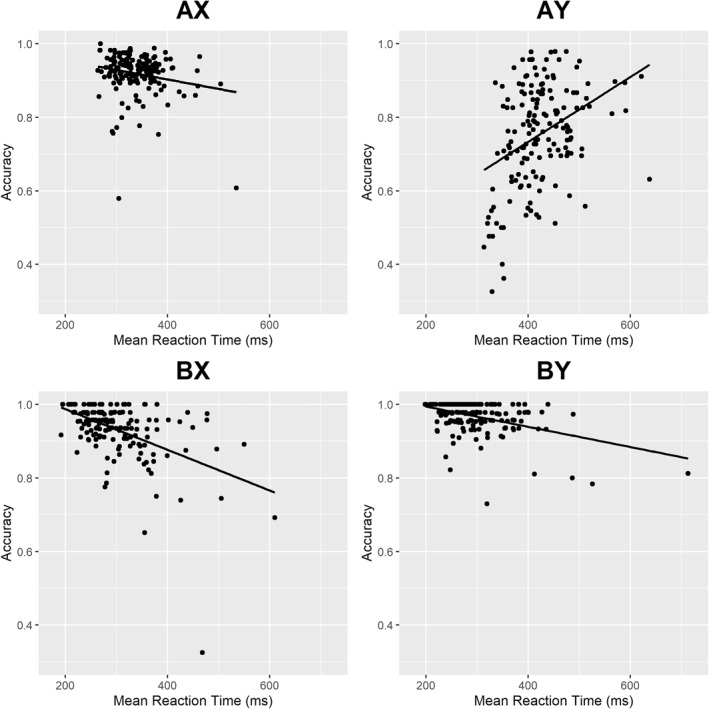
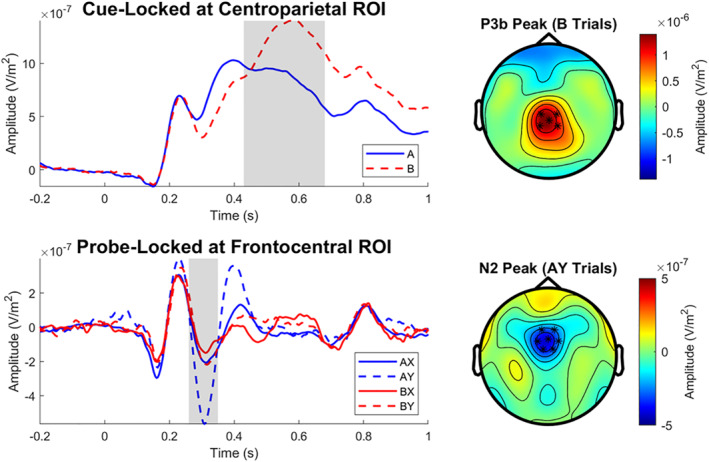
Participants included 112 adolescents (55% female; = 15.4 years) whose temperament was assessed during toddlerhood. In adolescence, participants completed an AX Continuous Performance Test while electroencephalography was recorded to disentangle neural activity related to proactive (cue-locked P3b) and reactive (probe-locked N2) control.
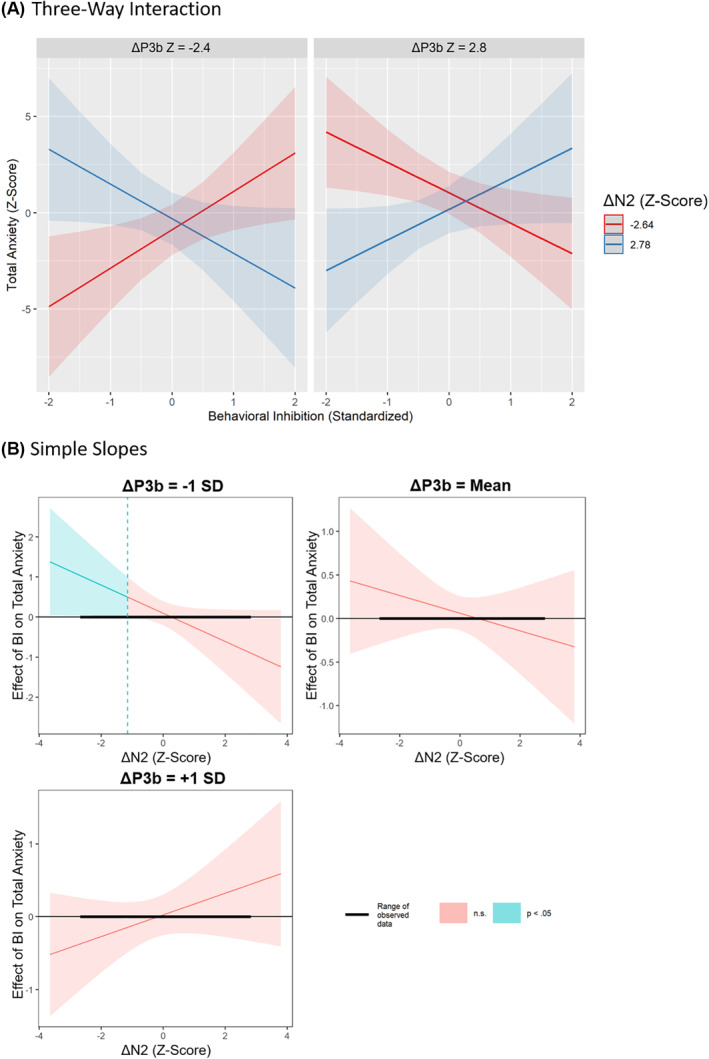
Greater BI was associated with greater total anxiety scores only among adolescents with smaller ΔP3bs and larger ΔN2s-a pattern consistent with decreased reliance on proactive strategies and increased reliance on reactive strategies. Additionally, a larger ΔP3b was associated with greater total anxiety scores; however, this effect was largely explained by the fact that females tended to have larger ΔP3bs and greater anxiety than males.
Early BI relates to risk for later anxiety specifically among adolescents who rely less on proactive strategies and more on reactive control strategies. Thus, cognitive control strategy moderates the association between developmental context (i.e., temperament) and later anxiety. The present study is the first to characterize how proactive and reactive control uniquely relate to pathways toward anxiety risk.
行为抑制(BI)是一种气质类型,其特征是在面对陌生人和情境时反应性增强和产生消极情绪,并且它预示着日后生活中会出现焦虑问题。然而,并非所有具有行为抑制的儿童都会出现焦虑问题,越来越多的证据表明,一个人如何管理其认知资源(认知控制)会影响焦虑风险。本研究旨在测试更多(主动控制)或更少(反应控制)的计划性认知策略是否会调节早期行为抑制与后期焦虑之间的关系。
研究对象包括112名青少年(55%为女性;平均年龄 = 15.4岁),他们在幼儿期接受了气质评估。在青少年时期,参与者完成了一项AX连续性能测试,同时记录脑电图,以区分与主动(线索锁定P3b)和反应(探针锁定N2)控制相关的神经活动。
只有在ΔP3b较小且ΔN2较大的青少年中,更高的行为抑制才与更高的总焦虑得分相关——这种模式与对主动策略的依赖减少和对反应策略的依赖增加相一致。此外,更大的ΔP3b与更高的总焦虑得分相关;然而,这种效应在很大程度上是由以下事实解释的:女性往往比男性具有更大的ΔP3b和更高的焦虑水平。
早期行为抑制与日后焦虑风险相关,这一关联尤其体现在那些较少依赖主动策略而更多依赖反应控制策略的青少年中。因此,认知控制策略调节了发展背景(即气质)与后期焦虑之间的关联。本研究首次描述了主动控制和反应控制如何独特地与焦虑风险途径相关。