Mwangi Willy E, Mogoa Eddy M, Mwangi James N, Mbuthia Paul G, Mbugua Susan W
Department of Clinical Studies, Faculty of Veterinary Medicine, University of Nairobi, Nairobi, Kenya.
Department of Veterinary Pathology, Microbiology, and Parasitology, Faculty of Veterinary Medicine, University of Nairobi, Nairobi, Kenya.
Vet World. 2018 Dec;11(12):1725-1735. doi: 10.14202/vetworld.2018.1725-1735. Epub 2018 Dec 25.
This was a systematic review conducted to evaluate the analgesic drugs and techniques used in the management of pain in dogs undergoing ovariohysterectomy.
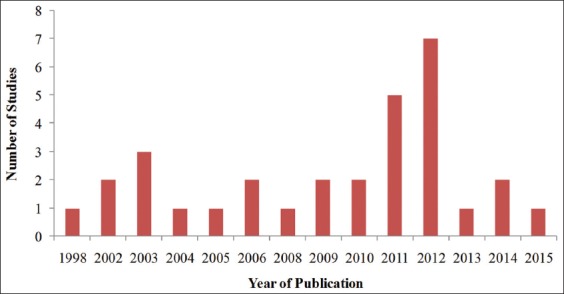
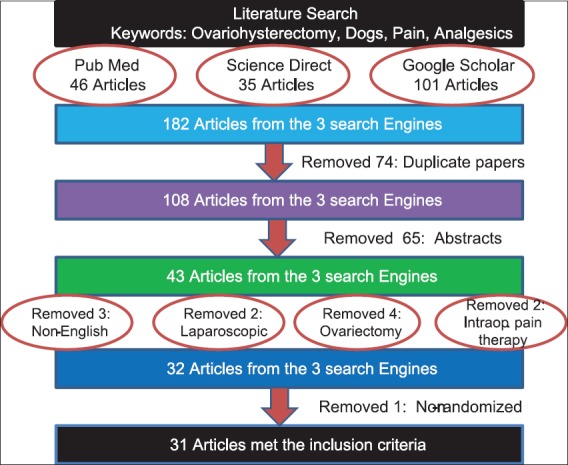
Systematic searches in PubMed, Google Scholar, and ScienceDirect were conducted for peer-reviewed articles written in English and published from 1995 to 2015. The key search words were dogs, ovariohysterectomy, pain, and analgesics. This was followed by a manual search of the references within the primary data sources. Inclusion and exclusion of studies and data extraction were performed independently by two reviewers. All randomized studies evaluating the effects of analgesics during ovariohysterectomy in dogs were included.
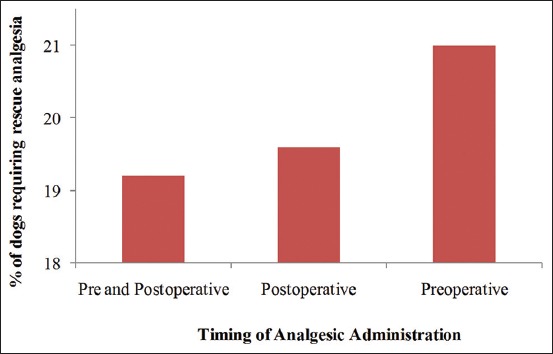
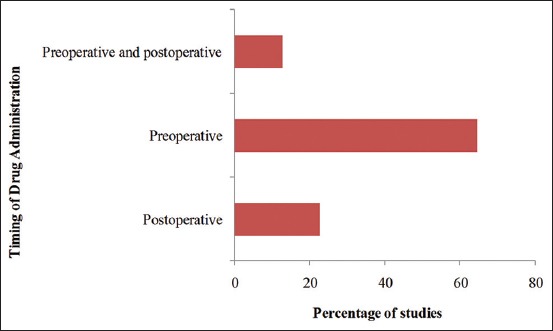
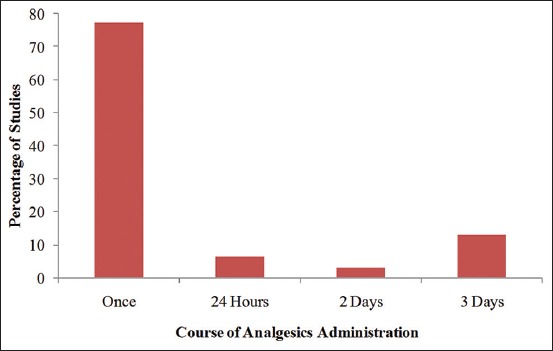
A total of 31 trials met the criteria and were, therefore, included in the study. Data on the type of analgesic drugs used, the technique of administration, and the need for rescue analgesia were extracted from the papers. Individual analgesic protocols were used in 83.9% of the studies compared to multimodal drug therapy, which was used in 16.1% of the studies. Opioids were used in 39.0% of studies, nonsteroidal anti-inflammatory drugs (NSAIDs) in 19.4%, a combination of NSAIDs and opioids in 19.4%, local analgesics in 6.5%, and acupuncture in 3.2% of the studies. Drug administration was done using three approaches that included pre-operative (64.5%), post-operative (22.6%) as well as combined pre- and post-operative approach (12.9%). In 77.4% of the studies, administration of analgesics was done once, while in 12.9%, it was done as a 72-h post-operative course. 24-h and 48-h courses of post-operative pain therapy were done in 6.5% and 3.2% of the studies, respectively. About 57% of the dogs in the control groups required rescue analgesia as compared to 21.6% in the single and 11.3% in multimodal drug therapy groups. The requirement for rescue analgesics was highest in dogs treated using acupuncture (43.8%) and lowest in dogs treated using NSAID-opioid combination (8.6%). Fewer dogs among those that received pain medication preoperatively and postoperatively required rescue analgesia compared to those in groups given drugs before and after surgery only. More dogs (26.4%) among those given analgesics only once postoperatively required rescue analgesia as compared to those that received analgesics daily for 72 h (4.4%).
This study provides evidence that opioids are the mainstream analgesic drugs used in managing acute post-operative pain in dogs' post-ovariohysterectomy. In addition, multimodal drug therapy, particularly, NSAID-opioids combination is more effective for pain management than single drug administration. Administering analgesics both before and after surgery is associated with better outcomes and so is a protracted course of post-operative pain therapy. Although these practices should be encouraged, controlled studies should be conducted to conclusively determine the best practices for pain management in dogs undergoing ovariohysterectomy.
本研究为一项系统综述,旨在评估用于接受卵巢子宫切除术的犬类疼痛管理的镇痛药物和技术。
在PubMed、谷歌学术和ScienceDirect数据库中进行系统检索,查找1995年至2015年期间发表的英文同行评审文章。关键检索词为犬、卵巢子宫切除术、疼痛和镇痛药。随后对主要数据源中的参考文献进行手动检索。研究的纳入和排除以及数据提取由两名评审员独立进行。纳入所有评估犬类卵巢子宫切除术期间镇痛药效果的随机研究。
共有31项试验符合标准,因此纳入本研究。从论文中提取了所用镇痛药类型、给药技术以及补救性镇痛需求的数据。83.9%的研究使用了个体化镇痛方案,而16.1%的研究使用了多模式药物治疗。39.0%的研究使用了阿片类药物,19.4%使用了非甾体抗炎药(NSAIDs),19.4%使用了NSAIDs与阿片类药物的联合用药,6.5%使用了局部镇痛药,3.2%使用了针灸。药物给药采用三种方法,包括术前给药(64.5%)、术后给药(22.6%)以及术前和术后联合给药(12.9%)。77.4%的研究中镇痛药给药一次,而12.9%的研究中是术后72小时疗程给药。术后疼痛治疗的24小时和48小时疗程分别在6.5%和3.2%的研究中进行。对照组中约57%的犬需要补救性镇痛,而单药治疗组为21.6%,多模式药物治疗组为11.3%。使用针灸治疗的犬对补救性镇痛药的需求最高(43.8%),而使用NSAID - 阿片类药物联合治疗的犬最低(8.6%)。与仅在手术前后给药的组相比,术前和术后接受疼痛药物治疗的犬中需要补救性镇痛的较少。术后仅给药一次的犬中需要补救性镇痛的更多(26.4%),而接受72小时每日镇痛的犬中为4.4%。
本研究提供的证据表明,阿片类药物是用于管理犬卵巢子宫切除术后急性术后疼痛的主流镇痛药。此外,多模式药物治疗,特别是NSAID - 阿片类药物联合治疗在疼痛管理方面比单药给药更有效。手术前后均给予镇痛药与更好的结果相关,术后疼痛治疗的延长疗程也是如此。尽管应鼓励这些做法,但仍应进行对照研究以最终确定接受卵巢子宫切除术的犬类疼痛管理的最佳做法。