Dpto. Química en Ciencias Farmacéuticas. Facultad de Farmacia, Universidad Complutense de Madrid, Plaza Ramón y Cajal s/n, 28040 Madrid, Spain.
Centro de Investigación Biomédica en Red-CIBER, 28029 Madrid, Spain.
Int J Mol Sci. 2019 Feb 20;20(4):929. doi: 10.3390/ijms20040929.
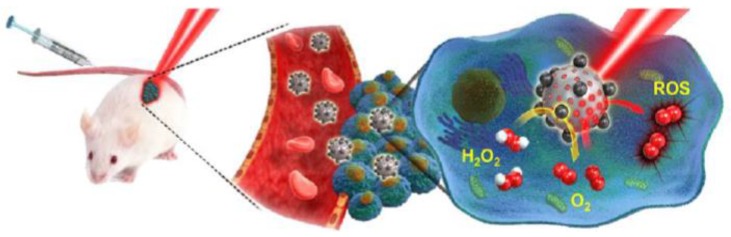
The rise and development of nanotechnology has enabled the creation of a wide number of systems with new and advantageous features to treat cancer. However, in many cases, the lone application of these new nanotherapeutics has proven not to be enough to achieve acceptable therapeutic efficacies. Hence, to avoid these limitations, the scientific community has embarked on the development of single formulations capable of combining functionalities. Among all possible components, silica-either solid or mesoporous-has become of importance as connecting and coating material for these new-generation therapeutic nanodevices. In the present review, the most recent examples of fully inorganic silica-based functional composites are visited, paying particular attention to those with potential biomedical applicability. Additionally, some highlights will be given with respect to their possible biosafety issues based on their chemical composition.
纳米技术的兴起和发展使人们能够创造出许多具有新颖和有利特性的系统,用于治疗癌症。然而,在许多情况下,这些新型纳米疗法的单独应用已被证明不足以达到可接受的治疗效果。因此,为了避免这些限制,科学界已经开始开发能够结合多种功能的单一制剂。在所有可能的成分中,硅石(无论是固体还是中孔)已成为这些新一代治疗性纳米器件的连接和涂层材料的重要选择。在本综述中,我们将访问最近的全无机硅基功能复合材料的例子,特别关注那些具有潜在生物医学应用的例子。此外,我们还将根据它们的化学成分,对它们可能存在的生物安全问题进行一些重点介绍。