Department of Radiation sciences, Umeå University, Umeå, Sweden.
PLoS One. 2019 Feb 22;14(2):e0212110. doi: 10.1371/journal.pone.0212110. eCollection 2019.
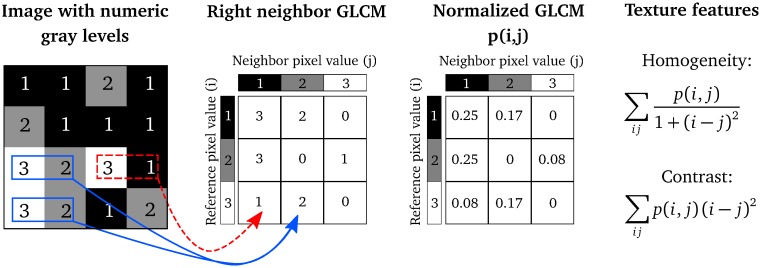
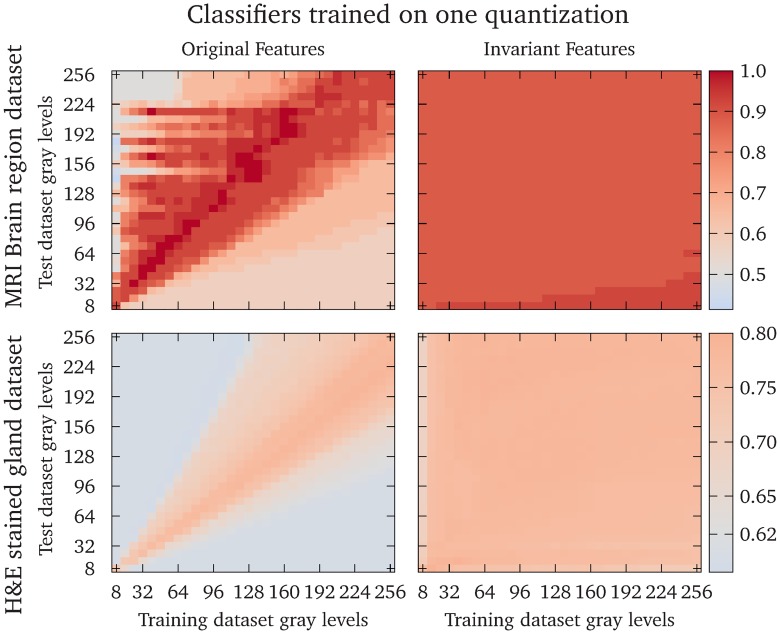
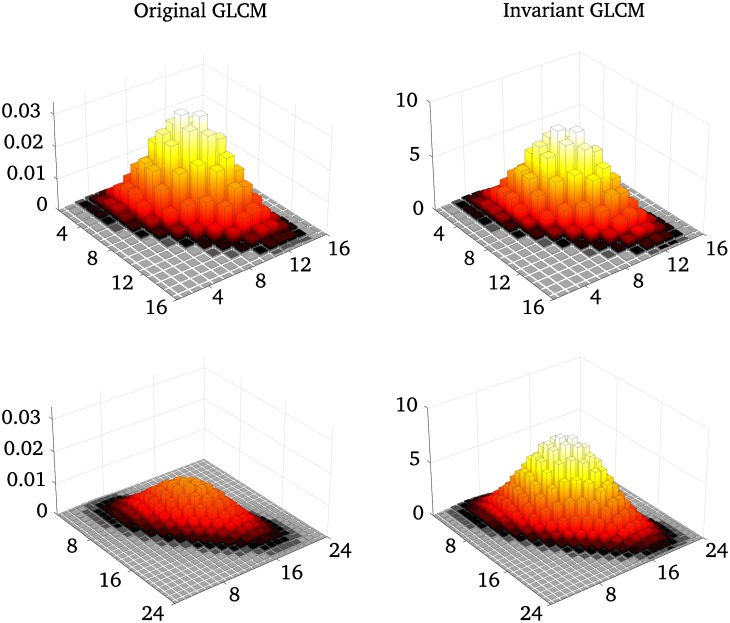
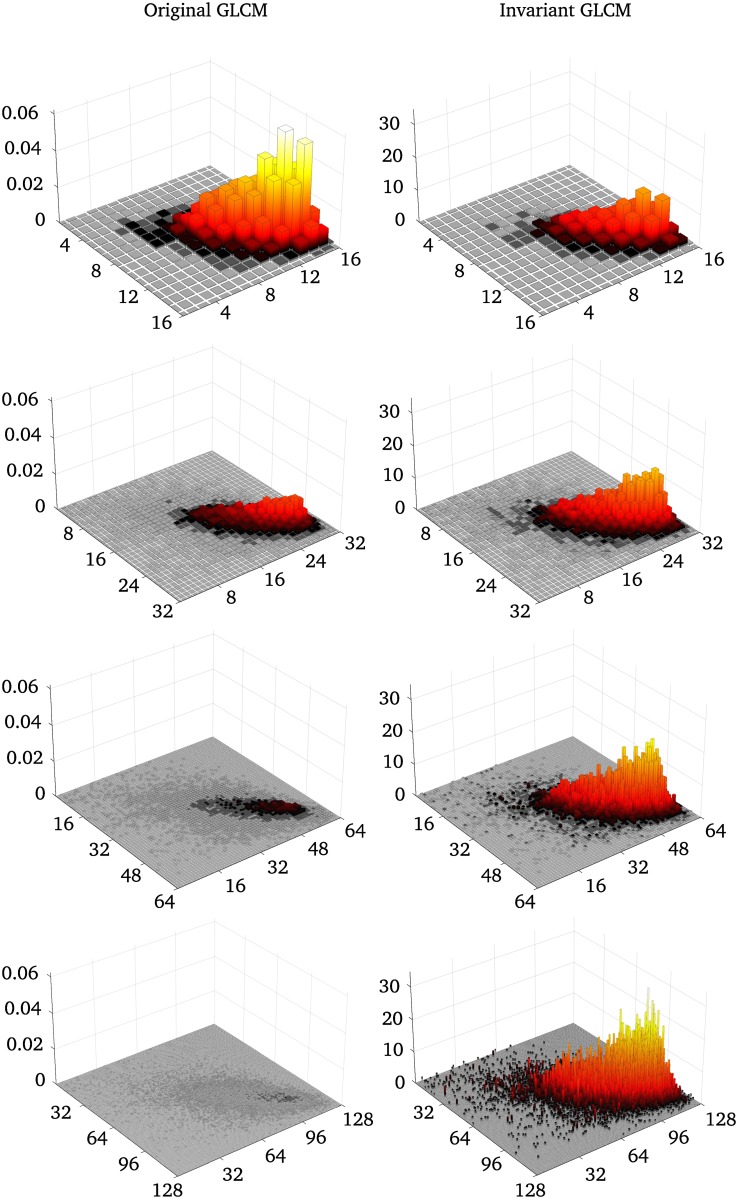
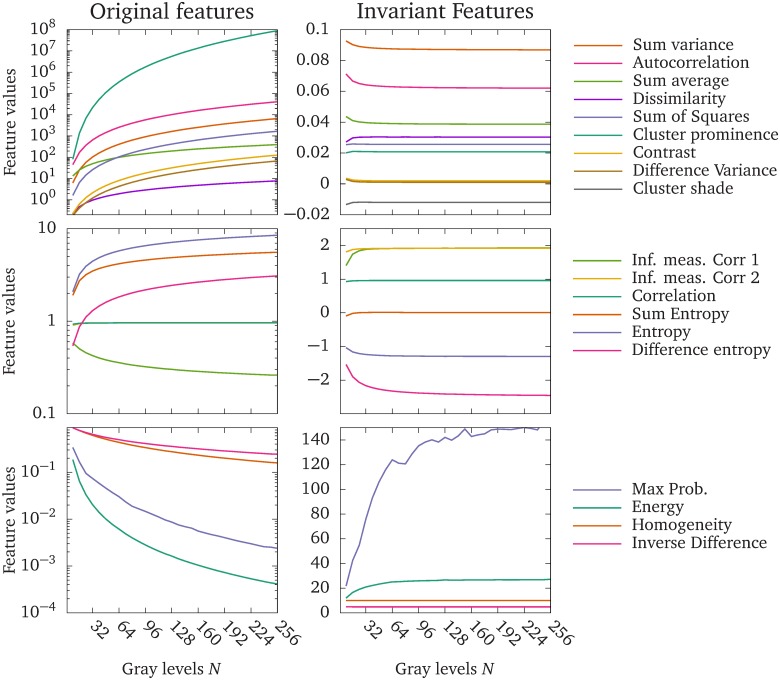
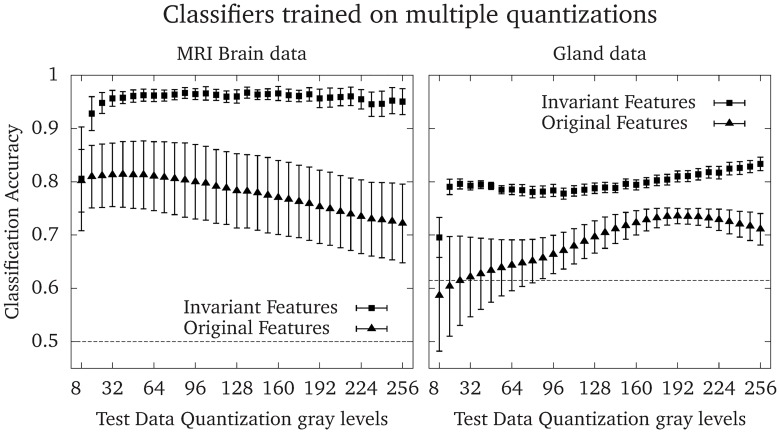
Haralick texture features are common texture descriptors in image analysis. To compute the Haralick features, the image gray-levels are reduced, a process called quantization. The resulting features depend heavily on the quantization step, so Haralick features are not reproducible unless the same quantization is performed. The aim of this work was to develop Haralick features that are invariant to the number of quantization gray-levels. By redefining the gray-level co-occurrence matrix (GLCM) as a discretized probability density function, it becomes asymptotically invariant to the quantization. The invariant and original features were compared using logistic regression classification to separate two classes based on the texture features. Classifiers trained on the invariant features showed higher accuracies, and had similar performance when training and test images had very different quantizations. In conclusion, using the invariant Haralick features, an image pattern will give the same texture feature values independent of image quantization.
哈拉斯纹理特征是图像分析中常用的纹理描述符。为了计算哈拉斯特征,需要对图像灰度级进行缩减,这一过程称为量化。所得特征在很大程度上依赖于量化步长,因此除非执行相同的量化,否则哈拉斯特征是不可重现的。本工作的目的是开发对量化灰度级数量不变的哈拉斯特征。通过将灰度共生矩阵(GLCM)重新定义为离散概率密度函数,它对量化具有渐近不变性。使用逻辑回归分类对不变特征和原始特征进行比较,根据纹理特征将两类分开。基于不变特征训练的分类器显示出更高的准确性,并且在训练图像和测试图像具有非常不同的量化时,具有相似的性能。总之,使用不变的哈拉斯特征,图像模式将给出与图像量化无关的相同纹理特征值。