Bio-Imaging and Machine Vision Lab, Fischell Department of Bioengineering, University of Maryland, College Park, MD, 20742, USA.
The Institute of Agriculture Engineering, Agriculture Research Organization, Volcani Center, P.O.Box 6, Bet Dagen, 50250, Israel.
Sci Rep. 2019 Mar 13;9(1):4377. doi: 10.1038/s41598-019-40066-y.
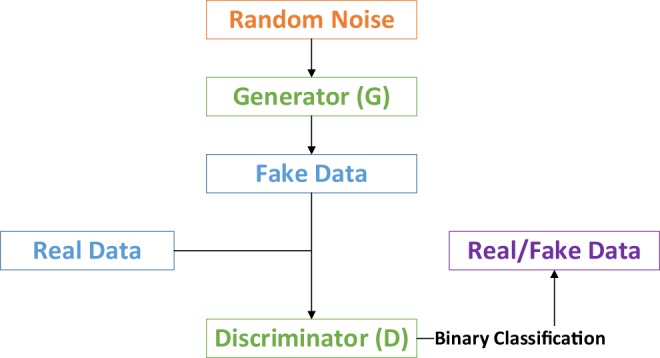
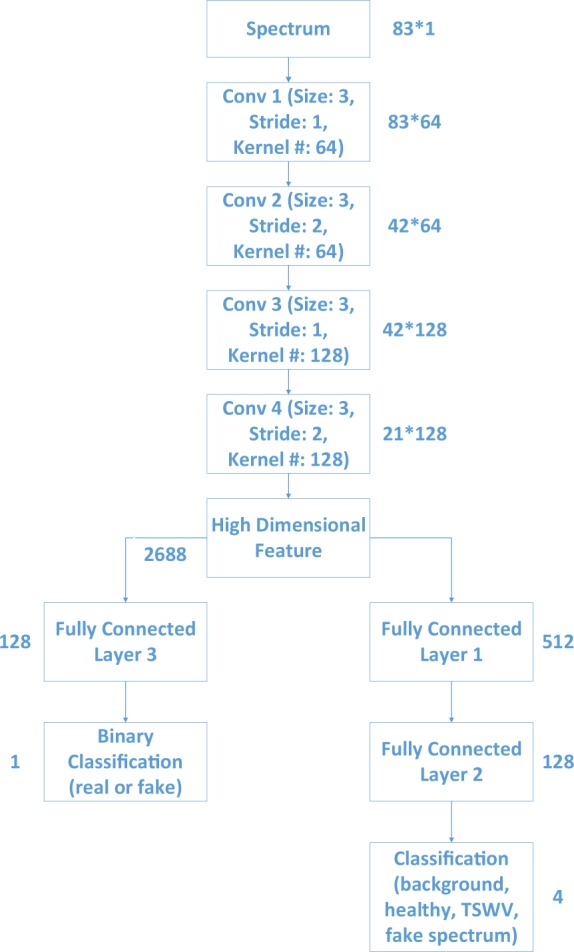
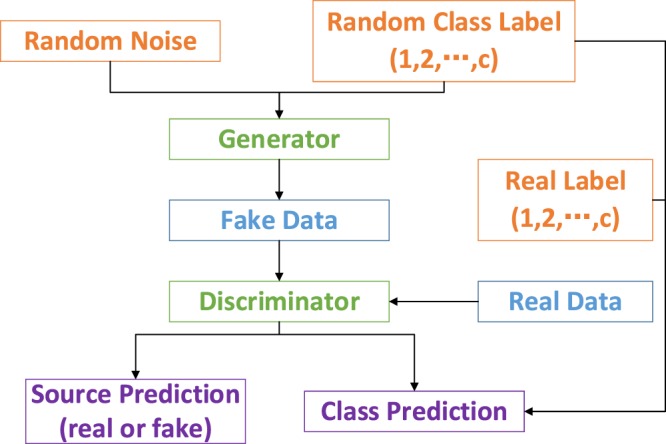
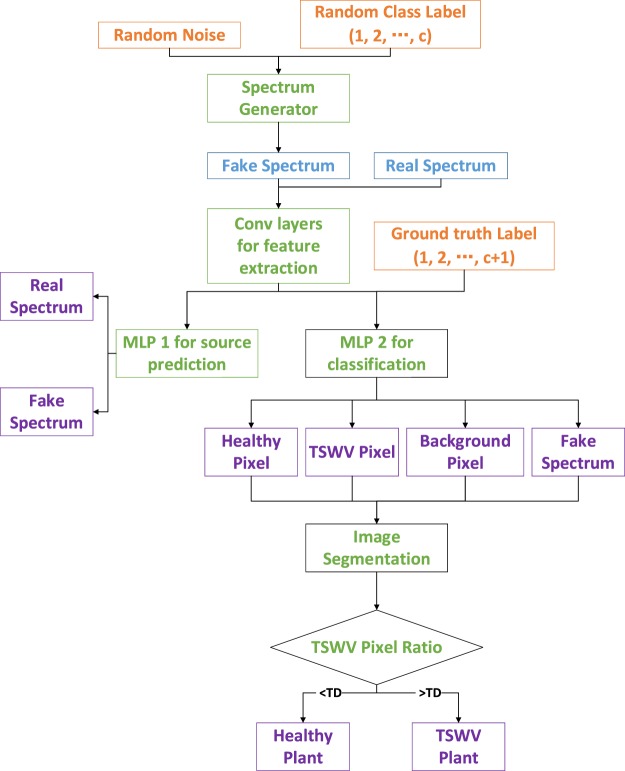
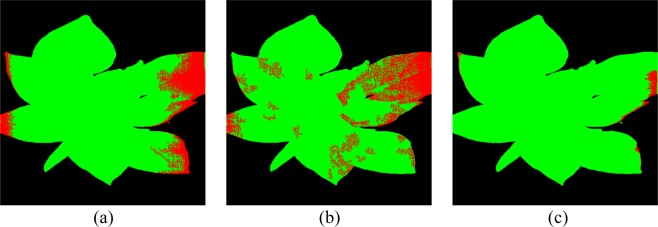
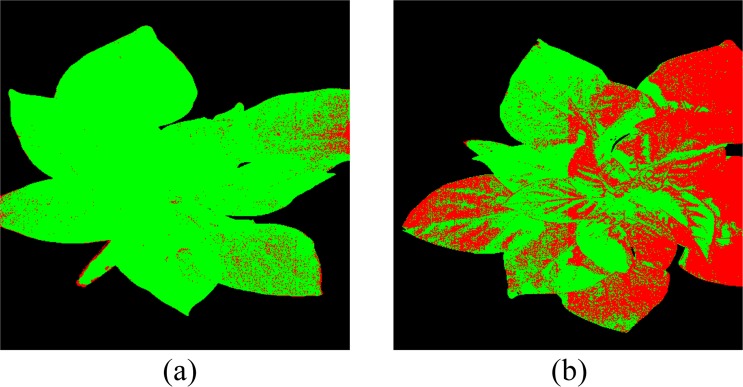
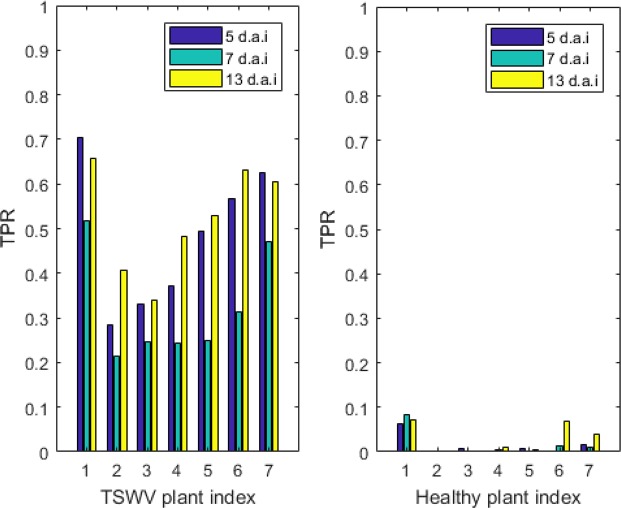
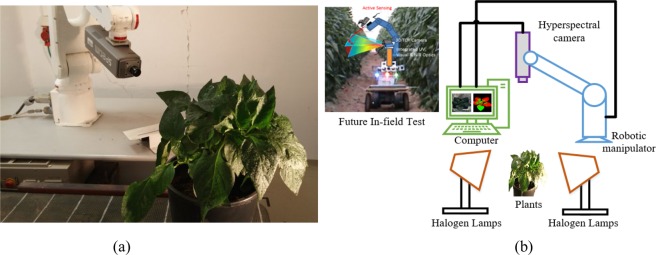
Tomato spotted wilt virus is a wide-spread plant disease in the world. It can threaten thousands of plants with a persistent and propagative manner. Early disease detection is expected to be able to control the disease spread, to facilitate management practice, and further to guarantee accompanying economic benefits. Hyperspectral imaging, a powerful remote sensing tool, has been widely applied in different science fields, especially in plant science domain. Rich spectral information makes disease detection possible before visible disease symptoms showing up. In the paper, a new hyperspectral analysis proximal sensing method based on generative adversarial nets (GAN) is proposed, named as outlier removal auxiliary classifier generative adversarial nets (OR-AC-GAN). It is an all-in-one method, which integrates the tasks of plant segmentation, spectrum classification and image classification. The model focuses on image pixels, which can effectively visualize potential plant disease positions, and keep experts' attention on these diseased pixels. Meanwhile, this new model can improve the performances of classic spectrum band selection methods, including the maximum variance principle component analysis (MVPCA), fast density-peak-based clustering, and similarity-based unsupervised band selection. Selecting spectrum wavebands reasonably is an important preprocessing step in spectroscopy/hyperspectral analysis applications, which can reduce the computation time for potential in-field applications, affect the prediction results and make the hyperspectral analysis results explainable. In the experiment, the hyperspectral reflectance imaging system covers the spectral range from 395 nm to 1005 nm. The proprosed model makes use of 83 bands to do the analysis. The plant level classification accuracy gets 96.25% before visible symptoms shows up. The pixel prediction false positive rate in healthy plants gets as low as 1.47%. Combining the OR-AC-GAN with three existing band selection algorithms, the performance of these band selection models can be significantly improved. Among them, MVPCA can leverage only 8 spectrum bands to get the same plant level classification accuracy as OR-AC-GAN, and the pixel prediction false positive rate in healthy plants is 1.57%, which is also comparable to OR-AC-GAN. This new model can be potentially transferred to other plant diseases detection applications. Its property to boost the performance of existing band selection methods can also accelerate the in-field applications of hyperspectral imaging technology.
番茄斑萎病毒是一种广泛存在于世界各地的植物病害。它可以以持续和传播的方式威胁成千上万种植物。早期疾病检测有望能够控制疾病的传播,便于管理实践,并进一步保证伴随的经济效益。高光谱成像作为一种强大的遥感工具,已广泛应用于不同的科学领域,特别是在植物科学领域。丰富的光谱信息使得在可见症状出现之前就有可能进行疾病检测。在本文中,提出了一种基于生成对抗网络(GAN)的新型高光谱分析近感方法,命名为异常值去除辅助分类器生成对抗网络(OR-AC-GAN)。它是一种集成了植物分割、光谱分类和图像分类任务的整体方法。该模型侧重于图像像素,可以有效地可视化潜在的植物病害位置,并使专家关注这些患病像素。同时,这种新模型可以提高经典光谱波段选择方法的性能,包括最大方差主成分分析(MVPCA)、快速基于密度峰值的聚类和基于相似性的无监督波段选择。合理选择光谱波段是光谱/高光谱分析应用中的一个重要预处理步骤,它可以减少潜在现场应用的计算时间,影响预测结果,并使高光谱分析结果具有可解释性。在实验中,高光谱反射成像系统覆盖的光谱范围从 395nm 到 1005nm。所提出的模型利用 83 个波段进行分析。在可见症状出现之前,植物级分类精度达到 96.25%。健康植物中的像素预测假阳性率低至 1.47%。将 OR-AC-GAN 与三种现有的波段选择算法相结合,可以显著提高这些波段选择模型的性能。其中,MVPCA 可以仅利用 8 个光谱波段获得与 OR-AC-GAN 相同的植物级分类精度,而健康植物中的像素预测假阳性率为 1.57%,也可与 OR-AC-GAN 相媲美。该新模型可潜在地应用于其他植物病害检测应用。其提升现有波段选择方法性能的特性也可以加速高光谱成像技术的现场应用。