Hyatt Hayden W, Kavazis Andreas N
School of Kinesiology, Auburn University, Auburn, AL, USA.
Int J Exerc Sci. 2019 Mar 1;12(5):433-443. doi: 10.70252/OKTE5180. eCollection 2019.
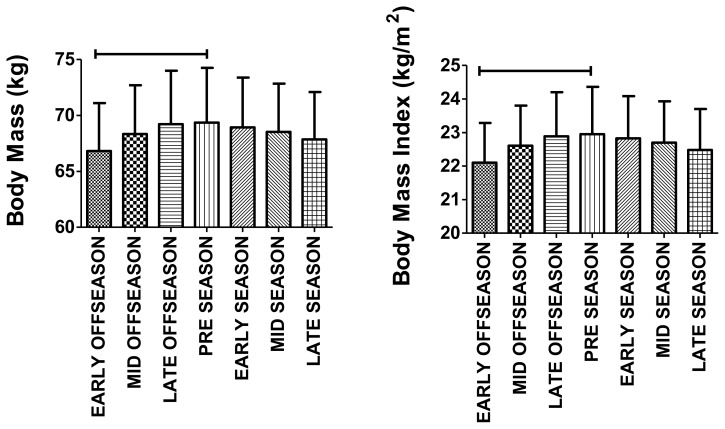
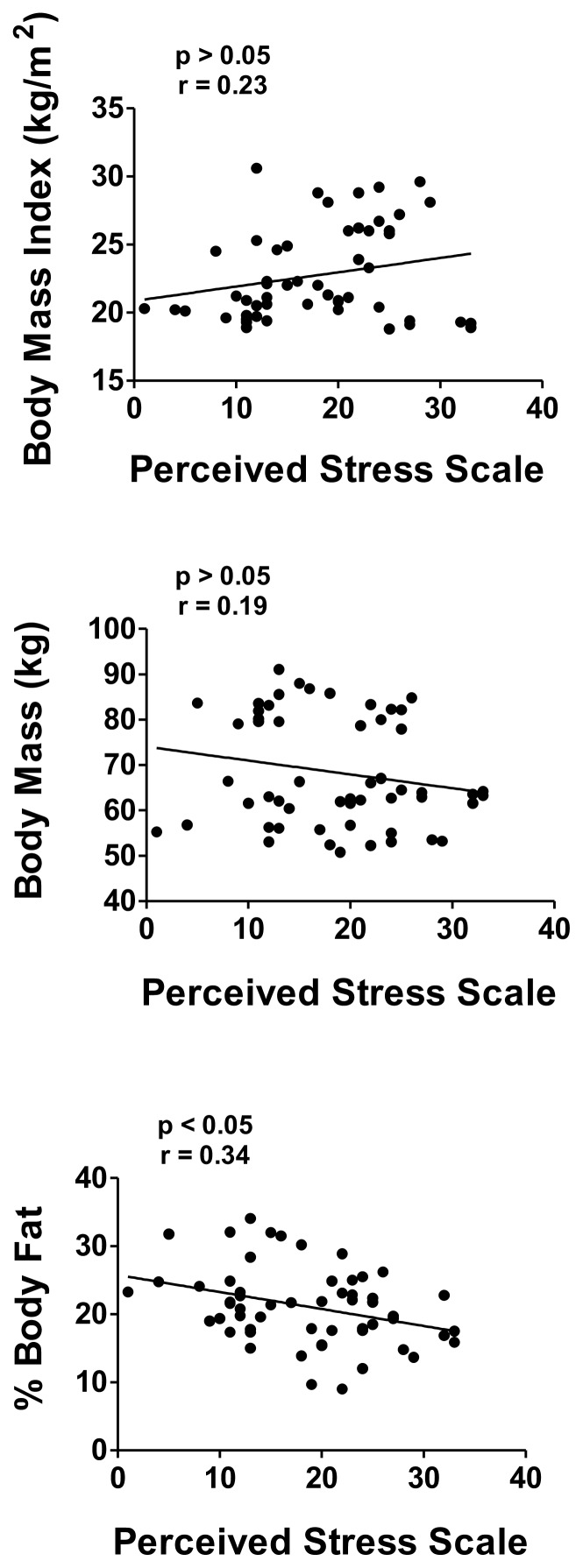
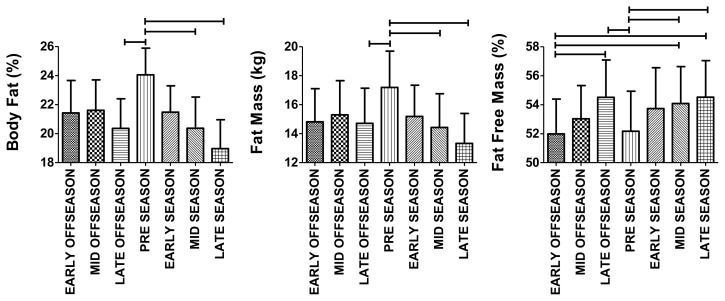
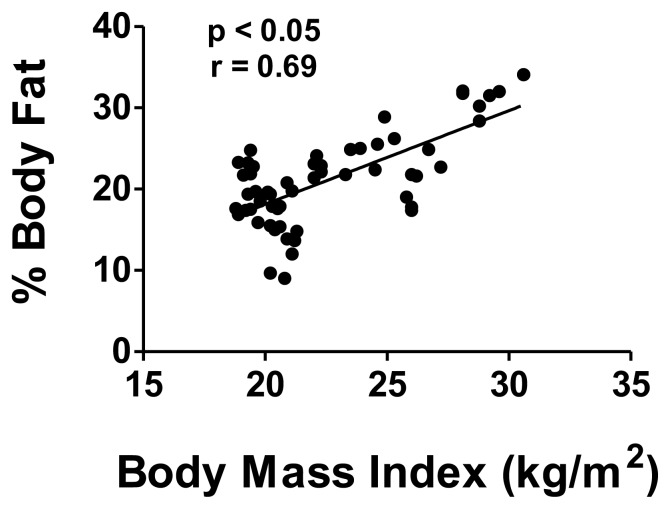
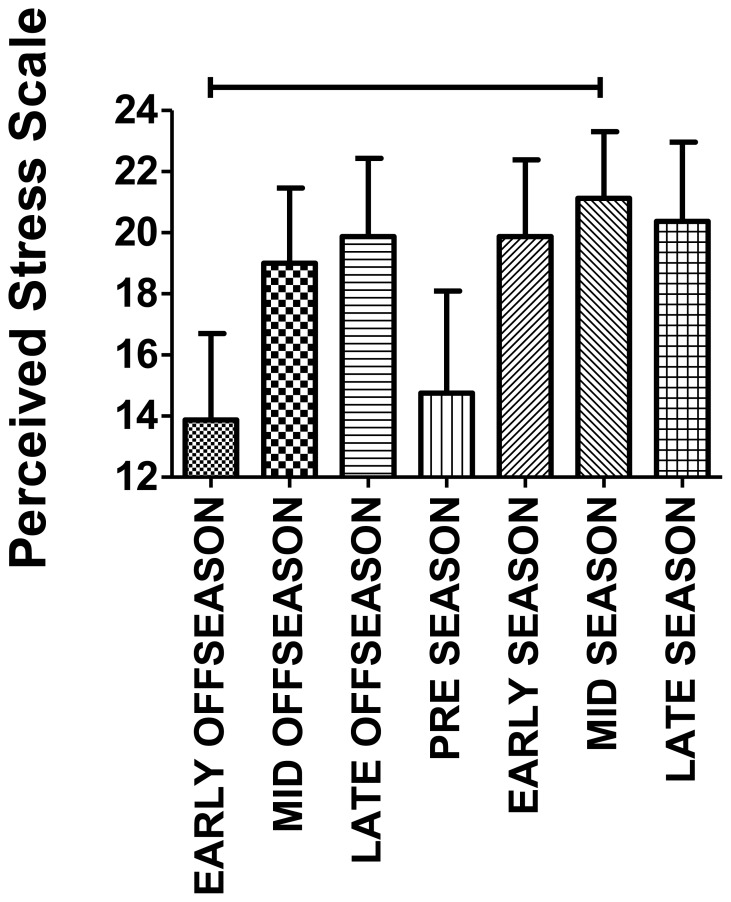
The aim of the study was to track changes of perceived stress and body composition across an entire calendar year in National Collegiate Athletic Association (NCAA) division I female volleyball players. We hypothesized that perceived stress and body composition would vary between the competitive season and off-season, with the largest changes occurring during time points prior to the onset and after the end of the competitive season. Eight female volleyball players participated in a longitudinal study. Body mass, body mass index (BMI), percent body fat, fat mass, and fat free mass were obtained during the early, mid, late, and off season and during the pre, early, mid, and late competitive season. The perceived stress scale-10 was used to appraise stress levels. BMI and body mass were significantly higher in pre-season compared to early-offseason. Changes in BMI between these points were due to increase in fat mass. Fat mass and percent body fat were significantly higher in pre-season compared to late off-season, mid-season, and late season. Perceived stress was significantly higher at the mid-season compared to early offseason. A significant positive correlation existed between BMI and body fat (p<0.05, r=0.69), while a significant negative correlation existed between percent body fat and perceived stress (p<0.05, r=0.34). Tracking body composition and perceived stress in collegiate female volleyball players can provide informative feedback on the training status and well-being of female collegiate athletes. Interestingly, it appears stress in these athletes may be more dependent upon the school session rather than participation in competitive sports.
本研究的目的是追踪美国大学体育协会(NCAA)一级女子排球运动员在一整个日历年内感知压力和身体成分的变化。我们假设,感知压力和身体成分在比赛季和非比赛季会有所不同,最大的变化发生在比赛季开始前和结束后的时间点。八名女子排球运动员参与了一项纵向研究。在赛季前、赛季中、赛季后以及休赛期的早期、中期、晚期测量体重、体重指数(BMI)、体脂百分比、脂肪量和去脂体重。使用感知压力量表-10来评估压力水平。与休赛期早期相比,赛季前的BMI和体重显著更高。这些时间点之间BMI的变化是由于脂肪量增加。与休赛期末期、赛季中期和赛季后期相比,赛季前的脂肪量和体脂百分比显著更高。与休赛期早期相比,赛季中期的感知压力显著更高。BMI与体脂之间存在显著正相关(p<0.05,r=0.69),而体脂百分比与感知压力之间存在显著负相关(p<0.05,r=0.34)。追踪大学女子排球运动员的身体成分和感知压力可以为大学女运动员的训练状态和健康状况提供有益的反馈。有趣的是,这些运动员的压力似乎可能更多地取决于学校课程安排,而非参与竞技运动。