Triticeae Research Institute, Sichuan Agricultural University, Wenjiang, Chengdu, Sichuan, 611130, People's Republic of China.
State Key Laboratory of Crop Genetics of Disease Resistance and Disease Control, Sichuan Agricultural University, Wenjiang, Chengdu, Sichuan, 611130, People's Republic of China.
BMC Genet. 2019 Mar 26;20(1):38. doi: 10.1186/s12863-019-0736-x.
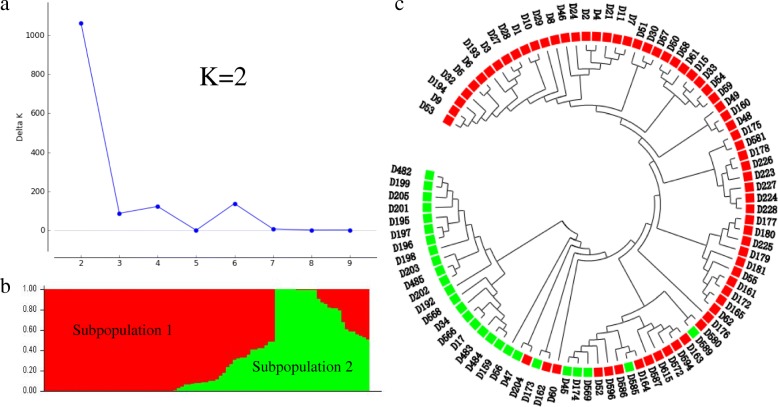
Stripe rust is a serious fungal disease of wheat (Triticum aestivum L.) caused by Puccinia striiformis f. sp. tritici (Pst), which results in yield reduction and decreased grain quality. Breeding for genetic resistance to stripe rust is the most cost-effective method to control the disease. In the present study, a genome-wide association study (GWAS) was conducted to identify markers linked to stripe rust resistance genes (or loci) in 93 Northern Chinese wheat landraces, using Diversity Arrays Technology (DArT) and simple sequence repeat (SSR) molecular marker technology based on phenotypic data from two field locations over two growing seasons in China.
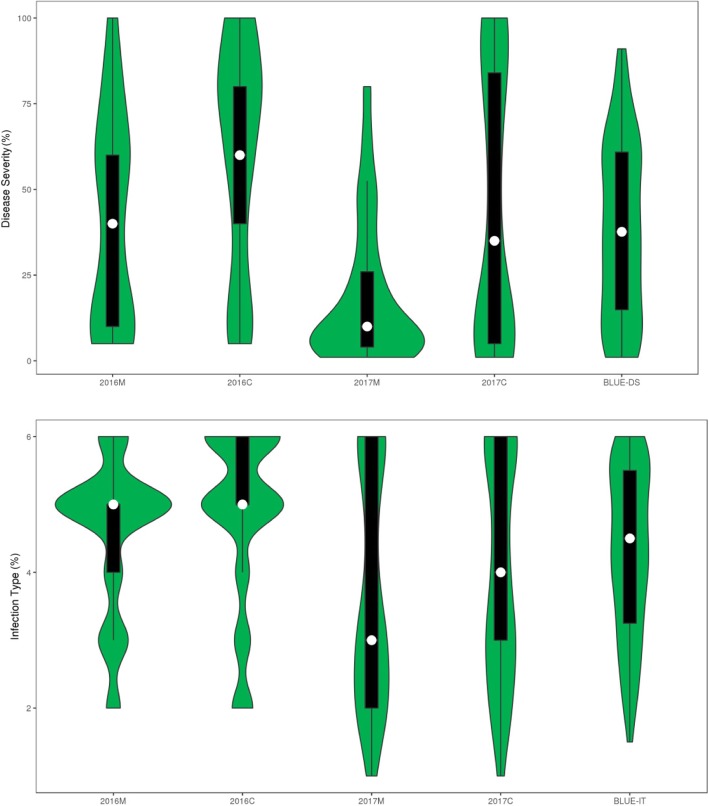
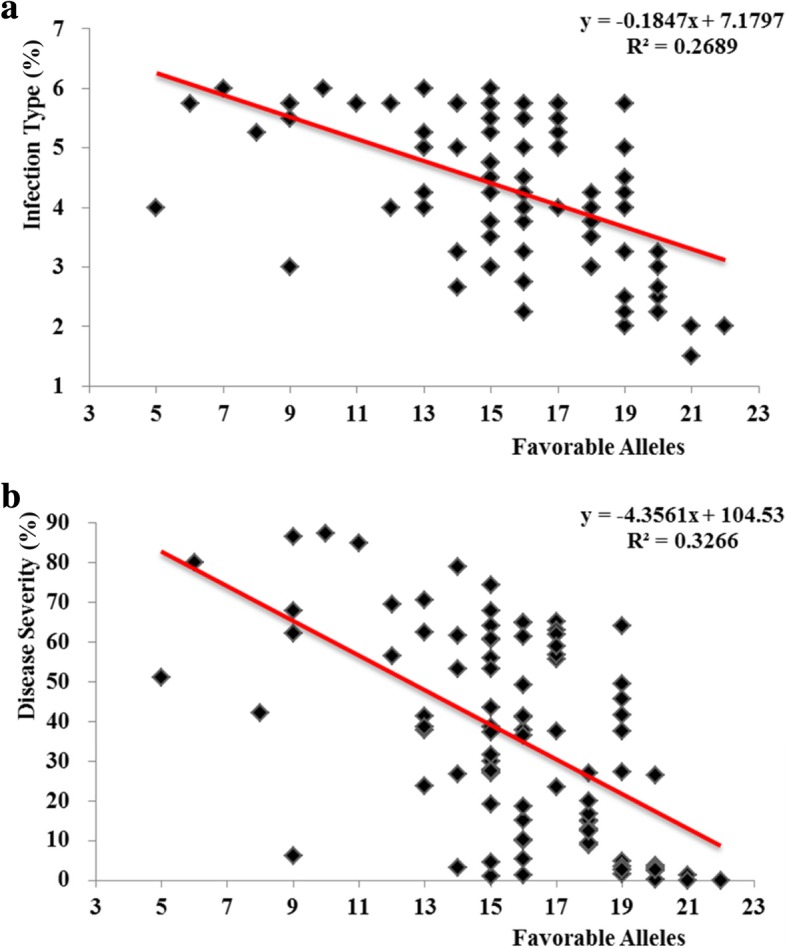
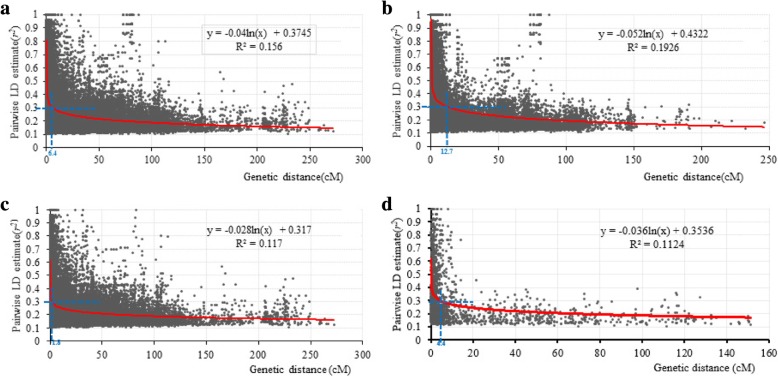
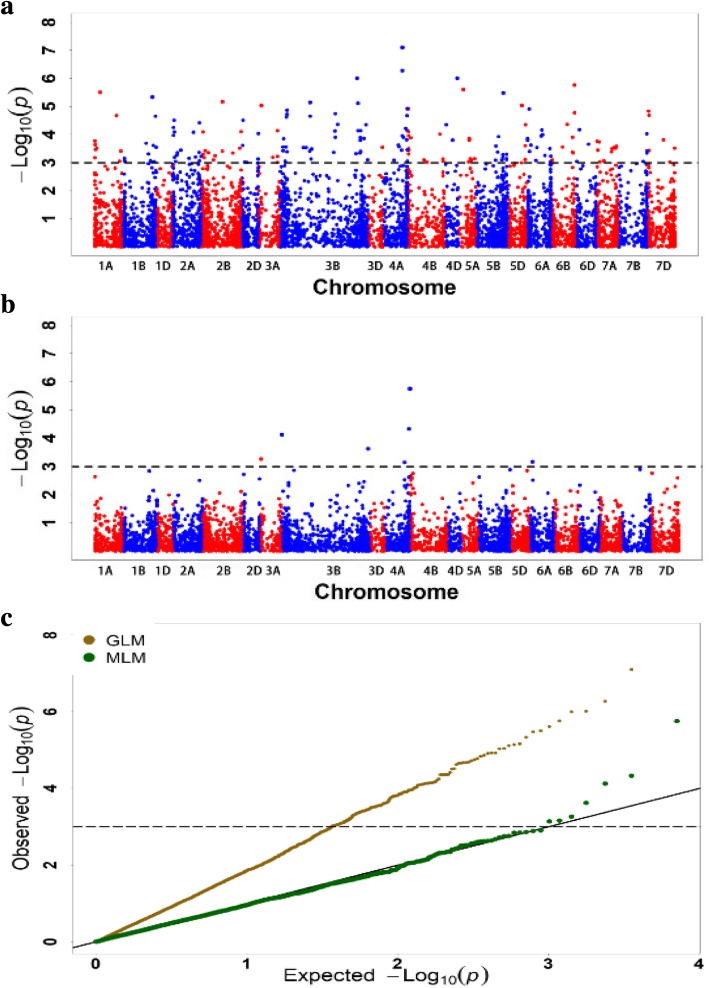
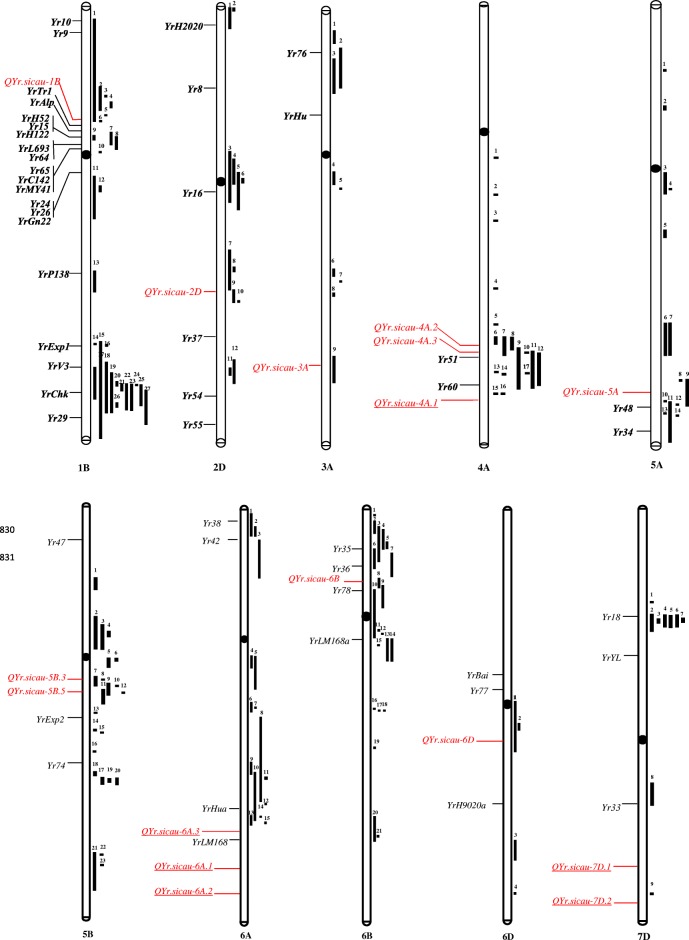
Seventeen accessions were verified to display stable and high levels of adult plant resistance (APR) to stripe rust via multi-environment field assessments. Significant correlations among environments and high heritability were observed for stripe rust infection type (IT) and disease severity (DS). Using mixed linear models (MLM) for the GWAS, a total of 32 significantly associated loci (P < 0.001) were detected. In combination with the linkage disequilibrium (LD) decay distance (6.4 cM), 25 quantitative trait loci (QTL) were identified. Based on the integrated map of previously reported genes and QTL, six QTL located on chromosomes 4A, 6A and 7D were mapped far from resistance regions identified previously, and represent potentially novel stripe rust resistance loci at the adult plant stage.
The present findings demonstrated that identification of genes or loci linked to significant markers in wheat by GWAS is feasible. Seventeen elite accessions conferred with stable and high resistance to stripe rust, and six putative newly detected APR loci were identified among the 93 Northern Chinese wheat landraces. The results illustrate the potential for acceleration of molecular breeding of wheat, and also provide novel sources of stripe rust resistance with potential utility in the breeding of improved wheat cultivars.
条锈病是一种由条形柄锈菌引起的小麦(Triticum aestivum L.)严重真菌病害,会导致产量降低和粮食质量下降。培育对条锈病的遗传抗性是控制该病最具成本效益的方法。本研究采用基于表型数据的多样性阵列技术(DArT)和简单序列重复(SSR)分子标记技术,在中国两个生长季节的两个田间地点,对 93 份中国北方小麦地方品种进行了全基因组关联研究(GWAS),以鉴定与条锈病抗性基因(或位点)相关的标记。
通过多环境田间评估,验证了 17 个品种对条锈病具有稳定和高水平的成株期抗性(APR)。在两个生长季节的两个田间地点,条锈病感染类型(IT)和病情严重度(DS)之间存在显著的环境相关性和高遗传力。利用混合线性模型(MLM)进行 GWAS,共检测到 32 个与条锈病显著相关的位点(P < 0.001)。结合连锁不平衡(LD)衰减距离(6.4 cM),鉴定出 25 个数量性状位点(QTL)。基于先前报道的基因和 QTL 的整合图谱,将 6 个 QTL 定位在 4A、6A 和 7D 染色体上,这些 QTL 远离先前鉴定的抗性区域,代表成株期潜在的新的条锈病抗性位点。
本研究表明,通过 GWAS 鉴定与小麦显著标记相关的基因或位点是可行的。17 个品种对条锈病具有稳定和高水平的抗性,在 93 份中国北方小麦地方品种中鉴定出 6 个新的潜在 APR 位点。研究结果表明,加速小麦分子育种是可行的,同时也为小麦条锈病抗性的改良提供了新的来源。