IBISC, Univ Evry, Université Paris-Saclay, Evry, 91025, France.
BMC Bioinformatics. 2019 Mar 29;20(Suppl 3):128. doi: 10.1186/s12859-019-2648-1.
RNAs can interact and form complexes, which have various biological roles. The secondary structure prediction of those complexes is a first step towards the identification of their 3D structure. We propose an original approach that takes advantage of the high number of RNA secondary structure and RNA-RNA interaction prediction tools. We formulate the problem of RNA complex prediction as the determination of the best combination (according to the free energy) of predicted RNA secondary structures and RNA-RNA interactions.
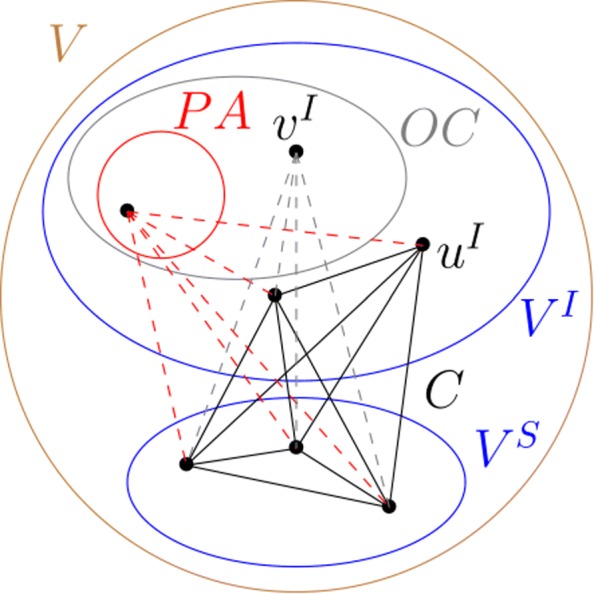
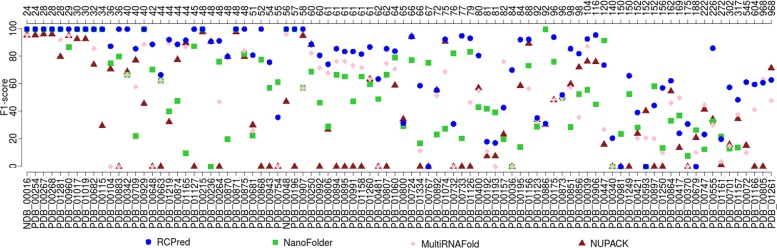
We model those predicted structures and interactions as a graph in order to have a combinatorial optimization problem that is a constrained maximum weight clique problem. We propose an heuristic based on Breakout Local Search to solve this problem and a tool, called RCPred, that returns several solutions, including motifs like internal and external pseudoknots. On a large number of complexes, RCPred gives competitive results compared to the methods of the state of the art.
We propose in this paper a method called RCPred for the prediction of several secondary structures of RNA complexes, including internal and external pseudoknots. As further works we will propose an improved computation of the global energy and the insertion of 3D motifs in the RNA complexes.
RNA 可以相互作用并形成复合物,这些复合物具有多种生物学功能。预测这些复合物的二级结构是识别其 3D 结构的第一步。我们提出了一种利用大量 RNA 二级结构和 RNA-RNA 相互作用预测工具的原创方法。我们将 RNA 复合物预测问题表述为确定预测 RNA 二级结构和 RNA-RNA 相互作用的最佳组合(根据自由能)。
我们将这些预测结构和相互作用建模为一个图,以便解决一个组合优化问题,即约束最大权重团问题。我们提出了一种基于突破局部搜索的启发式算法来解决这个问题,并开发了一个名为 RCPred 的工具,该工具返回了多个解决方案,包括内部和外部假结等基序。在大量复合物上,RCPred 的结果与最先进方法相比具有竞争力。
我们在本文中提出了一种称为 RCPred 的方法,用于预测 RNA 复合物的多个二级结构,包括内部和外部假结。作为进一步的工作,我们将提出一种改进的全局能量计算方法,并将 3D 基序插入到 RNA 复合物中。