Feed Research Institute, Chinese Academy of Agricultural Sciences, Key Laboratory of Feed Biotechnology of the Ministry of Agriculture, 100081, Beijing, China.
Department of Bacteriology, University of Wisconsin-Madison, 53706-1521, Madison, USA.
Environ Microbiol. 2019 Jul;21(7):2333-2346. doi: 10.1111/1462-2920.14614. Epub 2019 Apr 11.
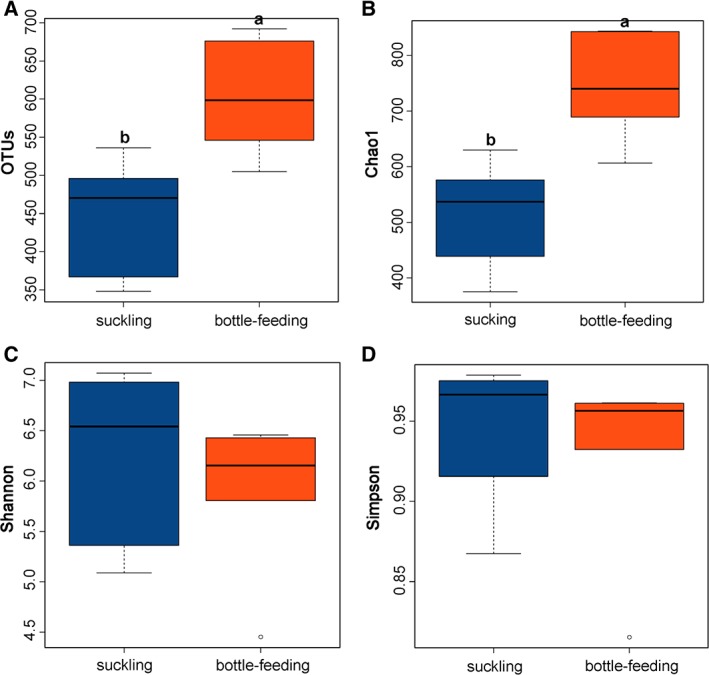
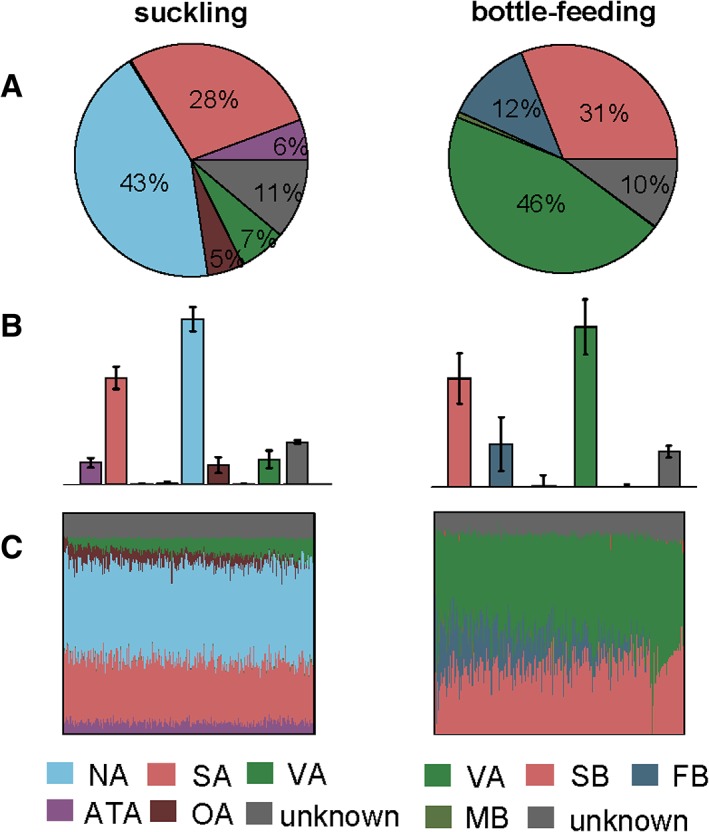
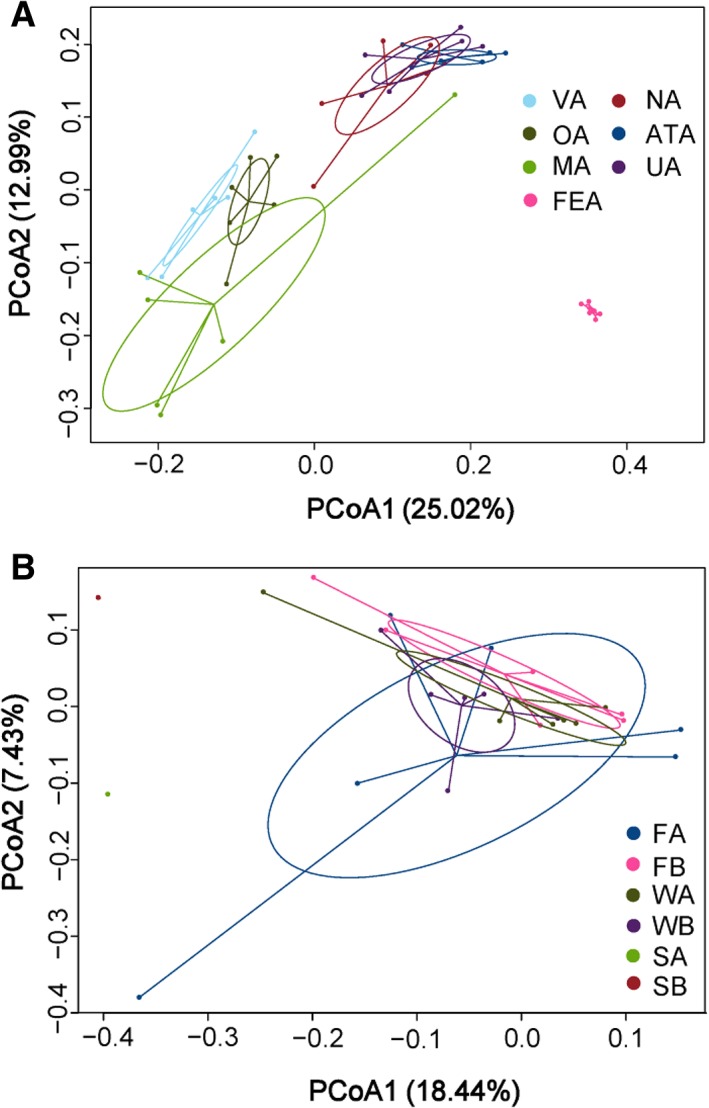
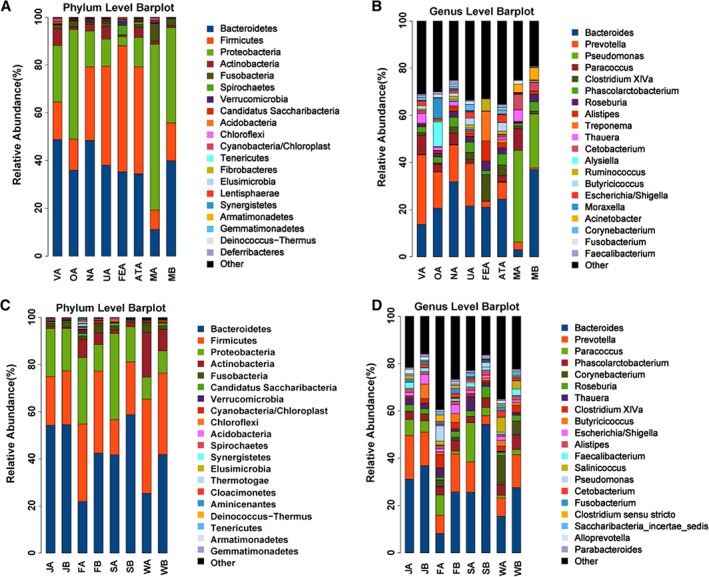
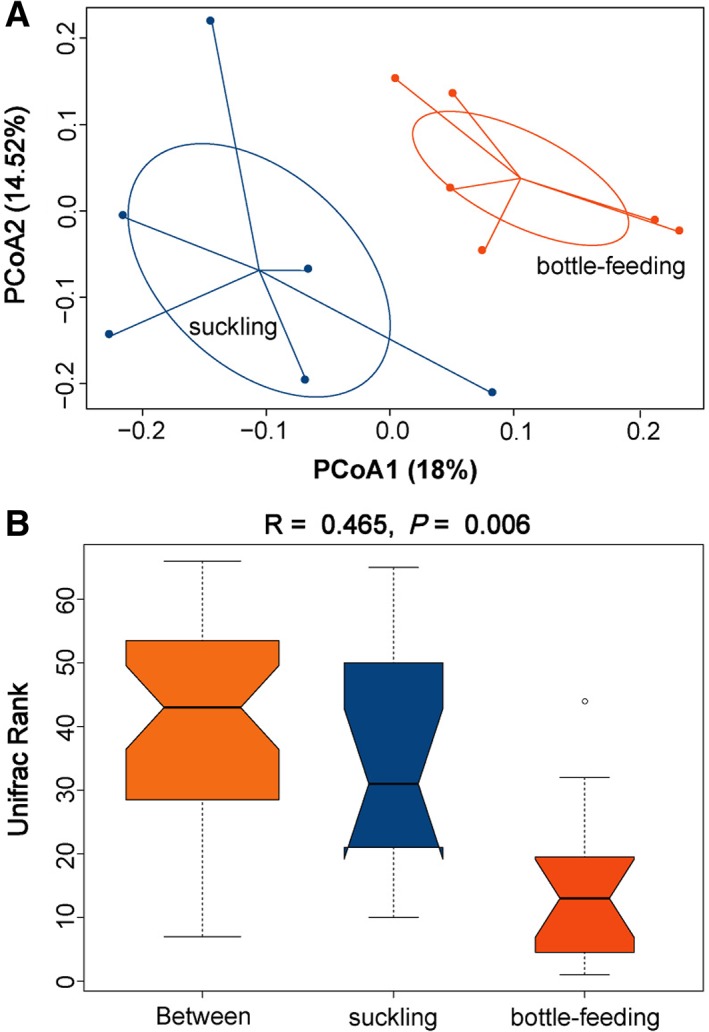
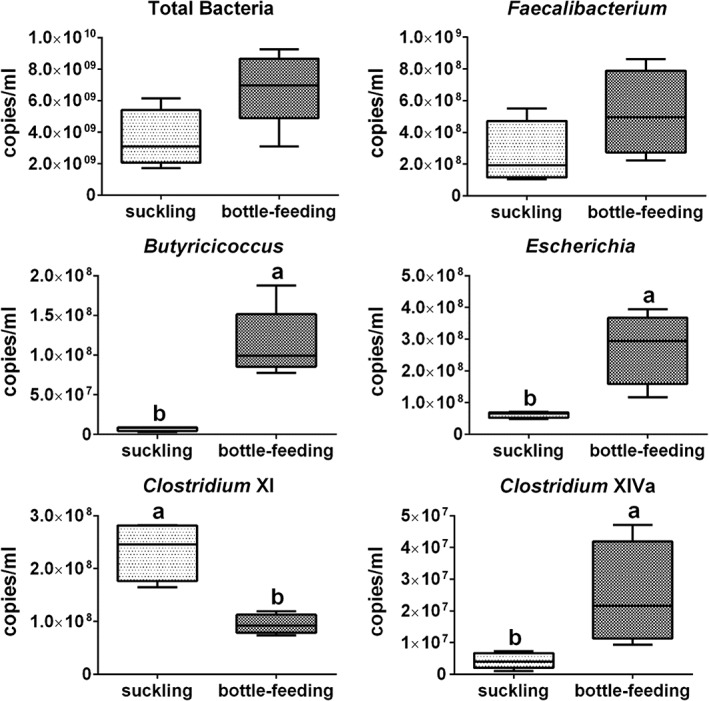
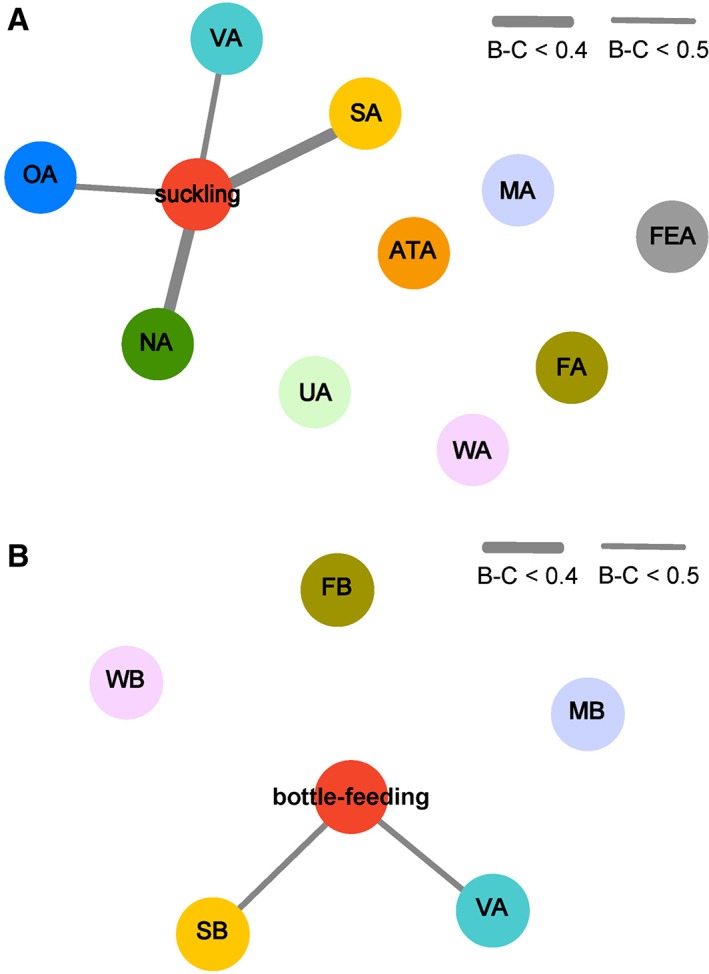
Early gut microbial colonization is important for postnatal metabolic and immune development. However, little is known about the effects of different feeding modes (suckling versus bottle-feeding) or microbial sources on this process in farm animals. We found that suckled and bottle-fed newborn lambs had their own distinct gut microbiota. Results from 16S rRNA gene sequencing and qPCR showed that, compared with suckling, bottle feeding significantly increased the abundances of Escherichia/Shigella, Butyricicoccus, and Clostridium XlVa, while significantly decreased the abundance of Clostridium XI. The higher levels of Escherichia/Shigella in bottle-fed lambs suggest that artificial feeding may increase the number of potential pathogens and delay the establishment of the anaerobic environment and anaerobic microbes. Feeding modes also affected the direct transmission of bacteria from the mother and the environment to newborns. The SourceTracker analysis estimated that the early gut microbes of suckled lambs were mainly derived from the mother's teats (43%) and ambient air (28%); whereas those of bottle-fed lambs were dominated by bacteria from the mother's vagina (46%), ambient air (31%), and the sheep pen floor (12%). These findings advance our understanding of gut microbiota in early life and may help design techniques to improve gut microbiota and health.
早期肠道微生物定植对产后代谢和免疫发育很重要。然而,对于不同的喂养方式(哺乳与奶瓶喂养)或微生物来源对动物肠道微生物定植的影响知之甚少。我们发现,哺乳和奶瓶喂养的新生羔羊有其独特的肠道微生物群。16S rRNA 基因测序和 qPCR 的结果表明,与哺乳相比,奶瓶喂养显著增加了大肠杆菌/志贺氏菌、丁酸梭菌和梭菌 XlVa 的丰度,而显著降低了梭菌 XI 的丰度。奶瓶喂养羔羊中更高水平的大肠杆菌/志贺氏菌表明,人工喂养可能会增加潜在病原体的数量,并延迟厌氧环境和厌氧微生物的建立。喂养方式也影响了细菌从母体和环境向新生羔羊的直接传播。SourceTracker 分析估计,哺乳羔羊的早期肠道微生物主要来自于母羊的乳头(43%)和环境空气(28%);而奶瓶喂养羔羊的肠道微生物则主要来自于母羊的阴道(46%)、环境空气(31%)和羊舍地板(12%)。这些发现提高了我们对早期生命肠道微生物群的认识,并可能有助于设计改善肠道微生物群和健康的技术。