Hubbard Troy D, Hsieh Jui-Hua, Rider Cynthia V, Sipes Nisha S, Sedykh Alexander, Collins Bradley J, Auerbach Scott S, Xia Menghang, Huang Ruili, Walker Nigel J, DeVito Michael J
Division of the National Toxicology Program, National Institute of Environmental Health Sciences, Research Triangle Park, North Carolina.
Kelly Government Solutions, Durham, North Carolina.
Appl In Vitro Toxicol. 2019 Mar 1;5(1):10-25. doi: 10.1089/aivt.2018.0020. Epub 2019 Mar 9.
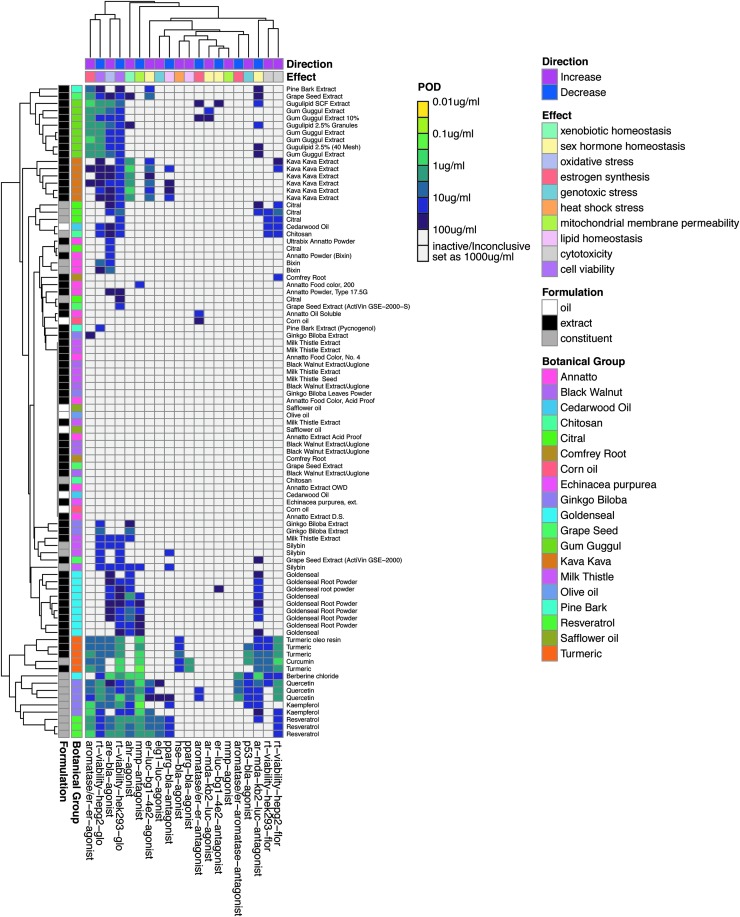
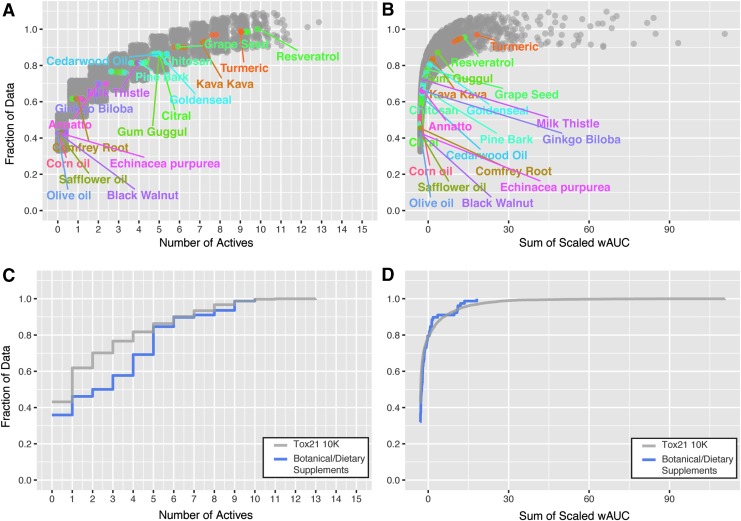
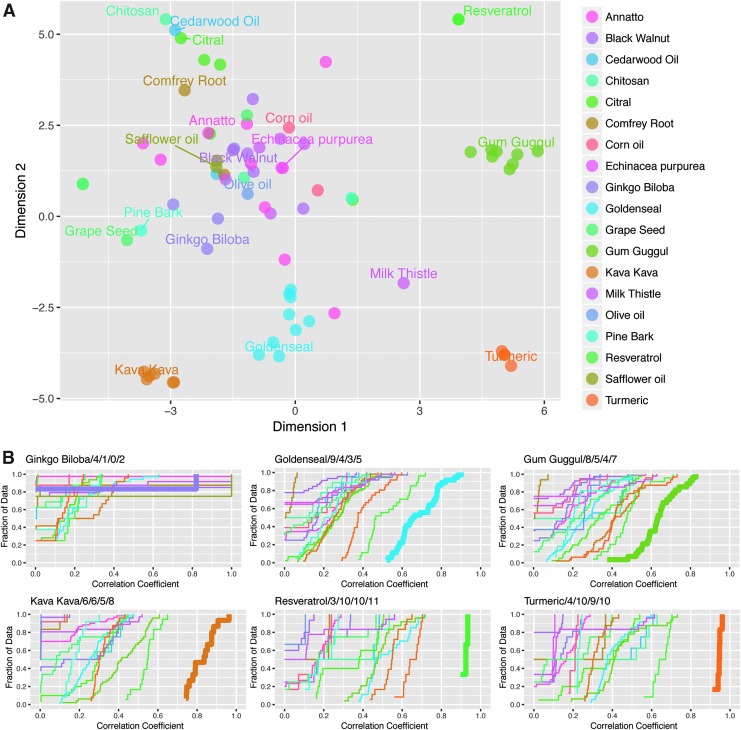
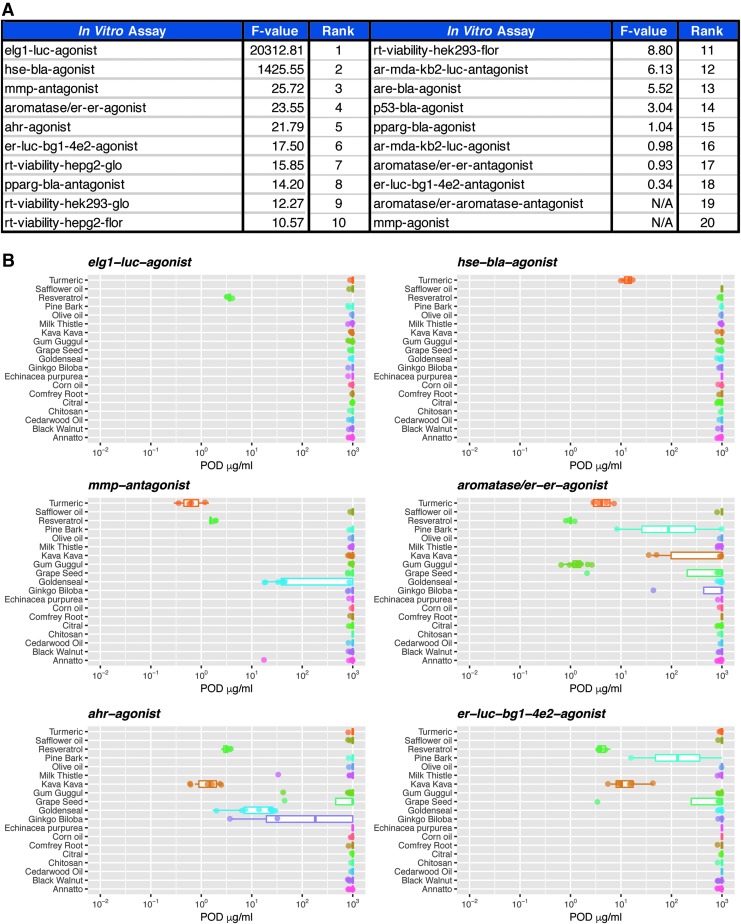
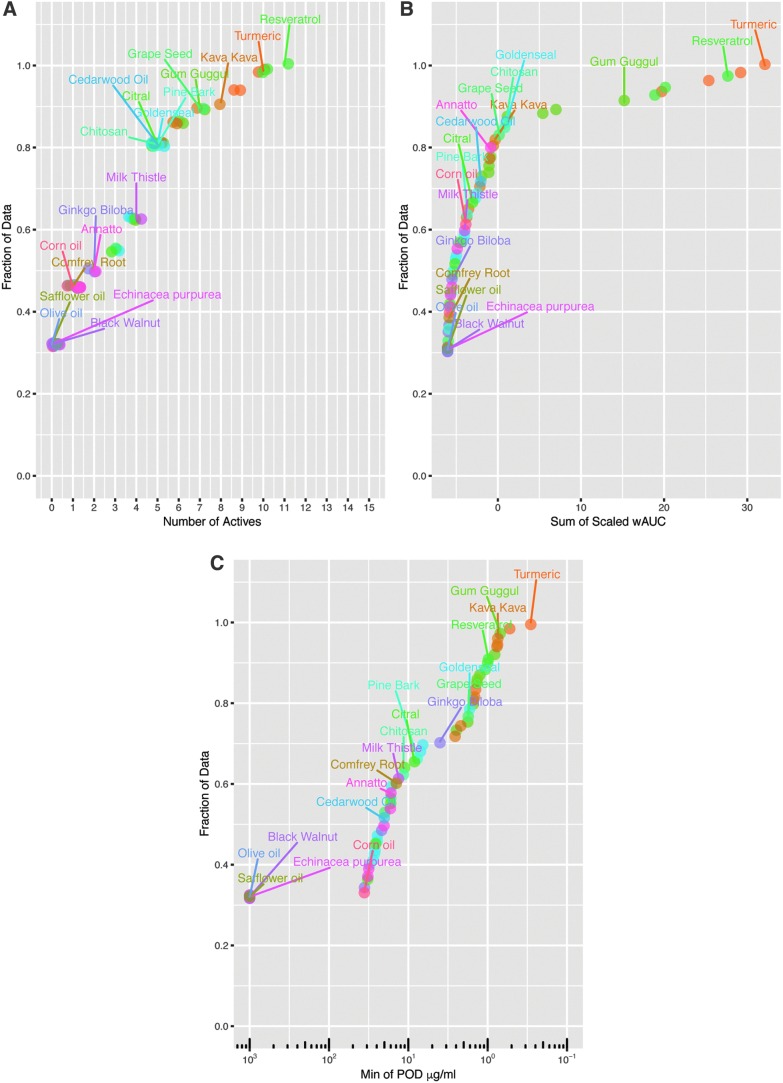
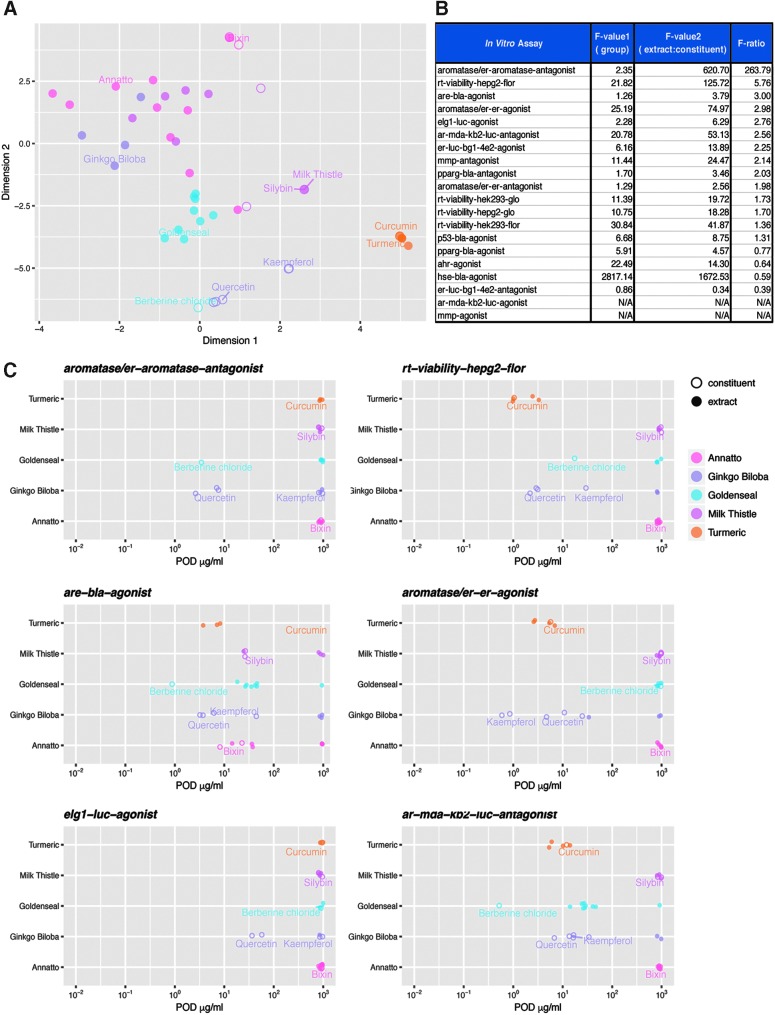
Recent nationwide surveys found that natural products, including botanical dietary supplements, are used by ∼18% of adults. In many cases, there is a paucity of toxicological data available for these substances to allow for confident evaluations of product safety. The National Toxicology Program (NTP) has received numerous nominations from the public and federal agencies to study the toxicological effects of botanical dietary supplements. The NTP sought to evaluate the utility of quantitative high-throughput screening (qHTS) assays for toxicological assessment of botanical and dietary supplements. In brief, concentration-response assessments of 90 test substances, including 13 distinct botanical species, and individual purported active constituents were evaluated using a subset of the Tox21 qHTS testing panel. The screen included 20 different endpoints that covered a broad range of biologically relevant signaling pathways to detect test article effects upon endocrine activity, nuclear receptor signaling, stress response signaling, genotoxicity, and cell death signaling. Botanical dietary supplement extracts induced measurable and diverse activity. Elevated biological activity profiles were observed following treatments with individual chemical constituents relative to their associated botanical extract. The overall distribution of activity was comparable to activities exhibited by compounds present in the Tox21 10K chemical library. Botanical supplements did not exhibit minimal or idiosyncratic activities that would preclude the use of qHTS platforms as a feasible method to screen this class of compounds. However, there are still many considerations and further development required when attempting to use qHTS methods to characterize the safety profile of botanical/dietary supplements.
近期的全国性调查发现,约18%的成年人使用天然产品,包括植物性膳食补充剂。在许多情况下,缺乏这些物质的毒理学数据,无法对产品安全性进行可靠评估。国家毒理学计划(NTP)收到了来自公众和联邦机构的众多提名,要求研究植物性膳食补充剂的毒理学效应。NTP试图评估定量高通量筛选(qHTS)分析方法在植物性和膳食补充剂毒理学评估中的实用性。简而言之,使用Tox21 qHTS测试小组的一个子集,对90种受试物质(包括13种不同的植物物种)和个别所谓的活性成分进行浓度-反应评估。该筛选包括20个不同的终点,涵盖了广泛的生物学相关信号通路,以检测受试物对内分泌活性、核受体信号传导、应激反应信号传导、遗传毒性和细胞死亡信号传导的影响。植物性膳食补充剂提取物诱导了可测量的多样活性。与相关植物提取物相比,用个别化学成分处理后观察到生物活性谱升高。活性的总体分布与Tox21 10K化学文库中化合物的活性相当。植物性补充剂未表现出极小或特异的活性,这将排除使用qHTS平台作为筛选这类化合物的可行方法。然而,在尝试使用qHTS方法来描述植物性/膳食补充剂的安全性概况时,仍有许多需要考虑的因素和进一步的发展需求。