• 文献检索
  • 文档翻译
  • 深度研究
  • 学术资讯
  • Suppr Zotero 插件Zotero 插件
  • 邀请有礼
  • 套餐&价格
  • 历史记录
应用&插件
Suppr Zotero 插件Zotero 插件浏览器插件Mac 客户端Windows 客户端微信小程序
定价
高级版会员购买积分包购买API积分包
服务
文献检索文档翻译深度研究API 文档MCP 服务
关于我们
关于 Suppr公司介绍联系我们用户协议隐私条款
关注我们

Suppr 超能文献

核心技术专利:CN118964589B侵权必究
粤ICP备2023148730 号-1Suppr @ 2026

文献检索

告别复杂PubMed语法,用中文像聊天一样搜索,搜遍4000万医学文献。AI智能推荐,让科研检索更轻松。

立即免费搜索

文件翻译

保留排版,准确专业,支持PDF/Word/PPT等文件格式,支持 12+语言互译。

免费翻译文档

深度研究

AI帮你快速写综述,25分钟生成高质量综述,智能提取关键信息,辅助科研写作。

立即免费体验

超越身体的自我:行动驱动和任务相关的纯粹远端线索调节表现和身体所有权。

Self Beyond the Body: Action-Driven and Task-Relevant Purely Distal Cues Modulate Performance and Body Ownership.

作者信息

Grechuta Klaudia, Ulysse Laura, Rubio Ballester Belén, Verschure Paul F M J

机构信息

Department of Information and Communication Technologies, Universitat Pompeu Fabra, Barcelona, Spain.

Institute for Bioengineering of Catalonia (IBEC), The Barcelona Institute of Science and Technology (BIST), Barcelona, Spain.

出版信息

Front Hum Neurosci. 2019 Mar 20;13:91. doi: 10.3389/fnhum.2019.00091. eCollection 2019.

DOI:10.3389/fnhum.2019.00091
PMID:30949038
原文链接:https://pmc.ncbi.nlm.nih.gov/articles/PMC6435571/
Abstract

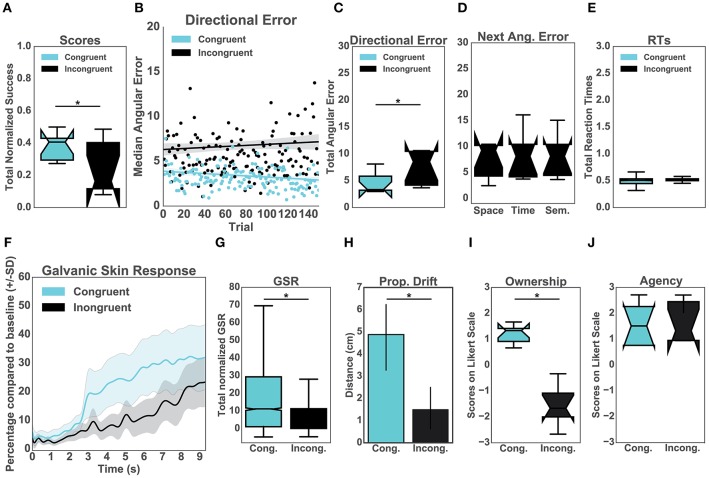
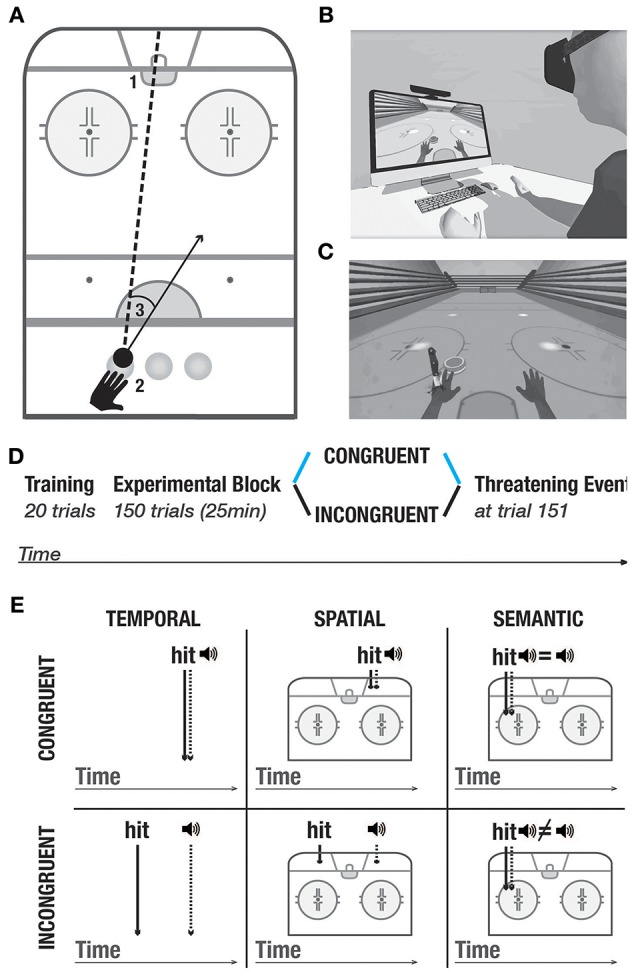
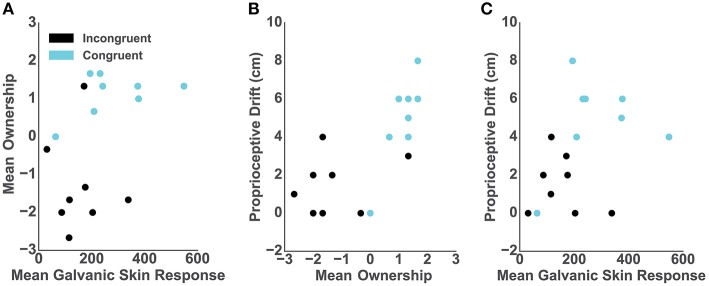
Our understanding of body ownership largely relies on the so-called Rubber Hand Illusion (RHI). In this paradigm, synchronous stroking of the real and the rubber hands leads to an illusion of ownership of the rubber hand provided that it is physically, anatomically, and spatially plausible. Self-attribution of an artificial hand also occurs during visuomotor synchrony. In particular, participants experience ownership over a virtual or a rubber hand when the visual feedback of self-initiated movements follows the trajectory of the instantiated motor commands, such as in the Virtual Hand Illusion (VHI) or the moving Rubber Hand Illusion (mRHI). Evidence yields that both when the cues are triggered externally (RHI) and when they result from voluntary actions (VHI and mRHI), the experience of ownership is established through bottom-up integration and top-down prediction of proximodistal cues (visuotactile or visuomotor) within the peripersonal space. It seems, however, that depending on whether the sensory signals are externally (RHI) or self-generated (VHI and mRHI), the top-down expectation signals are qualitatively different. On the one hand, in the RHI the sensory correlations are modulated by top-down influences which constitute empirically induced priors related to the internal (generative) model of the body. On the other hand, in the VHI and mRHI body ownership is actively shaped by processes which allow for continuous comparison between the expected and the actual sensory consequences of the actions. Ample research demonstrates that the differential processing of the predicted and the reafferent information is addressed by the central nervous system via an internal (forward) model or corollary discharge. Indeed, results from the VHI and mRHI suggest that, in action-contexts, the mechanism underlying body ownership could be similar to the forward model. Crucially, forward models integrate across all self-generated sensory signals including not only proximodistal (i.e., visuotactile or visuomotor) but also purely distal sensory cues (i.e., visuoauditory). Thus, if body ownership results from a consistency of a forward model, it will be affected by the (in)congruency of purely distal cues provided that they inform about action-consequences and are relevant to a goal-oriented task. Specifically, they constitute a corrective error signal. Here, we explicitly addressed this question. To test our hypothesis, we devised an embodied virtual reality-based motor task where action outcomes were signaled by distinct auditory cues. By manipulating the cues with respect to their spatial, temporal and semantic congruency, we show that purely distal (visuoauditory) feedback which violates predictions about action outcomes compromises both performance and body ownership. These results demonstrate, for the first time, that body ownership is influenced by not only externally and self-generated cues which pertain to the body within the peripersonal space but also those arising outside of the body. Hence, during goal-oriented tasks body ownership may result from the consistency of forward models.
https://cdn.ncbi.nlm.nih.gov/pmc/blobs/e545/6435571/c67f180c2d5f/fnhum-13-00091-g0003.jpg
https://cdn.ncbi.nlm.nih.gov/pmc/blobs/e545/6435571/e839b4cb279c/fnhum-13-00091-g0001.jpg
https://cdn.ncbi.nlm.nih.gov/pmc/blobs/e545/6435571/c74a38a114e1/fnhum-13-00091-g0002.jpg
https://cdn.ncbi.nlm.nih.gov/pmc/blobs/e545/6435571/c67f180c2d5f/fnhum-13-00091-g0003.jpg
https://cdn.ncbi.nlm.nih.gov/pmc/blobs/e545/6435571/e839b4cb279c/fnhum-13-00091-g0001.jpg
https://cdn.ncbi.nlm.nih.gov/pmc/blobs/e545/6435571/c74a38a114e1/fnhum-13-00091-g0002.jpg
https://cdn.ncbi.nlm.nih.gov/pmc/blobs/e545/6435571/c67f180c2d5f/fnhum-13-00091-g0003.jpg
摘要

我们对身体所有权的理解很大程度上依赖于所谓的橡胶手错觉(RHI)。在这种范式中,只要橡胶手在物理、解剖和空间上看似合理,对真实手和橡胶手进行同步抚摸就会导致对橡胶手的所有权错觉。在视运动同步期间也会出现对人造手的自我归属。特别是,当自我发起动作的视觉反馈遵循实例化运动指令的轨迹时,参与者会体验到对虚拟手或橡胶手的所有权,例如在虚拟手错觉(VHI)或移动橡胶手错觉(mRHI)中。有证据表明,无论是线索由外部触发(RHI)还是由自愿动作产生(VHI和mRHI),所有权体验都是通过对个人周边空间内近远侧线索(视触觉或视运动)的自下而上整合和自上而下预测来建立的。然而,似乎根据感觉信号是外部的(RHI)还是自我产生的(VHI和mRHI),自上而下的期望信号在性质上是不同的。一方面,在RHI中,感觉相关性受到自上而下影响的调节,这些影响构成了与身体内部(生成)模型相关的经验诱导先验。另一方面,在VHI和mRHI中,身体所有权是由允许对动作的预期和实际感觉后果进行持续比较的过程积极塑造的。大量研究表明,中枢神经系统通过内部(向前)模型或推论放电来处理预测信息和再传入信息的差异处理。事实上,VHI和mRHI的结果表明,在动作情境中,身体所有权的潜在机制可能类似于向前模型。至关重要的是,向前模型整合了所有自我产生的感觉信号,不仅包括近远侧(即视触觉或视运动)信号,还包括纯粹的远侧感觉线索(即视听觉)。因此,如果身体所有权源于向前模型的一致性,那么它将受到纯粹远侧线索的(不)一致性的影响,前提是这些线索告知动作后果并且与目标导向任务相关。具体而言,它们构成了一个纠正误差信号。在这里,我们明确解决了这个问题。为了检验我们的假设,我们设计了一个基于虚拟现实的具身运动任务,其中动作结果由不同的听觉线索发出信号。通过操纵线索在空间、时间和语义上的一致性,我们表明违反动作结果预测的纯粹远侧(视听觉)反馈会损害表现和身体所有权。这些结果首次证明,身体所有权不仅受到与个人周边空间内身体相关的外部和自我产生的线索的影响,还受到身体外部产生的线索的影响。因此,在目标导向任务中,身体所有权可能源于向前模型的一致性。

相似文献

1
Self Beyond the Body: Action-Driven and Task-Relevant Purely Distal Cues Modulate Performance and Body Ownership.超越身体的自我:行动驱动和任务相关的纯粹远端线索调节表现和身体所有权。
Front Hum Neurosci. 2019 Mar 20;13:91. doi: 10.3389/fnhum.2019.00091. eCollection 2019.
2
Challenging the Boundaries of the Physical Self: Distal Cues Impact Body Ownership.挑战身体自我的边界:远端线索影响身体所有权。
Front Hum Neurosci. 2021 Oct 14;15:704414. doi: 10.3389/fnhum.2021.704414. eCollection 2021.
3
Forward modelling the rubber hand: illusion of ownership modifies motor-sensory predictions by the brain.橡胶手的正向建模:所有权错觉会改变大脑的运动感觉预测。
R Soc Open Sci. 2016 Aug 24;3(8):160407. doi: 10.1098/rsos.160407. eCollection 2016 Aug.
4
Individual Differences in the Rubber Hand Illusion Are Related to Sensory Suggestibility.橡皮手错觉中的个体差异与感觉易受暗示性有关。
PLoS One. 2016 Dec 15;11(12):e0168489. doi: 10.1371/journal.pone.0168489. eCollection 2016.
5
Crossmodal congruency measures of lateral distance effects on the rubber hand illusion.对橡胶手错觉的横向距离影响的跨模态一致性测量。
Neuropsychologia. 2010 Feb;48(3):713-25. doi: 10.1016/j.neuropsychologia.2009.10.028. Epub 2009 Nov 11.
6
Action Shapes the Sense of Body Ownership Across Human Development.行动塑造了贯穿人类发展过程的身体所有权意识。
Front Psychol. 2018 Dec 17;9:2507. doi: 10.3389/fpsyg.2018.02507. eCollection 2018.
7
Integration of predictions and afferent signals in body ownership.躯体所有权中的预测与传入信号的整合。
Cognition. 2021 Jul;212:104722. doi: 10.1016/j.cognition.2021.104722. Epub 2021 Apr 14.
8
The Relationship Between the Virtual Hand Illusion and Motor Performance.虚拟手错觉与运动表现之间的关系。
Front Psychol. 2018 Nov 20;9:2242. doi: 10.3389/fpsyg.2018.02242. eCollection 2018.
9
The Moving Rubber Hand Illusion Reveals that Explicit Sense of Agency for Tapping Movements Is Preserved in Functional Movement Disorders.移动橡胶手错觉表明,功能性运动障碍患者对敲击动作的明确能动感得以保留。
Front Hum Neurosci. 2017 Jun 6;11:291. doi: 10.3389/fnhum.2017.00291. eCollection 2017.
10
Extending Bayesian Models of the Rubber Hand Illusion.扩展橡胶手错觉的贝叶斯模型。
Multisens Res. 2020 Jan 8;33(2):127-160. doi: 10.1163/22134808-20191440.

引用本文的文献

1
Human bodies in virtual worlds: a systematic review of implicit sense of agency and ownership measured in immersive virtual reality environments.虚拟世界中的人体:对沉浸式虚拟现实环境中测量的代理感和所有权感的系统评价。
Front Hum Neurosci. 2025 Aug 7;19:1553574. doi: 10.3389/fnhum.2025.1553574. eCollection 2025.
2
Deficits in Sense of Body Ownership, Sensory Processing, and Temporal Perception in Schizophrenia Patients With/Without Auditory Verbal Hallucinations.有/无幻听的精神分裂症患者的身体自我意识、感觉加工和时间感知缺陷
Front Neurosci. 2022 Apr 14;16:831714. doi: 10.3389/fnins.2022.831714. eCollection 2022.
3

本文引用的文献

1
The Relationship Between the Virtual Hand Illusion and Motor Performance.虚拟手错觉与运动表现之间的关系。
Front Psychol. 2018 Nov 20;9:2242. doi: 10.3389/fpsyg.2018.02242. eCollection 2018.
2
Effects of prolonged exposure to feedback delay on the qualitative subjective experience of virtual reality.长时间暴露于反馈延迟对虚拟现实的定性主观体验的影响。
PLoS One. 2018 Oct 24;13(10):e0205145. doi: 10.1371/journal.pone.0205145. eCollection 2018.
3
Action-effect binding and agency.动作-效应绑定和主体间性。
"Tricking the Brain" Using Immersive Virtual Reality: Modifying the Self-Perception Over Embodied Avatar Influences Motor Cortical Excitability and Action Initiation.
利用沉浸式虚拟现实“欺骗大脑”:改变对具身化虚拟形象的自我认知会影响运动皮层兴奋性和动作发起。
Front Hum Neurosci. 2022 Feb 9;15:787487. doi: 10.3389/fnhum.2021.787487. eCollection 2021.
4
Environment-Related and Body-Related Components of the Minimal Self.具身自我中与环境及身体相关的组成部分。
Front Psychol. 2021 Nov 11;12:712559. doi: 10.3389/fpsyg.2021.712559. eCollection 2021.
5
Challenging the Boundaries of the Physical Self: Distal Cues Impact Body Ownership.挑战身体自我的边界:远端线索影响身体所有权。
Front Hum Neurosci. 2021 Oct 14;15:704414. doi: 10.3389/fnhum.2021.704414. eCollection 2021.
6
Exercising With a Six Pack in Virtual Reality: Examining the Proteus Effect of Avatar Body Shape and Sex on Self-Efficacy for Core-Muscle Exercise, Self-Concept of Body Shape, and Actual Physical Activity.在虚拟现实中拥有六块腹肌进行锻炼:探究虚拟化身体型和性别对核心肌肉锻炼自我效能、体型自我概念及实际身体活动的普罗透斯效应。
Front Psychol. 2021 Oct 8;12:693543. doi: 10.3389/fpsyg.2021.693543. eCollection 2021.
7
Congruency of Information Rather Than Body Ownership Enhances Motor Performance in Highly Embodied Virtual Reality.信息一致性而非身体所有权可增强高度沉浸式虚拟现实中的运动表现。
Front Neurosci. 2021 Jul 2;15:678909. doi: 10.3389/fnins.2021.678909. eCollection 2021.
8
The Forward Model: A Unifying Theory for the Role of the Cerebellum in Motor Control and Sense of Agency.前向模型:小脑在运动控制和能动感中作用的统一理论。
Front Syst Neurosci. 2021 Apr 15;15:644059. doi: 10.3389/fnsys.2021.644059. eCollection 2021.
9
The Body Across Adulthood: On the Relation Between Interoception and Body Representations.成年期的身体:关于内感受与身体表征之间的关系
Front Neurosci. 2021 Feb 24;15:586684. doi: 10.3389/fnins.2021.586684. eCollection 2021.
10
Interpersonal Motor Interactions Shape Multisensory Representations of the Peripersonal Space.人际运动互动塑造个人周边空间的多感官表征。
Brain Sci. 2021 Feb 19;11(2):255. doi: 10.3390/brainsci11020255.
Conscious Cogn. 2018 Oct;65:304-309. doi: 10.1016/j.concog.2018.10.001. Epub 2018 Oct 10.
4
The sense of agency shapes body schema and peripersonal space.主体感塑造身体图式和身体周围空间。
Sci Rep. 2018 Sep 14;8(1):13847. doi: 10.1038/s41598-018-32238-z.
5
The perceptual shaping of anticipatory actions.预期动作的知觉塑造。
Proc Biol Sci. 2017 Dec 20;284(1869). doi: 10.1098/rspb.2017.1780.
6
Body ownership determines the attenuation of self-generated tactile sensations.躯体所有权决定了自我产生的触觉感觉的减弱。
Proc Natl Acad Sci U S A. 2017 Aug 1;114(31):8426-8431. doi: 10.1073/pnas.1703347114. Epub 2017 Jul 17.
7
The role of expectation in multisensory body representation - neural evidence.期望在多感觉体像中的作用——神经学证据。
Eur J Neurosci. 2017 Aug;46(3):1897-1905. doi: 10.1111/ejn.13629. Epub 2017 Jul 23.
8
Visuotactile integration modulates motor performance in a perceptual decision-making task.视触整合调节知觉决策任务中的运动表现。
Sci Rep. 2017 Jun 13;7(1):3333. doi: 10.1038/s41598-017-03488-0.
9
Characteristics of Implicit Sensorimotor Adaptation Revealed by Task-irrelevant Clamped Feedback.通过任务无关的钳制反馈揭示的内隐感觉运动适应特征
J Cogn Neurosci. 2017 Jun;29(6):1061-1074. doi: 10.1162/jocn_a_01108. Epub 2017 Feb 14.
10
Self-perception beyond the body: the role of past agency.超越身体的自我认知:过去能动性的作用。
Psychol Res. 2017 May;81(3):549-559. doi: 10.1007/s00426-016-0766-1. Epub 2016 Apr 7.