Guo Huan, Yuan Qin, Fu Yuan, Liu Wen, Su Ya-Hong, Liu Hui, Wu Chao-Yi, Zhao Li, Zhang Qing, Lin De-Rong, Chen Hong, Qin Wen, Wu Ding-Tao
College of Food Science, Sichuan Agricultural University, Ya'an 625014, Sichuan, China.
Polymers (Basel). 2019 Jan 26;11(2):215. doi: 10.3390/polym11020215.
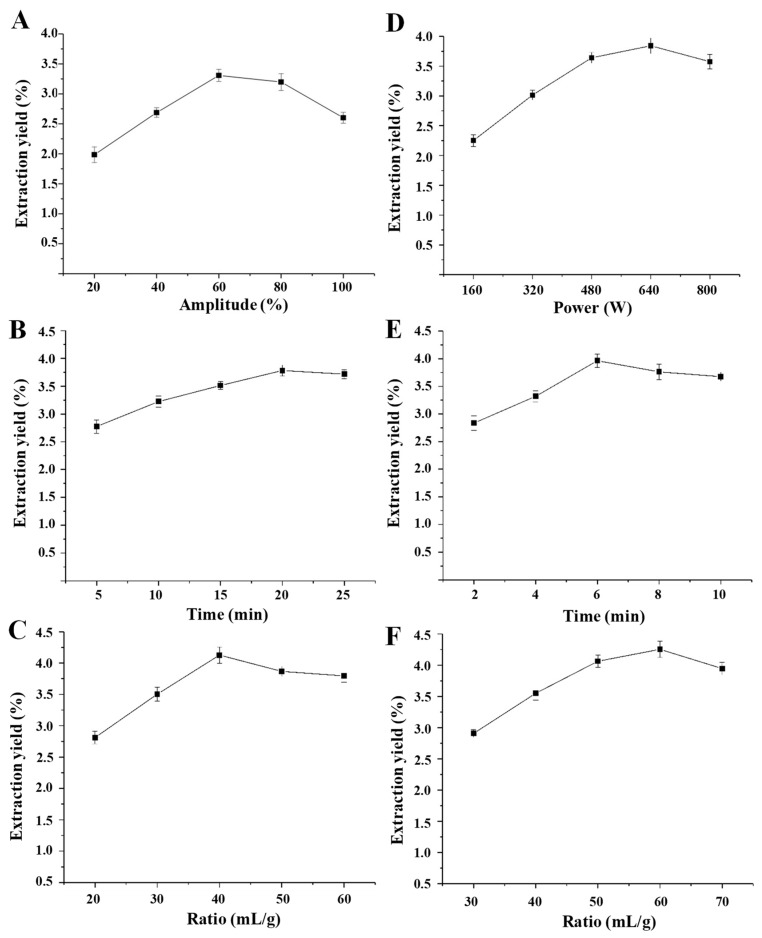
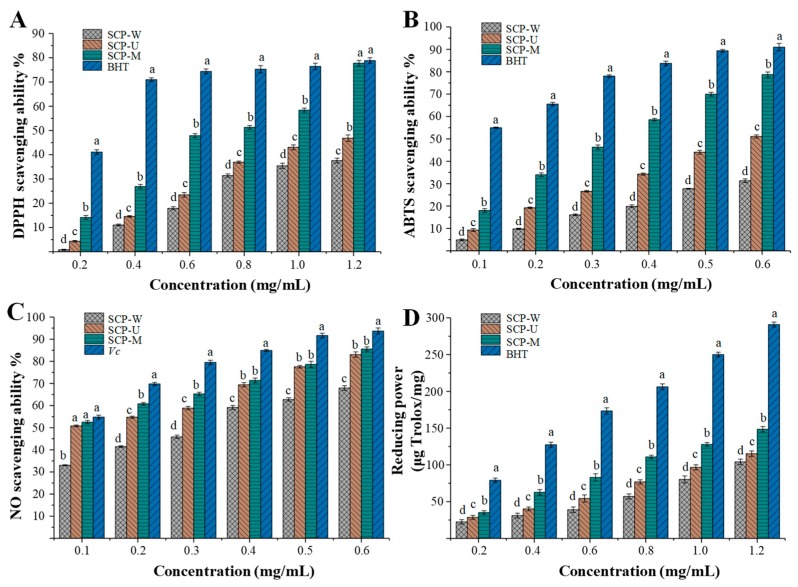
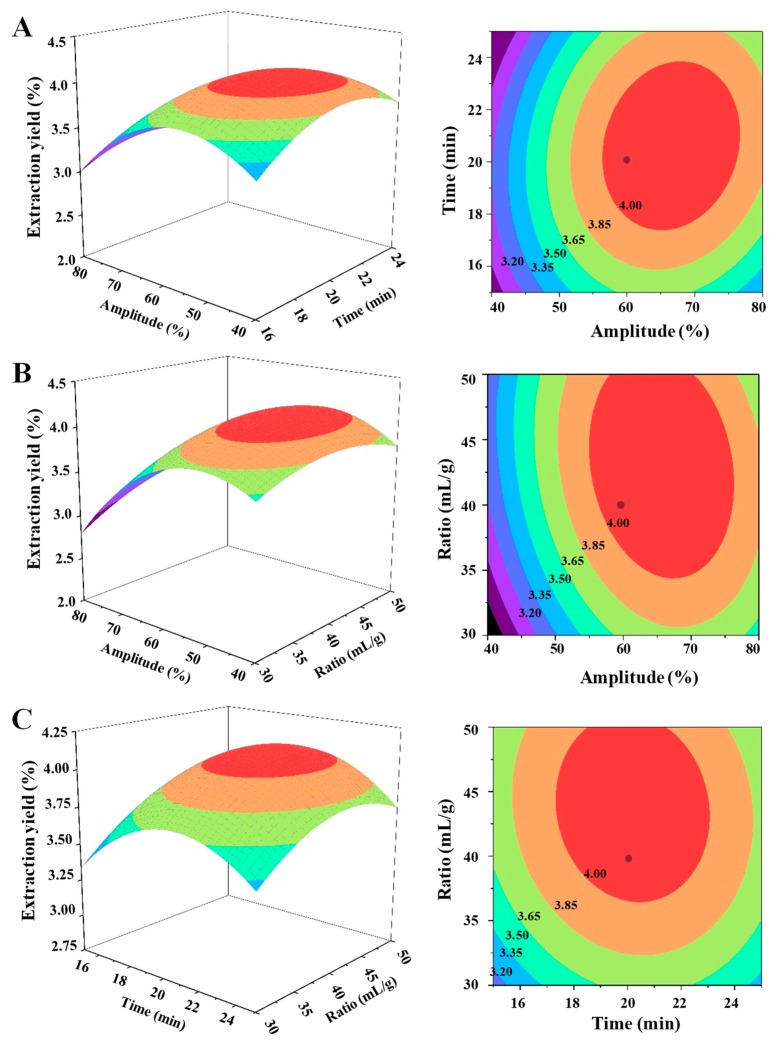
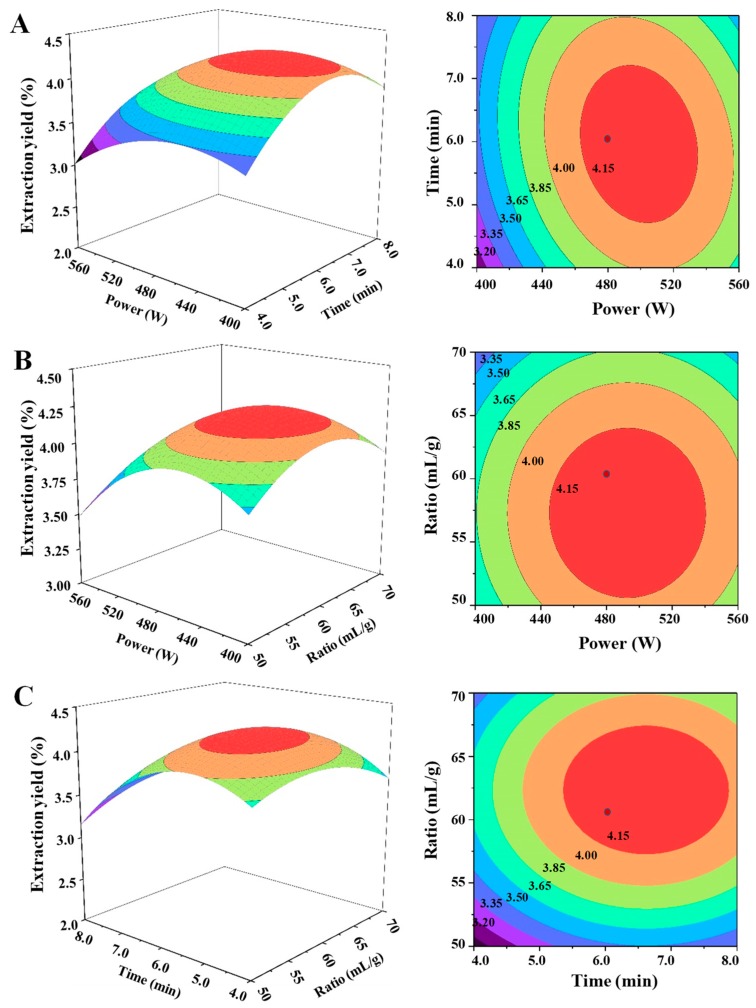
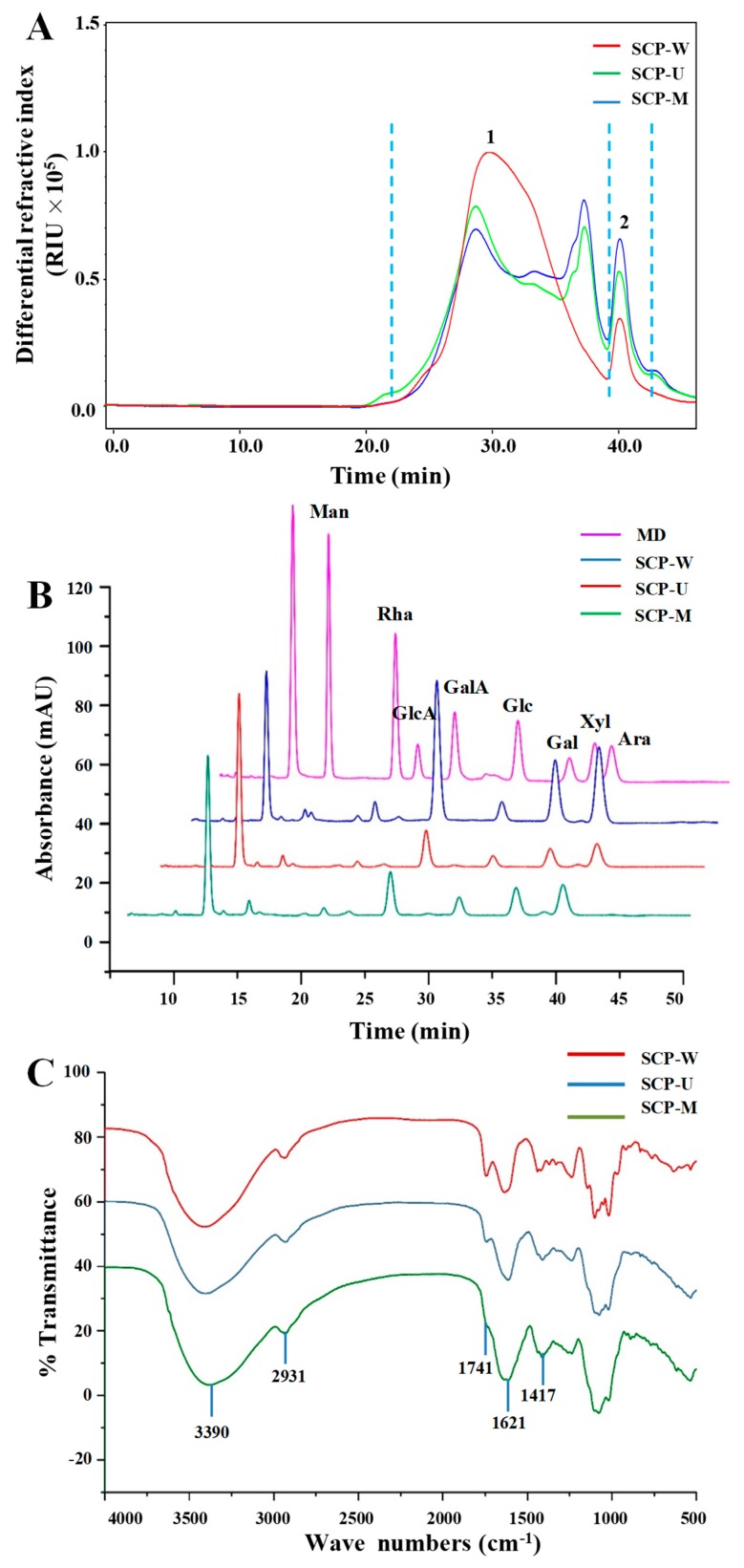
In order to explore snow chrysanthemum polysaccharides (SCPs) as functional food ingredients and natural antioxidants for industrial applications, both microwave-assisted extraction (MAE) and ultrasonic-assisted extraction (UAE) were firstly optimized for the extraction of SCPs. Furthermore, the effects of conventional hot water extraction, UAE, and MAE on the chemical structures and antioxidant activities of SCPs were investigated. The maximum extraction yields of SCPs extracted by UAE (4.13 ± 0.24%) and MAE (4.26 ± 0.21%) were achieved at the optimized extraction parameters as follows: ultrasound amplitude (68%) and microwave power (500 W), ultrasound extraction time (21 min) and microwave extraction time (6.5 min), and ratio of liquid to raw material (42.0 mL/g for UAE and 59.0 mL/g for MAE). In addition, different extraction methods significantly affected the contents of uronic acids, the molecular weights, the molar ratio of constituent monosaccharides, and the degree of esterification of SCPs. SCPs exhibited remarkable DPPH (IC ≤ 1.702 mg/mL), ABTS (IC ≤ 1.121 mg/mL), and nitric oxide (IC ≤ 0.277 mg/mL) radical scavenging activities, as well as reducing power (≥ 80.17 ± 4.8 μg Trolox/mg), which suggested that SCPs might be one of the major contributors toward the antioxidant activities of snow chrysanthemum tea. The high antioxidant activities (DPPH, IC = 0.693 mg/mL; ABTS, IC = 0.299 mg/mL; nitric oxide, IC = 0.105 mg/mL; and reducing power, 127.79 ± 2.57 μg Trolox/mg) observed in SCP-M extracted by the MAE method might be partially attributed to its low molecular weight and high content of unmethylated galacturonic acids. Results suggested that the MAE method could be an efficient technique for the extraction of SCPs with high antioxidant activity, and SCPs could be further explored as natural antioxidants for industrial application.
为了探索雪菊多糖(SCPs)作为功能性食品成分和用于工业应用的天然抗氧化剂,首先对微波辅助提取(MAE)和超声辅助提取(UAE)进行了优化以提取SCPs。此外,还研究了传统热水提取、UAE和MAE对SCPs化学结构和抗氧化活性的影响。在如下优化提取参数下,UAE(4.13±0.24%)和MAE(4.26±0.21%)提取SCPs的最大提取率得以实现:超声振幅(68%)和微波功率(500W)、超声提取时间(21分钟)和微波提取时间(6.5分钟),以及液料比(UAE为42.0mL/g,MAE为59.0mL/g)。此外,不同提取方法显著影响了SCPs的糖醛酸含量、分子量、组成单糖的摩尔比以及酯化度。SCPs表现出显著的DPPH(IC≤1.702mg/mL)、ABTS(IC≤1.121mg/mL)和一氧化氮(IC≤0.277mg/mL)自由基清除活性,以及还原力(≥80.17±4.8μg Trolox/mg),这表明SCPs可能是雪菊茶抗氧化活性的主要贡献者之一。通过MAE方法提取的SCP-M中观察到的高抗氧化活性(DPPH,IC = 0.693mg/mL;ABTS,IC = 0.299mg/mL;一氧化氮,IC = 0.105mg/mL;还原力,127.79±2.57μg Trolox/mg)可能部分归因于其低分子量和高含量的未甲基化半乳糖醛酸。结果表明,MAE方法可能是一种高效提取具有高抗氧化活性的SCPs的技术,并且SCPs可作为天然抗氧化剂进一步用于工业应用探索。