IHAP, Université de Toulouse, INRA, ENVT, Toulouse, France.
Université Libre de Bruxelles, Brussels, Belgium.
Sci Rep. 2019 Apr 16;9(1):6177. doi: 10.1038/s41598-019-42607-x.
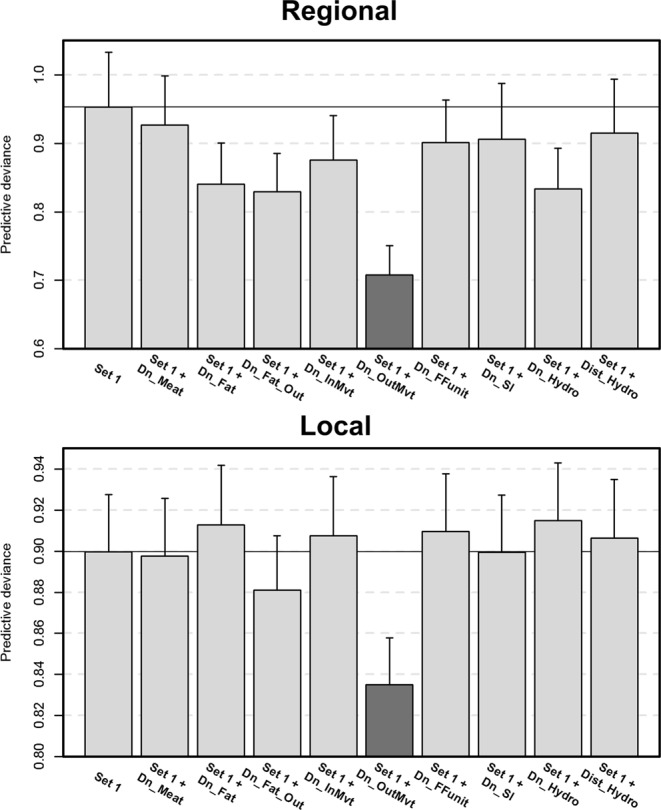
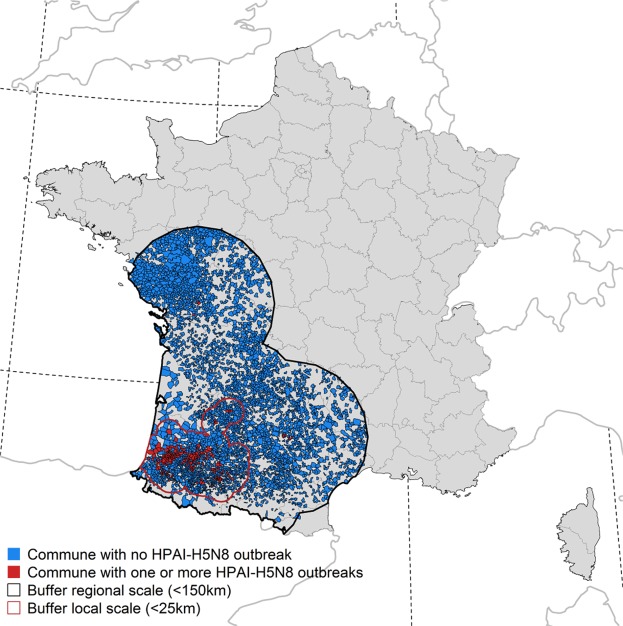
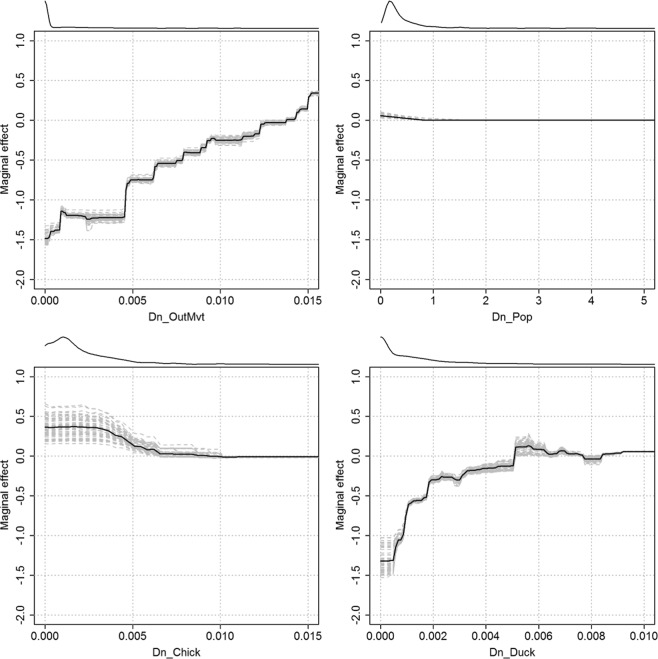
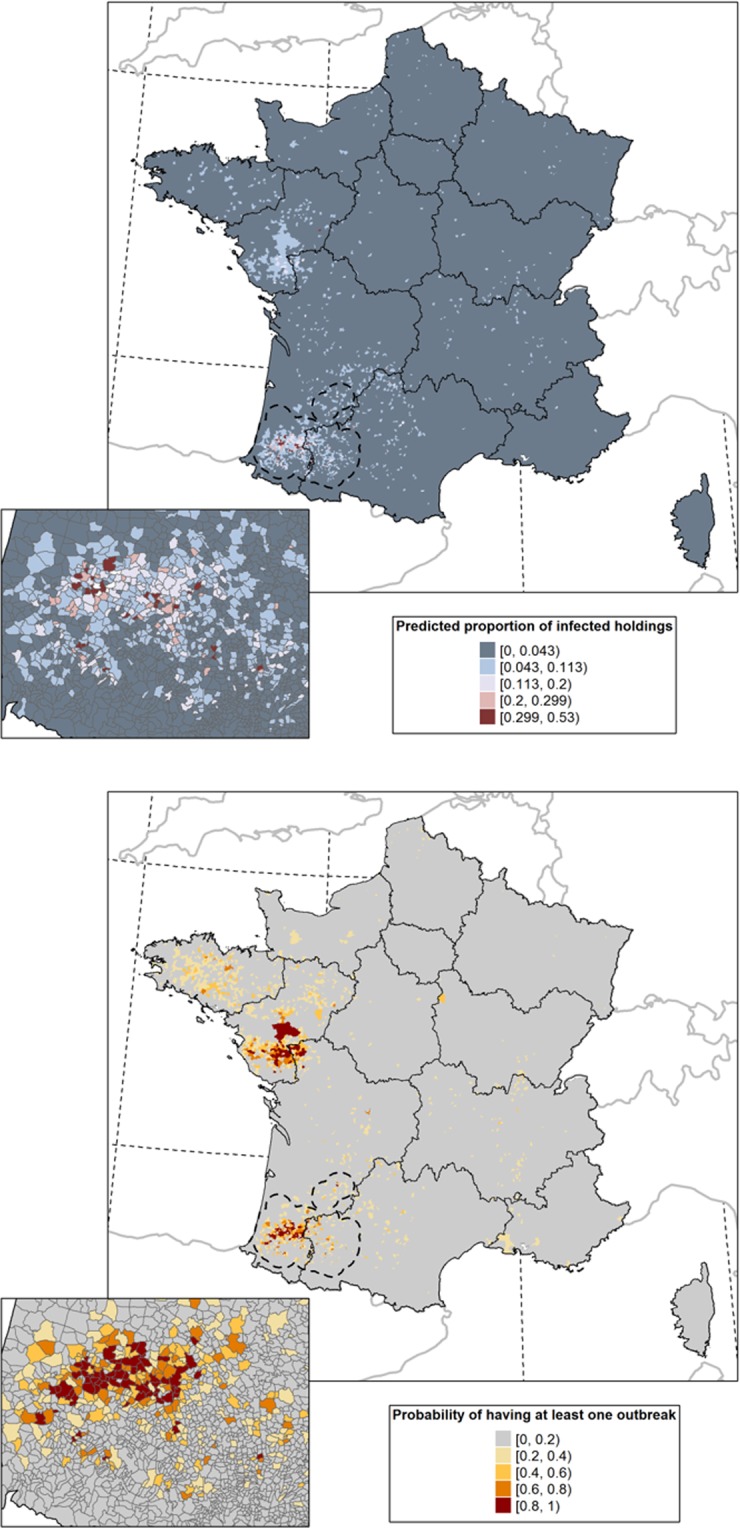
In winter 2016-2017, Highly Pathogenic Avian Influenza (HPAI) H5N8 virus spread across Europe, causing unprecedented epizootics. France was massively affected, resulting in the culling of over 6 million poultry. Boosted regression tree (BRT) models were used to quantify the association between spatial risk factors and HPAI H5N8 infection in poultry holdings and to generate predictive maps for HPAI infection. Three datasets were combined to build the model: a dataset of the reported outbreaks in poultry, a dataset of the poultry holdings where the virus has not been reported and a set of relevant spatial risk factors, including poultry production and trade, and water bird habitat. Results identified key associations between the 'foie gras' production systems and HPAI H5N8 risk of occurrence and indicate that strengthening surveillance of fattening duck production systems and making the transportation of fattening ducks more secure would be key priority options for HPAI prevention and control.
2016-2017 年冬季,高致病性禽流感(HPAI)H5N8 病毒在欧洲蔓延,造成了前所未有的疫情。法国受到了严重影响,导致超过 600 万只家禽被扑杀。 boosted 回归树(BRT)模型被用于量化空间风险因素与家禽养殖场中 HPAI H5N8 感染之间的关联,并生成 HPAI 感染的预测图。该模型结合了三个数据集:一个报告的家禽疫情数据集,一个未报告病毒的家禽养殖场数据集,以及一组相关的空间风险因素,包括家禽生产和贸易以及水禽栖息地。结果确定了“鹅肝”生产系统与 HPAI H5N8 发生风险之间的关键关联,并表明加强对育肥鸭生产系统的监测以及使育肥鸭的运输更加安全将是 HPAI 预防和控制的重点优先事项。