Systems Biology and Medicine Center for Complex Diseases, Affiliated Hospital of Qingdao University, Qingdao, China.
Department of Medical Records, Affiliated Hospital of Qingdao University, Qingdao, China.
Prog Mol Biol Transl Sci. 2019;163:423-444. doi: 10.1016/bs.pmbts.2019.03.003. Epub 2019 Mar 25.
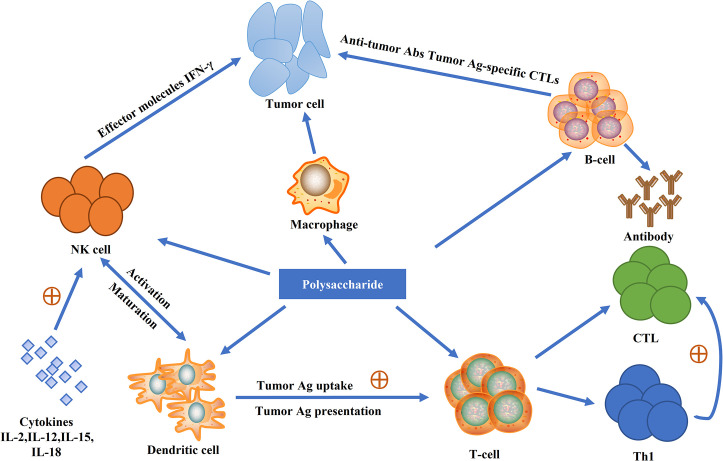
Most of traditional Chinese medicine substances come from herbal plants. The medicinal quality of herbal plants varies with the locations of cultivation, the parts of the herb collected, the season of the herb collected, and the herb processing method. Polysaccharides are major components of the herb plants and their biosynthesis is partly controlled by the genes but mostly influenced by the availability of the nutrition and determined by the various environmental factors. In recent decades, polysaccharides isolated from different kinds of Chinese herbs have received much attention due to their important biological activities, such as anti-tumor, anti-oxidant, anti-diabetic, radiation protecting, antiviral, hypolipidemic, and immunomodulatory activities. Interestingly, different batches of the same herb can obtain different polysaccharide fractions with subtle differences in molecular weight, monosaccharide compositions, glycosidic linkages, and biological functions. Even with these variations, a large number of bioactive polysaccharides from different kinds of traditional Chinese herbs have been purified, characterized, and reported. This review provides a comprehensive summary of the latest polysaccharide extraction methods and the strategies used for monosaccharide compositional analysis plus polysaccharide structural characterization. Most importantly, the reported chemical characteristics and biological activities of the polysaccharides from the famous traditional Chinese herbs including Astragalus membranaceus, Ginseng, Lycium barbarum, Angelica sinensis, Cordyceps sinensis, and Ophiopogon japonicus will be reviewed and discussed. The published studies provide evidence that polysaccharides from traditional Chinese herbs play an important role in their medical applications, which forms the basis for future research, development, and application of these polysaccharides as functional foods and therapeutics in modern medicine.
大多数中药来源于草本植物。草本植物的药用品质因种植地点、采集的草药部位、采集的季节、草药加工方法而有所不同。多糖是草药植物的主要成分,其生物合成部分受基因控制,但主要受营养物质的可利用性影响,并由各种环境因素决定。近几十年来,从不同种类的中草药中分离出的多糖由于其重要的生物活性而受到广泛关注,如抗肿瘤、抗氧化、抗糖尿病、辐射保护、抗病毒、降血脂和免疫调节活性。有趣的是,同一草药的不同批次可以获得不同的多糖级分,分子量、单糖组成、糖苷键和生物功能略有差异。即使存在这些差异,仍有大量来自不同种类的传统中药的生物活性多糖被纯化、表征和报道。本综述提供了中药多糖提取方法和单糖组成分析及多糖结构表征策略的最新进展综述。最重要的是,对来自著名中药的多糖的化学特性和生物活性进行了综述和讨论,包括黄芪、人参、枸杞、当归、冬虫夏草和麦冬。已发表的研究为多糖在中药中的医疗应用提供了证据,这为未来将这些多糖作为功能性食品和现代医学中的治疗药物进行研究、开发和应用奠定了基础。