Zottel Alja, Videtič Paska Alja, Jovčevska Ivana
Medical Center for Molecular Biology, Institute of Biochemistry, Faculty of Medicine, University of Ljubljana, 1000 Ljubljana, Slovenia.
Materials (Basel). 2019 May 15;12(10):1588. doi: 10.3390/ma12101588.
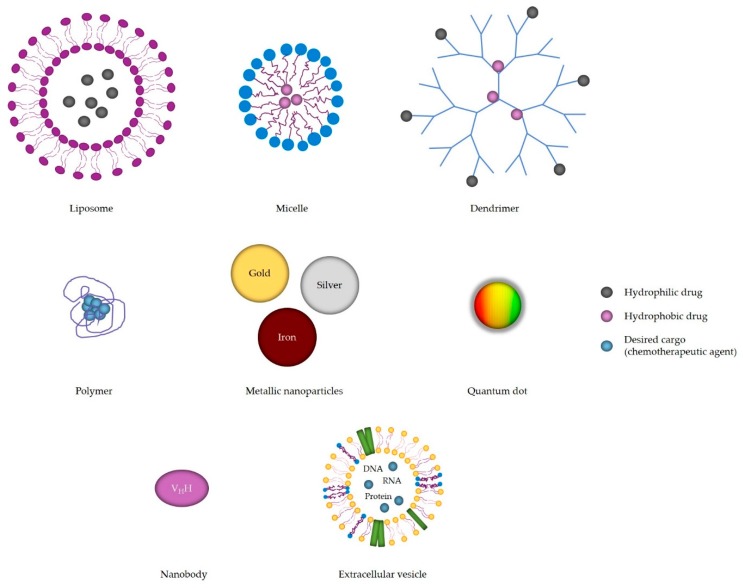
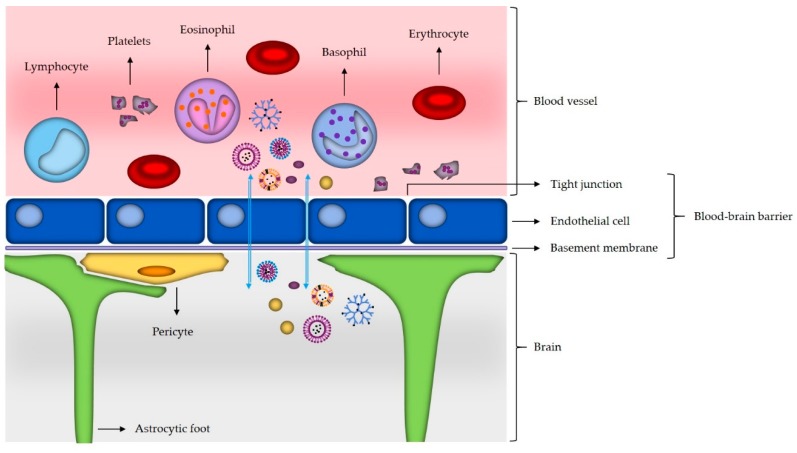
Advances in technology of the past decades led to development of new nanometer scale diagnosis and treatment approaches in cancer medicine leading to establishment of nanooncology. Inorganic and organic nanomaterials have been shown to improve bioimaging techniques and targeted drug delivery systems. Their favorable physico-chemical characteristics, like small sizes, large surface area compared to volume, specific structural characteristics, and possibility to attach different molecules on their surface transform them into excellent transport vehicles able to cross cell and/or tissue barriers, including the blood-brain barrier. The latter is one of the greatest challenges in diagnosis and treatment of brain cancers. Application of nanomaterials can prolong the circulation time of the drugs and contrasting agents in the brain, posing an excellent opportunity for advancing the treatment of the most aggressive form of the brain cancer-glioblastomas. However, possible unwanted side-effects and toxicity issues must be considered before final clinical translation of nanoparticles.
过去几十年技术的进步促使癌症医学中新型纳米级诊断和治疗方法得以发展,进而催生了纳米肿瘤学。无机和有机纳米材料已被证明能改善生物成像技术和靶向给药系统。它们具有良好的物理化学特性,如尺寸小、表面积与体积之比大、特定的结构特征,以及能够在其表面连接不同分子,这些特性使其成为能够跨越细胞和/或组织屏障(包括血脑屏障)的出色运输载体。血脑屏障是脑癌诊断和治疗中最大的挑战之一。纳米材料的应用可以延长药物和造影剂在脑内的循环时间,为推进对最具侵袭性的脑癌形式——胶质母细胞瘤的治疗提供了绝佳机会。然而,在纳米颗粒最终用于临床之前,必须考虑可能出现的不良副作用和毒性问题。