Oršolić Nada, Landeka Jurčević Irena, Đikić Domagoj, Rogić Dunja, Odeh Dyana, Balta Vedran, Perak Junaković Eleonora, Terzić Svjetlana, Jutrić David
Division of Animal Physiology, Faculty of Science, University of Zagreb, Rooseveltov trg 6, HR-10000 Zagreb, Croatia.
Laboratory of Chemistry and Food Biochemistry, Faculty of Food Technology and Biotechnology, University of Zagreb, Pierottijeva 6, 10000 Zagreb, Croatia.
Antioxidants (Basel). 2019 Jun 3;8(6):156. doi: 10.3390/antiox8060156.
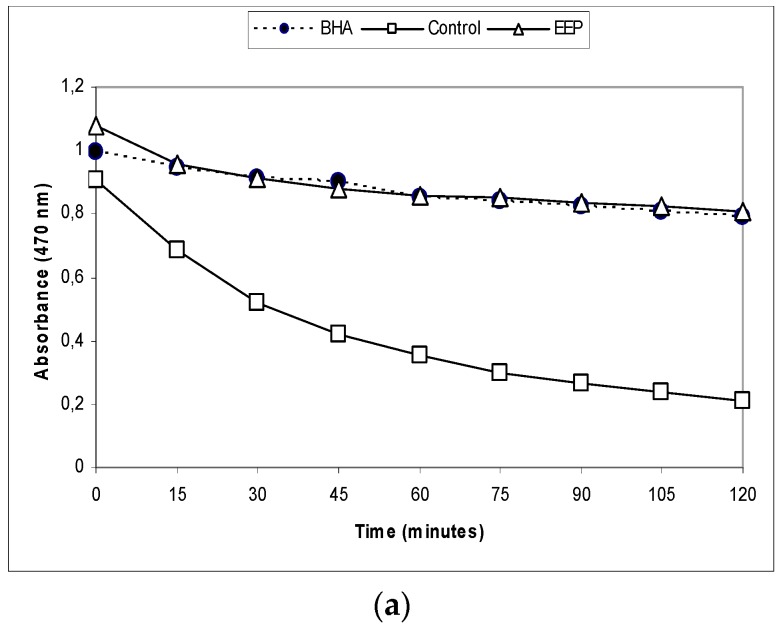
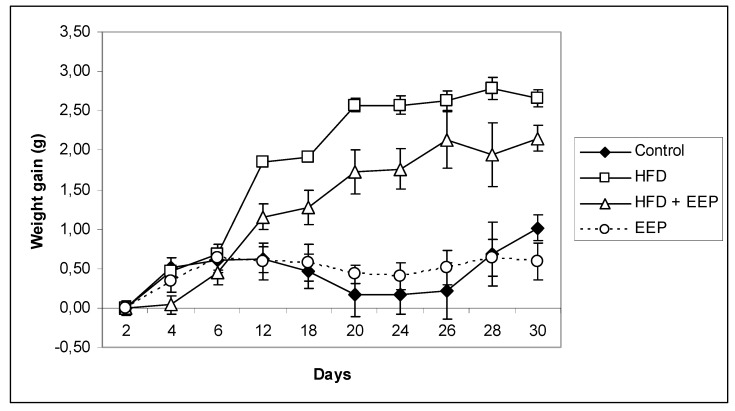
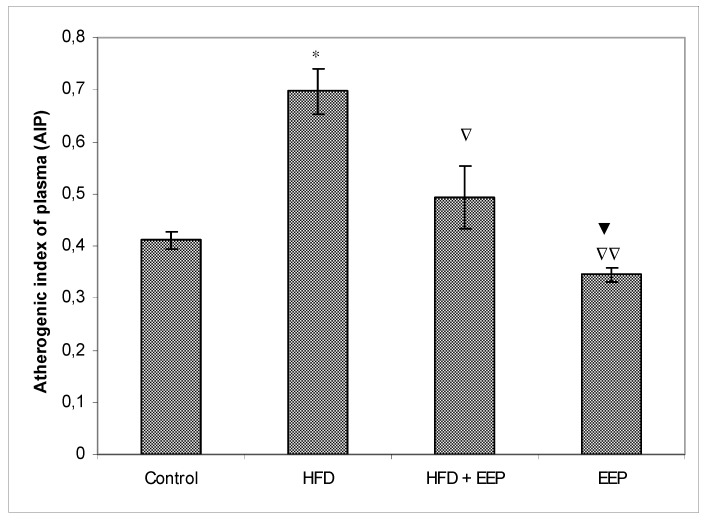
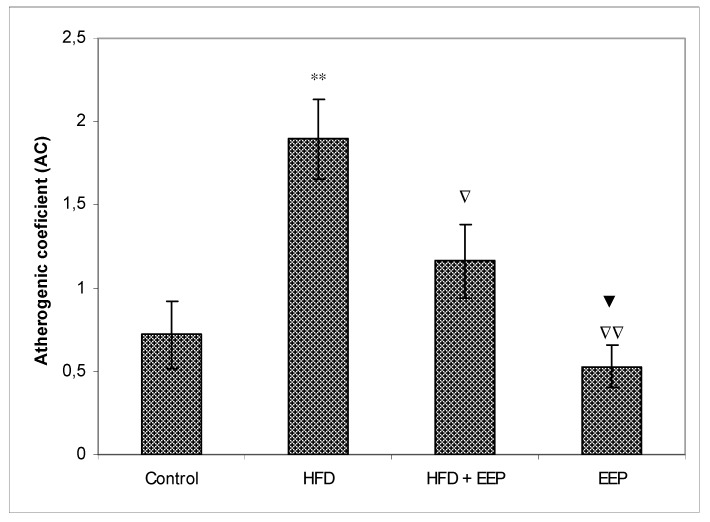
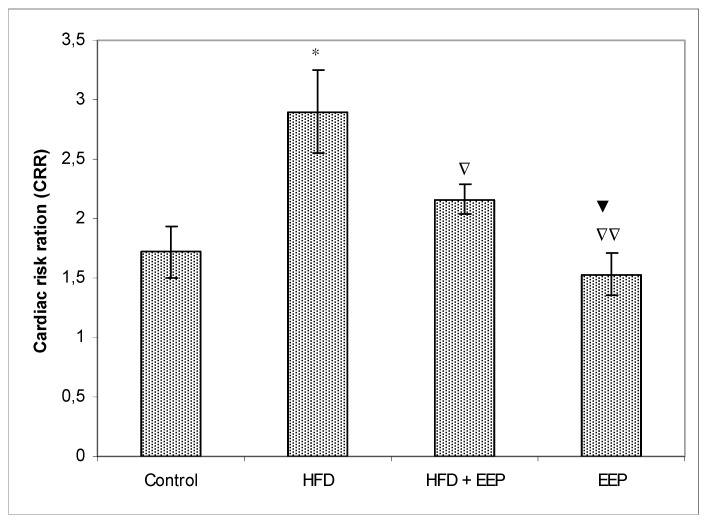
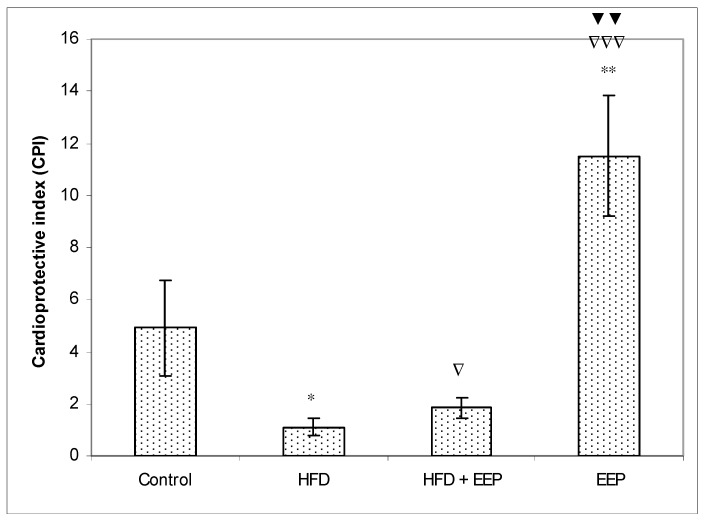
Obesity, a major health problem worldwide, is associated with increased cardiovascular risk factors, such as dyslipidemia, glucose intolerance, and hypertension. We investigated the antioxidative capacity of the ethanol extract of propolis (EEP) and its effect on the lipid profile, the hepatorenal function, and the atherogenic indices in mice fed with a high-fat diet (HFD). EEP (50 mg/kg) was given orally to mice for 30 days. After the treatments, levels of the serum total triglyceride and cholesterol, the high density lipoprotein (HDL-c) and low density lipoprotein (LDL-c) cholesterols, the serum enzymes, and the metabolites were measured, and atherogenic indices [atherogenic index of plasma (AIP); cardiac risk ratio (CRR); cardioprotective index (CPI); atherogenic coefficient (AC)] were calculated and compared with the antioxidant, the reducing power, the radical-scavenging, and the chelating activity of EEP. The HFD diet with EEP significantly reduced the negative lipid profile and lowered AIP, CRR, and AC and increased CPI in animals on a HFD. In addition, EEP reduced the weight of mice and lipid accumulation in the liver, and it had significant in vitro antioxidative activities. The EEP possesses anti-hyperlipidemic and antioxidant activity and exhibits protective action on the cardiovascular system and hepatorenal functions. Our results contribute towards the validation of the traditional use of propolis as a food supplement in aiding hyperlipidemic disorders.
肥胖是全球主要的健康问题,与心血管疾病风险因素增加相关,如血脂异常、葡萄糖不耐受和高血压。我们研究了蜂胶乙醇提取物(EEP)的抗氧化能力及其对高脂饮食(HFD)喂养小鼠的血脂谱、肝肾功 能和致动脉粥样硬化指数的影响。将EEP(50 mg/kg)口服给予小鼠30天。处理后,测量血清总甘油三酯和胆固醇、高密度脂蛋白(HDL-c)和低密度脂蛋白(LDL-c)胆固醇、血清酶和代谢物的水平,并计算致动脉粥样硬化指数[血浆致动脉粥样硬化指数(AIP);心脏风险比(CRR);心脏保护指数(CPI);致动脉粥样硬化系数(AC)],并与EEP的抗氧化、还原能力、自由基清除和螯合活性进行比较。含EEP的HFD饮食显著改善了动物的不良血脂谱,降低了AIP、CRR和AC,并提高了CPI。此外,EEP减轻了小鼠体重和肝脏脂质积累,并且具有显著的体外抗氧化活性。EEP具有抗高血脂和抗氧化活性,并对心血管系统和肝肾功 能具有保护作用。我们的结果有助于验证蜂胶作为食品补充剂辅助治疗高脂血症疾病的传统用途。