Hao Haibo, Zhang Jinjing, Wang Hong, Wang Qian, Chen Mingjie, Juan Jiaxiang, Feng Zhiyong, Chen Hui
National Research Center for Edible Fungi Biotechnology and Engineering, Key Laboratory of Applied Mycological Resources and Utilization, Ministry of Agriculture, Shanghai Key Laboratory of Agricultural Genetics and Breeding, Institute of Edible Fungi, Shanghai Academy of Agricultural Sciences, 307 Room, No. 1000, Jinqi Road, FengXian District, Shanghai, 201403, China.
College of Life Science, Nanjing Agricultural University, No. 1, Weigang Road, XuanWu District, Nanjing, 210095, China.
AMB Express. 2019 Jul 12;9(1):103. doi: 10.1186/s13568-019-0831-4.
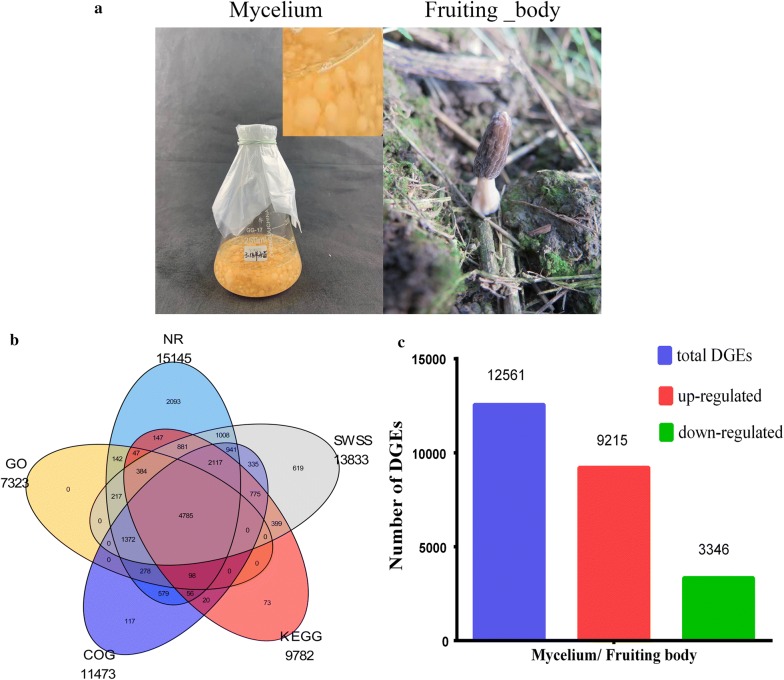
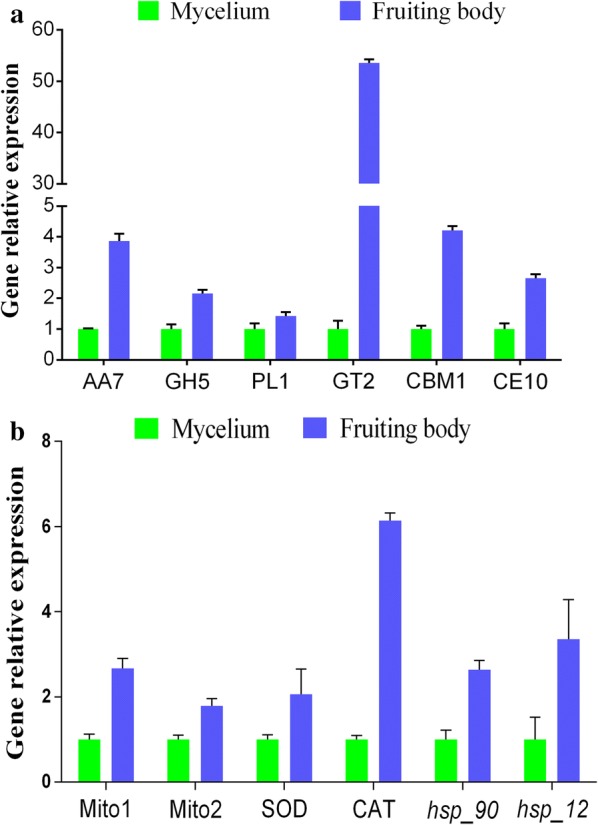
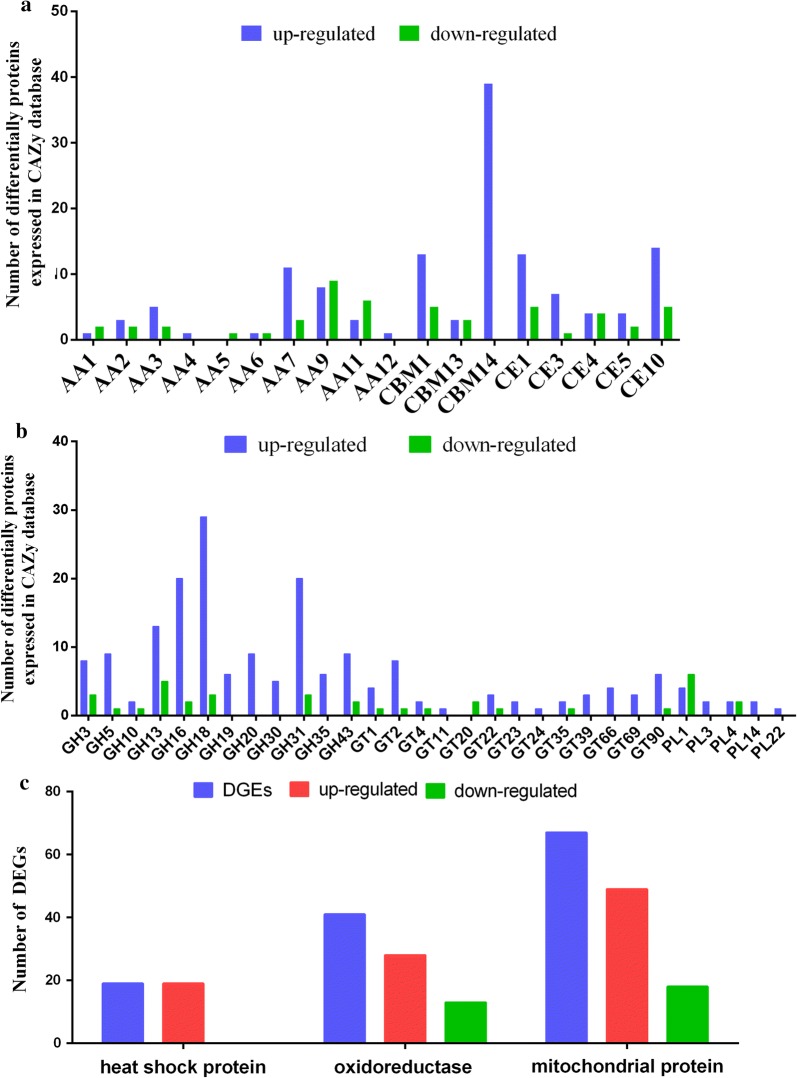
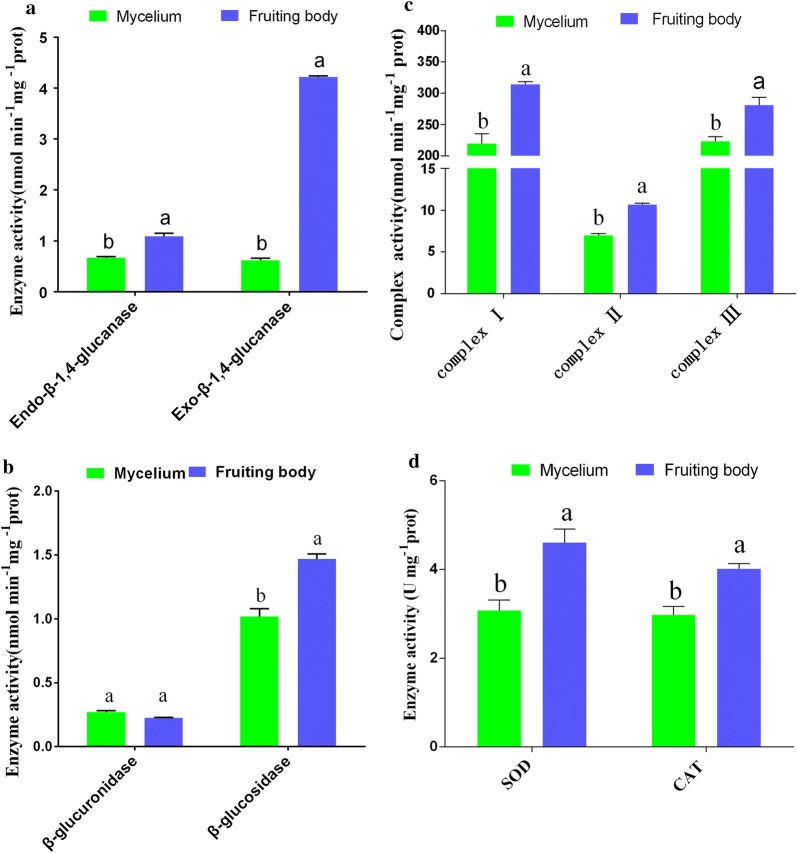
Morchella importuna has been artificially cultivated, but stable production remains difficult because its mechanisms of fruiting body formation are unclear. To investigate the fruiting body formation mechanisms, we sequenced the transcriptomes of Morchella importuna at the mycelial and young fruiting body stages. Among the 12,561 differentially expressed genes (DEGs), 9215 were upregulated, and 3346 were downregulated. DEG enrichment analysis showed that these genes were enriched in the "generation of precursor metabolites and energy", "carbohydrate catabolic process", and "oxidoreductase activity" Gene Ontology (GO) functional categories. Enzyme activity assay results indicated that the activity levels of CAZymes (carbohydrate-active enzymes), oxidoreductases (SOD (superoxide dismutase), CAT (catalase)) and mitochondrial complex (complex I, II, III) proteins were significantly increased from the mycelial stage to the young fruiting body stage. In addition, the genes encoding CAZymes, mitochondrial proteins, oxidoreductases and heat shock proteins had higher expression levels in the young fruiting body stage than in the mycelial stage, and the qRT-PCR results showed similar trends to the RNA-Seq results. In summary, these results suggest that carbohydrate catabolism and energy metabolism are significantly enhanced in the young fruiting body stage and that growth environment temperature changes affect the formation of fruiting bodies.
暗黑羊肚菌已实现人工栽培,但由于其子实体形成机制尚不清楚,稳定生产仍面临困难。为了研究子实体形成机制,我们对暗黑羊肚菌菌丝体阶段和幼嫩子实体阶段的转录组进行了测序。在12561个差异表达基因(DEG)中,9215个基因上调,3346个基因下调。DEG富集分析表明,这些基因富集在“前体代谢物和能量的产生”、“碳水化合物分解代谢过程”和“氧化还原酶活性”基因本体(GO)功能类别中。酶活性测定结果表明,从菌丝体阶段到幼嫩子实体阶段,碳水化合物活性酶(CAZymes)、氧化还原酶(超氧化物歧化酶(SOD)、过氧化氢酶(CAT))和线粒体复合物(复合物I、II、III)蛋白的活性水平显著增加。此外,编码CAZymes、线粒体蛋白、氧化还原酶和热休克蛋白的基因在幼嫩子实体阶段的表达水平高于菌丝体阶段,qRT-PCR结果显示出与RNA-Seq结果相似的趋势。总之,这些结果表明,在幼嫩子实体阶段碳水化合物分解代谢和能量代谢显著增强,并且生长环境温度变化影响子实体的形成。