Division of Oral Ecology and Biochemistry, Tohoku University Graduate School of Dentistry, Sendai, Japan.
Division of Advanced Prosthetic Dentistry, Tohoku University Graduate School of Dentistry, Sendai, Japan.
Sci Rep. 2019 Jul 18;9(1):10446. doi: 10.1038/s41598-019-46790-9.
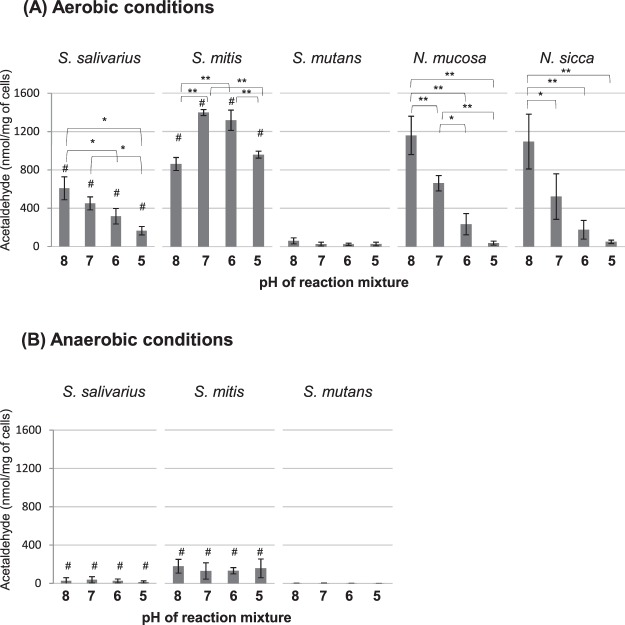
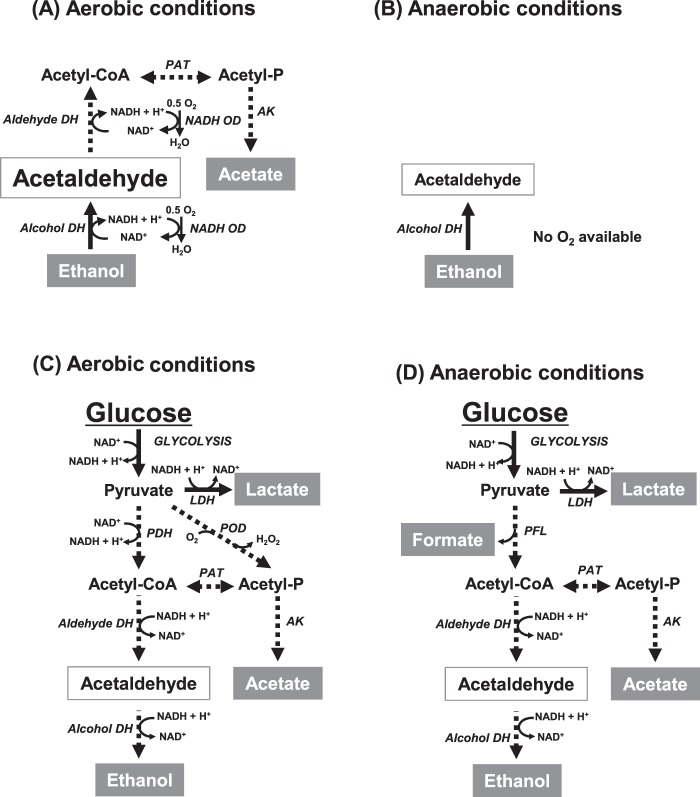
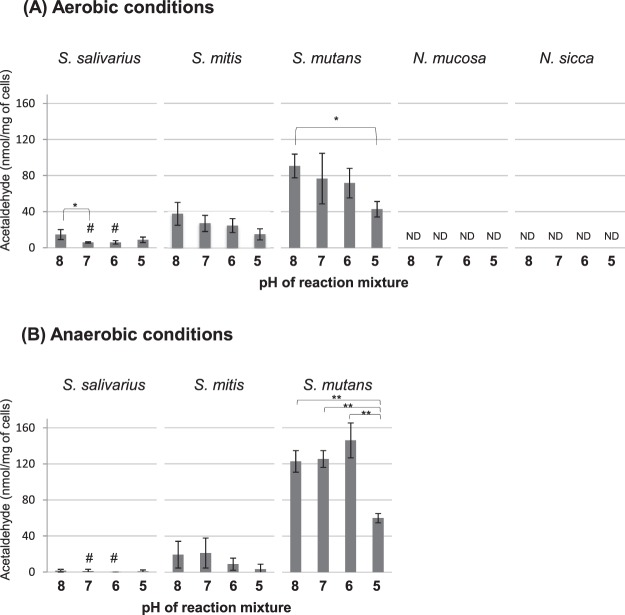
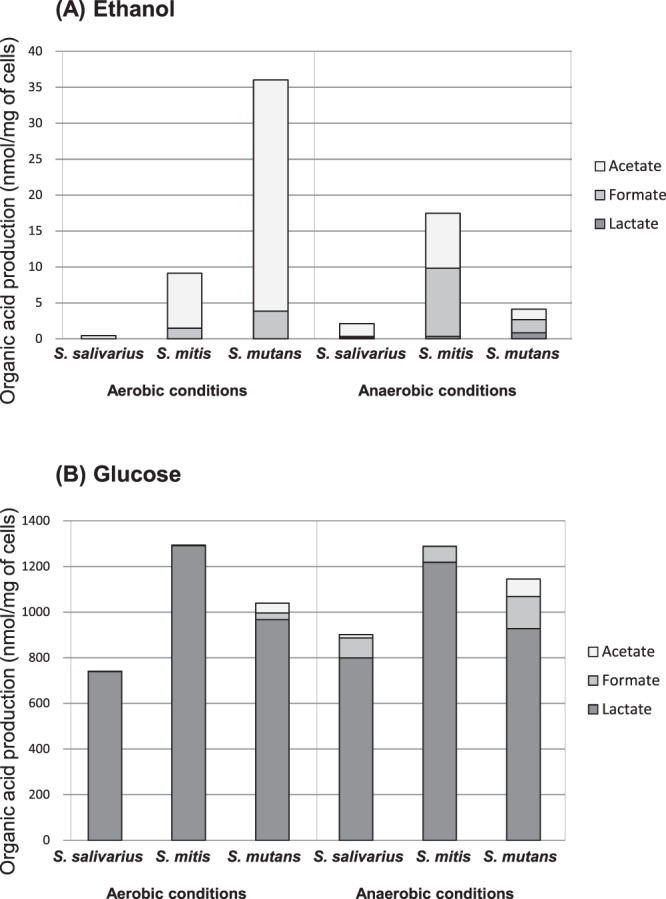
Acetaldehyde is known to be carcinogenic and produced by oral bacteria. Thus, bacterial acetaldehyde production might contribute to oral cancer. Therefore, we examined bacterial acetaldehyde production from ethanol and glucose under various conditions mimicking the oral cavity and clarified the metabolic pathways responsible for bacterial acetaldehyde production. Streptococcus mitis, S. salivarius, S. mutans, Neisseria mucosa and N. sicca were used. The bacterial metabolism was conducted at pH 5.0-8.0 under aerobic and anaerobic conditions. The production of acetaldehyde and organic acids was measured with gas chromatography and HPLC, respectively. Bacterial enzymes were also assessed. All of the bacteria except for S. mutans exhibited their greatest acetaldehyde production from ethanol at neutral to alkaline pH under aerobic conditions. S. mutans demonstrated the greatest acetaldehyde from glucose under anaerobic conditions, although the level was much lower than that from ethanol. Alcohol dehydrogenase and NADH oxidase were detected in all of the bacteria. This study revealed that oral indigenous bacteria, Streptococcus and Neisseria can produce acetaldehyde, and that such acetaldehyde production is affected by environmental conditions. It was suggested that alcohol dehydrogenase and NADH oxidase are involved in ethanol-derived acetaldehyde production and that the branched-pathway from pyruvate is involved in glucose-derived acetaldehyde production.
乙醛已知具有致癌性,并由口腔细菌产生。因此,细菌产生的乙醛可能导致口腔癌。因此,我们在模拟口腔环境的各种条件下检查了乙醇和葡萄糖的细菌乙醛生成,并阐明了负责细菌乙醛生成的代谢途径。使用了缓症链球菌、唾液链球菌、变形链球菌、粘膜奈瑟菌和干燥奈瑟菌。在 pH 值为 5.0-8.0 下,在有氧和无氧条件下进行细菌代谢。用气相色谱法和高效液相色谱法分别测定乙醛和有机酸的生成。还评估了细菌酶。除变形链球菌外,所有细菌在有氧条件下,中性到碱性 pH 下从乙醇中产生最大量的乙醛。尽管水平远低于乙醇,但变形链球菌在厌氧条件下从葡萄糖中产生最大量的乙醛。所有细菌中均检测到醇脱氢酶和 NADH 氧化酶。本研究表明,口腔固有细菌链球菌和奈瑟菌可以产生乙醛,并且这种乙醛的产生受环境条件的影响。研究表明,醇脱氢酶和 NADH 氧化酶参与乙醇衍生的乙醛生成,而来自丙酮酸的支链途径参与葡萄糖衍生的乙醛生成。