RFF-CMCC European Institute on Economics and the Environment (EIEE), Centro Euro-Mediterraneo sui Cambiamenti Climatici, Milan, 20144, Italy.
Imperial College London, Grantham Institute, London, SW7 2AZ, UK.
Nat Commun. 2019 Jul 22;10(1):3277. doi: 10.1038/s41467-019-10842-5.
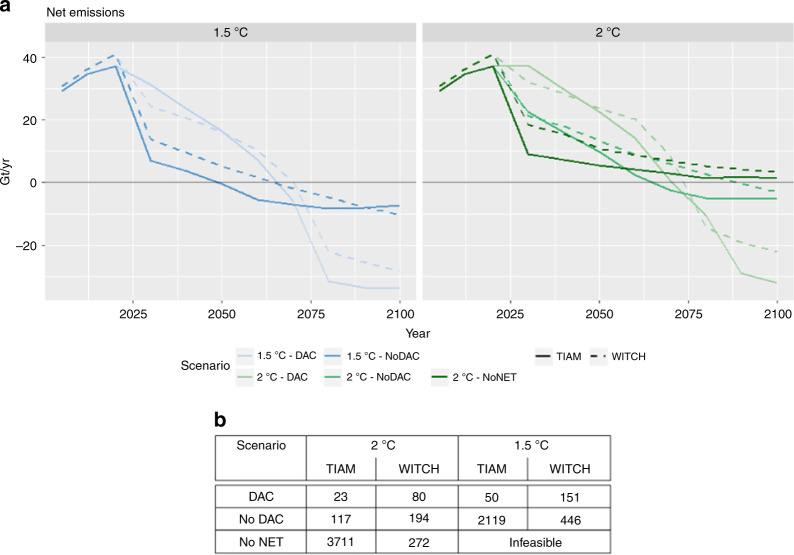
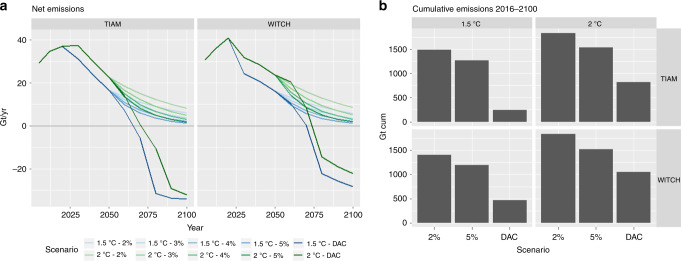
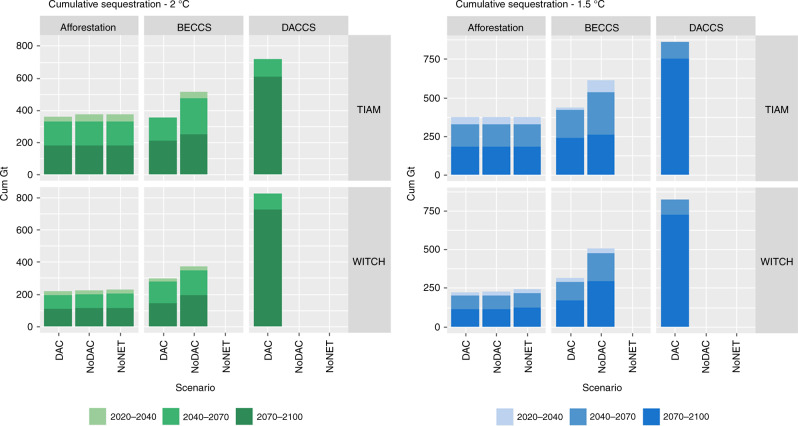
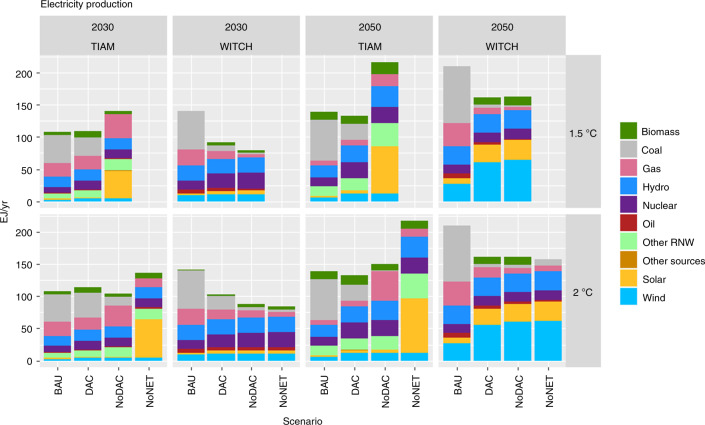
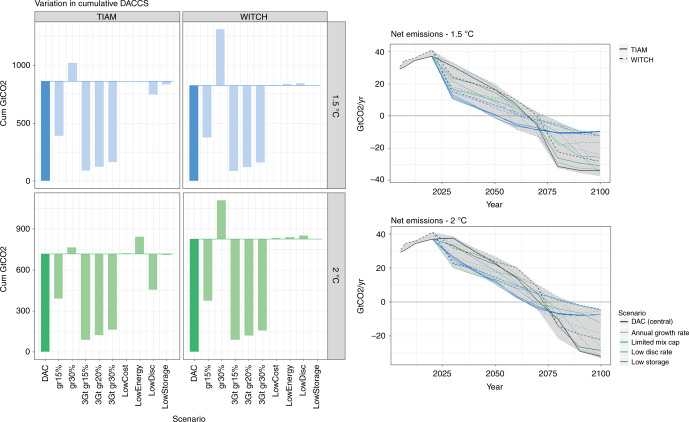
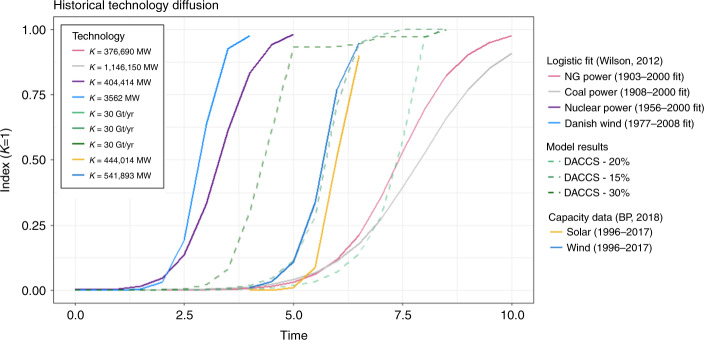
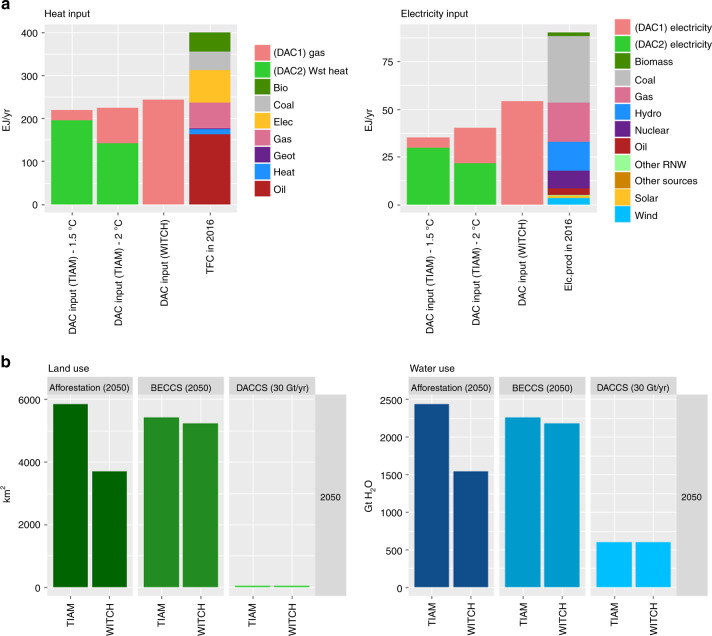
The feasibility of large-scale biological CO removal to achieve stringent climate targets remains unclear. Direct Air Carbon Capture and Storage (DACCS) offers an alternative negative emissions technology (NET) option. Here we conduct the first inter-model comparison on the role of DACCS in 1.5 and 2 °C scenarios, under a variety of techno-economic assumptions. Deploying DACCS significantly reduces mitigation costs, and it complements rather than substitutes other NETs. The key factor limiting DACCS deployment is the rate at which it can be scaled up. Our scenarios' average DACCS scale-up rates of 1.5 GtCO/yr would require considerable sorbent production and up to 300 EJ/yr of energy input by 2100. The risk of assuming that DACCS can be deployed at scale, and finding it to be subsequently unavailable, leads to a global temperature overshoot of up to 0.8 °C. DACCS should therefore be developed and deployed alongside, rather than instead of, other mitigation options.
大规模生物 CO 去除以实现严格的气候目标的可行性尚不清楚。直接空气碳捕获和储存 (DACCS) 提供了一种替代的负排放技术 (NET) 选择。在这里,我们根据各种技术经济假设,首次对 DACCS 在 1.5°C 和 2°C 情景中的作用进行了模型间比较。部署 DACCS 可显著降低缓解成本,并且它是对其他 NET 的补充,而不是替代。限制 DACCS 部署的关键因素是其可以扩展的速度。我们情景的平均 DACCS 扩展速度为 1.5 GtCO/yr,这将需要大量的吸附剂生产,到 2100 年,能源投入高达 300 EJ/yr。假设 DACCS 可以大规模部署,而随后发现无法部署,这将导致全球温度超过 0.8°C。因此,DACCS 应该与其他缓解选择一起开发和部署,而不是替代它们。